
Conversion Rate Optimization (CRO)
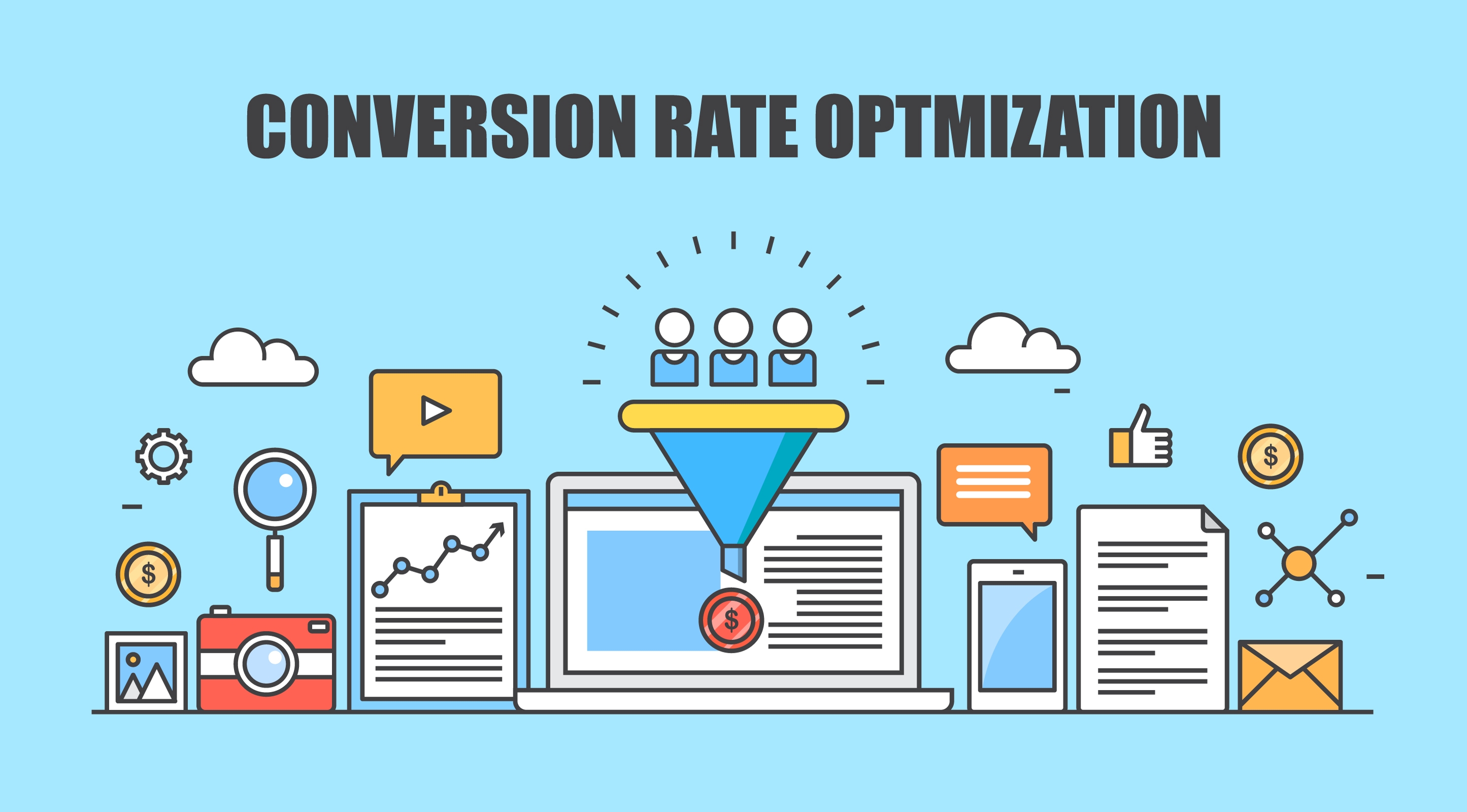
In the digital age, businesses often obsess over generating more traffic—spending heavily on ads, search engine optimization, or social campaigns to attract visitors. While traffic matters, the more fundamental question is: What happens once those visitors arrive? This is where Conversion Rate Optimization (CRO) steps in as one of the most powerful levers for sustainable business growth.
CRO is the practice of improving the percentage of website visitors who complete a desired action, whether it’s making a purchase, signing up for a newsletter, downloading a resource, or filling out a form. By focusing on improving existing traffic performance rather than simply acquiring more visitors, CRO can dramatically boost revenue, reduce costs, and create a better customer experience.
1. Making the Most of Existing Traffic
The most immediate benefit of CRO is efficiency. Consider two businesses, each generating 50,000 monthly visitors. If Business A has a 2% conversion rate, it nets 1,000 sales. Business B, with a 4% conversion rate, achieves 2,000 sales with the same traffic volume. Business B has essentially doubled its revenue potential without increasing ad spend or traffic acquisition efforts.
This efficiency becomes crucial in competitive industries where the cost of acquiring traffic (via Google Ads or social media advertising) continues to rise. Rather than pouring money into “buying” more visitors, CRO enables businesses to extract greater value from the ones they already have.
2. Improving Return on Investment (ROI)
CRO doesn’t exist in isolation—it ties directly to profitability. By improving the rate at which visitors convert, companies lower their customer acquisition cost (CAC). For instance, if your average CAC is $50 per customer at a 2% conversion rate, doubling that rate to 4% effectively reduces CAC to $25. This margin improvement boosts ROI across every marketing channel, making budgets more impactful.
Think of CRO as a multiplier: every dollar spent on traffic acquisition goes further. Businesses with optimized conversion flows often see more predictable returns, making it easier to scale ad campaigns and justify further investments in growth.
3. Enhancing the Customer Experience
At its core, CRO is not just about metrics—it’s about understanding and serving the customer better. Many optimization strategies focus on removing friction from the user journey:
-
Streamlining checkout processes to reduce abandonment.
-
Clarifying calls-to-action (CTAs) so visitors know exactly what to do.
-
Optimizing page load times for smoother browsing.
-
Personalizing recommendations to match visitor intent.
When users feel understood and supported, they’re more likely to engage, convert, and return. This builds loyalty and long-term customer relationships—outcomes that are far more valuable than one-time transactions.
4. Reducing Waste in Marketing
Without CRO, businesses often face “leaky bucket” problems: spending on ads only to watch visitors leave because of unclear messaging, confusing navigation, or poor mobile design. CRO acts as a repair mechanism, plugging leaks that drain marketing budgets.
By testing landing pages, optimizing ad-to-page relevance, or improving form usability, companies reduce bounce rates and wasted clicks. Instead of chasing more visitors to fill the bucket, CRO ensures the ones already inside flow smoothly toward conversion.
5. Gaining Actionable Insights
One overlooked benefit of CRO is the intelligence it provides. A/B testing, heatmaps, and user behavior analysis reveal what resonates with audiences. For example:
-
Which headlines drive more clicks?
-
Do users prefer long-form or short-form content?
-
Which design layouts encourage trust?
These insights extend beyond website optimization—they can inform product design, marketing campaigns, and even customer service. Businesses become more data-driven, aligning strategies with real-world user behavior rather than assumptions.
6. Building Long-Term Growth
Conversion optimization is not a one-time project—it’s an ongoing process that compounds over time. Each improvement builds on the last, gradually raising baseline performance.
Consider Amazon: much of its success stems not only from traffic volume but also from relentless optimization of its customer journey—1-click purchasing, tailored recommendations, frictionless checkout. This commitment to CRO has made conversions seamless, driving long-term dominance.
For smaller businesses and startups, consistent optimization creates a competitive edge. While competitors chase clicks, CRO-focused organizations steadily improve profitability and customer experience.
7. Supporting Scaling and Expansion
When businesses scale—whether through new products, markets, or international expansion—CRO provides the foundation for predictable performance. High conversion rates reduce financial risk when entering new markets, as marketing dollars stretch further.
Moreover, CRO aligns with modern growth strategies like growth hacking, where rapid experimentation is used to drive outsized results. Instead of assuming what works, CRO systematically tests, learns, and iterates.
8. The Bottom Line: Growth Without Extra Spend
The importance of CRO boils down to one principle: doing more with less. In a landscape where acquisition costs are climbing and attention spans are shrinking, businesses cannot afford to waste opportunities. CRO ensures that every visitor, every click, and every dollar has the highest possible chance of delivering results.
Ultimately, Conversion Rate Optimization is important because it transforms businesses from traffic-dependent to conversion-focused. It shifts the mindset from quantity to quality, from spending to efficiency, and from assumptions to insights. Companies that embrace CRO don’t just grow faster—they grow smarter, more sustainably, and with stronger customer relationships.
- Arts
- Business
- Computers
- Juegos
- Health
- Home
- Kids and Teens
- Money
- News
- Personal Development
- Recreation
- Regional
- Reference
- Science
- Shopping
- Society
- Sports
- Бизнес
- Деньги
- Дом
- Досуг
- Здоровье
- Игры
- Искусство
- Источники информации
- Компьютеры
- Личное развитие
- Наука
- Новости и СМИ
- Общество
- Покупки
- Спорт
- Страны и регионы
- World

 English
 Russian
 French
 Portuguese
 Deutsch
 Turkish
 Dutch
Dutch
 Italiano
 Arabic
 Romaian
 Portuguese (Brazil)
 Greek
Greek