
What Is Customer Acquisition in Marketing?
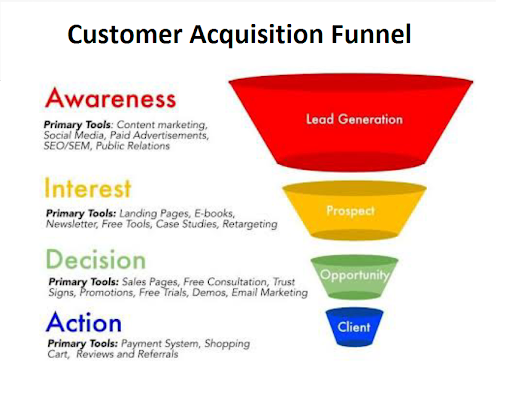
Customer acquisition is one of the central responsibilities of marketing. While sales may close deals and product teams may deliver value, marketing plays a critical role in attracting, educating, and converting prospects into customers. Understanding customer acquisition in marketing is essential for building sustainable growth, optimizing budgets, and aligning teams around measurable outcomes.
This article provides a comprehensive explanation of what customer acquisition means in a marketing context, how it works, the strategies involved, and how modern marketing teams approach acquisition across digital and offline channels.
What Is Customer Acquisition in Marketing?
Customer acquisition in marketing refers to the set of marketing activities and strategies used to attract new customers and convert them into paying users.
In marketing terms, customer acquisition includes:
-
Creating awareness
-
Generating demand
-
Capturing leads
-
Nurturing prospects
-
Driving conversions
Marketing’s role is to move potential customers through the acquisition funnel until they are ready to purchase.
Customer Acquisition vs Sales in Marketing Context
Marketing and sales both contribute to acquisition, but their responsibilities differ.
Marketing’s Role in Acquisition
-
Brand awareness
-
Lead generation
-
Demand creation
-
Education and nurturing
-
Conversion optimization (especially in self-serve models)
Sales’ Role in Acquisition
-
Lead qualification
-
Relationship building
-
Negotiation
-
Deal closing
In many modern businesses—especially ecommerce, SaaS, and B2C—marketing owns most or all of the acquisition process.
Why Customer Acquisition Is a Core Marketing Function
Marketing exists to drive growth. Without customer acquisition, marketing efforts lack commercial impact.
Customer acquisition enables:
-
Revenue growth
-
Market expansion
-
Brand relevance
-
Business sustainability
Marketing strategies are judged not just on reach or engagement, but on their ability to acquire customers efficiently.
The Customer Acquisition Funnel in Marketing
Marketing-driven acquisition typically follows a funnel structure:
-
Awareness
-
Interest
-
Consideration
-
Conversion
-
Activation (sometimes included)
Each stage requires different marketing tactics, messaging, and metrics.
Awareness in Marketing
At this stage, marketing introduces the brand to potential customers.
Common awareness tactics:
-
SEO and content marketing
-
Social media marketing
-
Paid advertising
-
Influencer marketing
-
PR and media outreach
The goal is visibility and brand recognition, not immediate sales.
Interest in Marketing
Interest involves deeper engagement.
Tactics include:
-
Lead magnets
-
Educational content
-
Email subscriptions
-
Social engagement
Marketing begins collecting contact information and behavioral data here.
Consideration in Marketing
Marketing helps prospects evaluate options.
Tactics include:
-
Case studies
-
Comparison pages
-
Testimonials
-
Webinars and demos
-
Retargeting campaigns
Trust-building and differentiation are critical at this stage.
Conversion in Marketing
Marketing often drives or supports the conversion moment.
Tactics include:
-
Landing page optimization
-
Pricing pages
-
Promotional offers
-
Conversion-focused ads
-
Checkout optimization
The goal is to remove friction and encourage action.
Customer Acquisition Channels in Marketing
Marketing teams use a mix of channels to acquire customers.
Digital Marketing Channels
Digital channels dominate modern acquisition strategies.
SEO (Search Engine Optimization)
-
Drives high-intent traffic
-
Low long-term CAC
-
Compounding results over time
Paid Advertising
-
Google Ads
-
Social media ads
-
Display and retargeting
Paid channels provide speed and scalability but require optimization.
Social Media Marketing
-
Organic engagement
-
Community building
-
Paid social campaigns
Effectiveness depends on platform and audience alignment.
Content Marketing
Content marketing attracts customers by providing value.
Examples:
-
Blog posts
-
Videos
-
Guides and ebooks
-
Podcasts
Content builds trust, shortens sales cycles, and supports SEO.
Email Marketing
Email is a powerful acquisition and nurturing tool.
Uses include:
-
Lead nurturing
-
Promotions
-
Product education
-
Retargeting inactive prospects
Email often has one of the highest ROIs among marketing channels.
Offline Marketing Channels
Although digital dominates, offline channels still matter.
Examples:
-
Events and trade shows
-
Print advertising
-
Direct mail
-
Out-of-home advertising
Offline channels are more common in local or enterprise acquisition.
Customer Acquisition Strategies in Marketing
Marketing strategies for acquisition vary by business model.
Inbound Marketing
Inbound marketing attracts customers organically.
Key components:
-
SEO
-
Content marketing
-
Social engagement
-
Lead nurturing
Inbound strategies focus on education and value.
Outbound Marketing
Outbound marketing proactively reaches prospects.
Examples:
-
Paid ads
-
Cold email
-
Cold calling
-
Direct mail
Outbound can be effective but often has higher CAC.
Product-Led Marketing
Product-led strategies use the product itself as a marketing channel.
Examples:
-
Free trials
-
Freemium models
-
Viral features
Common in SaaS and app-based businesses.
Brand-Led Marketing
Brand-led acquisition focuses on emotional connection and trust.
Examples:
-
Storytelling
-
Influencer partnerships
-
Community building
Brand strength lowers CAC over time.
Measuring Customer Acquisition in Marketing
Marketing teams track acquisition using specific metrics.
Core Customer Acquisition Metrics
-
Customer acquisition cost (CAC)
-
Cost per lead (CPL)
-
Conversion rate
-
Lead-to-customer rate
-
LTV:CAC ratio
-
Time to acquire customer
These metrics determine marketing efficiency.
Channel-Level Metrics
Marketing teams often track:
-
CAC by channel
-
Conversion rate by channel
-
LTV by channel
-
Churn by acquisition source
Not all customers are equal—source matters.
Customer Acquisition Cost (CAC) in Marketing
CAC is a key marketing KPI.
Marketing influences CAC through:
-
Targeting accuracy
-
Conversion optimization
-
Channel mix
-
Messaging effectiveness
Lower CAC allows marketing teams to scale responsibly.
The Role of Marketing Automation in Acquisition
Automation enables marketing teams to scale acquisition efficiently.
Common uses:
-
Email workflows
-
Lead scoring
-
Behavioral segmentation
-
Retargeting campaigns
Automation reduces manual effort and improves consistency.
Customer Acquisition in B2B Marketing
B2B acquisition has unique characteristics:
-
Longer sales cycles
-
Higher CAC
-
Multiple stakeholders
-
Strong sales alignment
Marketing focuses heavily on:
-
Lead quality
-
Education
-
Account-based marketing (ABM)
Customer Acquisition in B2C Marketing
B2C acquisition emphasizes:
-
Speed
-
Volume
-
Emotional triggers
-
Brand affinity
Marketing often owns the full acquisition funnel in B2C.
The Relationship Between Marketing and Retention
Marketing acquisition does not end at conversion.
Marketing also supports:
-
Onboarding
-
Engagement
-
Upselling
-
Cross-selling
Retention improves acquisition efficiency by increasing LTV.
Common Customer Acquisition Marketing Mistakes
-
Focusing only on traffic volume
-
Ignoring conversion optimization
-
Over-reliance on paid ads
-
Poor audience targeting
-
Not tracking CAC accurately
-
Misalignment with sales or product teams
Avoiding these mistakes improves performance.
How Marketing Teams Optimize Acquisition Over Time
Successful marketing teams:
-
Test channels continuously
-
Optimize funnels
-
Improve messaging
-
Use data to guide decisions
-
Balance short-term and long-term strategies
Optimization is ongoing, not one-time.
Customer Acquisition Trends in Marketing
Modern acquisition trends include:
-
AI-driven targeting
-
Personalization at scale
-
First-party data strategies
-
Community-led growth
-
Creator and influencer marketing
-
Privacy-first acquisition tactics
Marketing must adapt as platforms and regulations change.
Final Thoughts
Customer acquisition in marketing is about more than generating leads—it’s about building systems that attract, convert, and activate customers efficiently. Marketing teams play a central role in growth by shaping how prospects discover, evaluate, and choose a brand.
Businesses that excel at customer acquisition marketing:
-
Understand their audience deeply
-
Choose channels strategically
-
Measure performance rigorously
-
Optimize continuously
In a competitive landscape, effective customer acquisition marketing is one of the strongest advantages a business can have.
- Arts
- Business
- Computers
- Games
- Health
- Home
- Kids and Teens
- Money
- News
- Personal Development
- Recreation
- Regional
- Reference
- Science
- Shopping
- Society
- Sports
- Бизнес
- Деньги
- Дом
- Досуг
- Здоровье
- Игры
- Искусство
- Источники информации
- Компьютеры
- Личное развитие
- Наука
- Новости и СМИ
- Общество
- Покупки
- Спорт
- Страны и регионы
- World

 Russian
 French
 Spanish
 Portuguese
 Deutsch
 Turkish
 Dutch
Dutch
 Italiano
 Arabic
 Romaian
 Portuguese (Brazil)
 Greek
Greek