
What are the best task management frameworks?
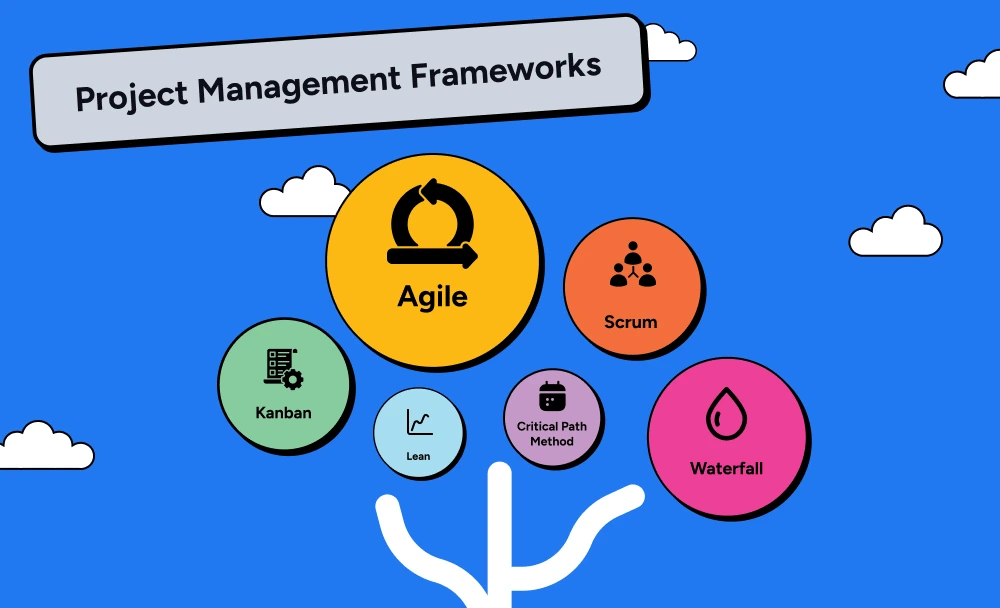
Task management frameworks are structured methodologies that help individuals and teams organize, prioritize, execute, and track work efficiently. Choosing the right framework can dramatically improve productivity, clarity, and alignment with goals. However, no single framework fits all scenarios—each has strengths, trade-offs, and ideal use cases.
This article provides a comprehensive exploration of the best task management frameworks, explaining how they work, when to use them, and how to integrate them into a cohesive system.
What Is a Task Management Framework?
A task management framework is a systematic approach to handling tasks throughout their lifecycle. It defines:
-
How tasks are captured
-
How they are prioritized
-
How work is executed
-
How progress is tracked
-
How improvements are made
Frameworks reduce ambiguity and decision fatigue by providing repeatable structures.
Why Frameworks Matter
Without a framework, task management becomes:
-
Reactive rather than proactive
-
Inconsistent and unstructured
-
Prone to overload and missed deadlines
A strong framework introduces:
-
Clarity in priorities
-
Predictability in workflows
-
Efficiency in execution
-
Measurable performance
1. Getting Things Done (GTD)
Overview
Getting Things Done (GTD), developed by David Allen, is one of the most widely used personal productivity frameworks.
Core Concept
Free your mind from remembering tasks by capturing everything in a trusted system.
Workflow
-
Capture tasks
-
Clarify what they mean
-
Organize them into categories
-
Reflect regularly
-
Engage with tasks
Key Components
-
Inbox (task capture)
-
Next actions
-
Projects
-
Waiting for
-
Someday/maybe
Strengths
-
Reduces mental clutter
-
Highly flexible
-
Excellent for personal productivity
Weaknesses
-
Can become complex if over-implemented
-
Requires discipline for regular reviews
Best Use Case
Individuals managing diverse responsibilities and needing clarity.
2. Kanban
Overview
Kanban is a visual task management framework originating from manufacturing but widely used in knowledge work.
Core Concept
Visualize work and limit work in progress to improve flow.
Structure
Tasks move through columns such as:
-
To Do
-
In Progress
-
Done
Key Principles
-
Visualize workflow
-
Limit WIP (Work in Progress)
-
Manage flow
-
Improve continuously
Strengths
-
High visibility
-
Easy to implement
-
Excellent for continuous workflows
Weaknesses
-
Less structured planning
-
Can lack long-term strategic alignment
Best Use Case
Teams with ongoing, continuous work (e.g., support, operations).
3. Scrum
Overview
Scrum is an agile framework designed for iterative project management.
Core Concept
Deliver work in short, time-boxed iterations called sprints.
Key Elements
-
Sprint planning
-
Daily standups
-
Sprint reviews
-
Retrospectives
Artifacts
-
Product backlog
-
Sprint backlog
-
Increment
Strengths
-
Strong structure
-
Frequent feedback
-
Clear accountability
Weaknesses
-
Requires discipline and coordination
-
Can be rigid for non-software teams
Best Use Case
Teams working on complex, evolving projects.
4. Eisenhower Matrix
Overview
A prioritization framework based on urgency and importance.
Structure
Tasks are categorized into four quadrants:
-
Urgent & Important
-
Important, Not Urgent
-
Urgent, Not Important
-
Neither
Strengths
-
Simple and intuitive
-
Improves decision-making
-
Helps eliminate low-value tasks
Weaknesses
-
Does not provide execution workflow
-
Subjective classification
Best Use Case
Individuals or teams needing better prioritization.
5. Time Blocking
Overview
A scheduling framework where time is allocated to specific tasks.
Core Concept
Plan your day by assigning tasks to time slots.
Strengths
-
Improves focus
-
Reduces procrastination
-
Ensures time for important work
Weaknesses
-
Requires accurate estimation
-
Can be disrupted by interruptions
Best Use Case
Individuals needing structured daily execution.
6. Pomodoro Technique
Overview
A time management method focused on short, focused work intervals.
Structure
-
25 minutes work
-
5 minutes break
-
Longer break after several cycles
Strengths
-
Enhances focus
-
Reduces burnout
-
Easy to implement
Weaknesses
-
Not ideal for deep, uninterrupted work
-
Rigid intervals may not suit all tasks
Best Use Case
Individuals struggling with focus or procrastination.
7. OKRs (Objectives and Key Results)
Overview
A goal-setting framework that aligns tasks with measurable outcomes.
Structure
-
Objective: What you want to achieve
-
Key Results: How you measure success
Strengths
-
Strong alignment with goals
-
Measurable outcomes
-
Scalable for organizations
Weaknesses
-
Requires careful definition
-
Can become metric-heavy
Best Use Case
Organizations and teams aligning tasks with strategy.
8. Agile Task Management
Overview
A broader philosophy encompassing frameworks like Scrum and Kanban.
Core Principles
-
Iterative progress
-
Continuous feedback
-
Adaptability
Strengths
-
Flexible
-
Responsive to change
-
Customer-focused
Weaknesses
-
Requires cultural adoption
-
Can lack structure if poorly implemented
Best Use Case
Dynamic environments with changing requirements.
9. Ivy Lee Method
Overview
A simple daily prioritization technique.
Process
-
Write down 6 tasks
-
Prioritize them
-
Work on them sequentially
Strengths
-
Extremely simple
-
Forces prioritization
-
Reduces overwhelm
Weaknesses
-
Limited scalability
-
No long-term planning
Best Use Case
Individuals needing simplicity and focus.
10. PARA Method
Overview
A system for organizing digital information and tasks.
Categories
-
Projects
-
Areas
-
Resources
-
Archives
Strengths
-
Excellent organization
-
Works well with digital tools
Weaknesses
-
Not a full execution system
-
Requires integration with other frameworks
Best Use Case
Knowledge workers managing large volumes of information.
11. MoSCoW Method
Overview
A prioritization technique used in project management.
Categories
-
Must have
-
Should have
-
Could have
-
Won’t have
Strengths
-
Clear prioritization
-
Useful for scope management
Weaknesses
-
Can be subjective
-
Requires discipline
Best Use Case
Project planning and requirement prioritization.
12. Critical Path Method (CPM)
Overview
A project management framework focusing on task dependencies.
Core Concept
Identify the sequence of tasks that determines project duration.
Strengths
-
Optimizes timelines
-
Identifies critical tasks
Weaknesses
-
Complex
-
Requires detailed planning
Best Use Case
Large, complex projects with dependencies.
Comparing Frameworks
| Framework | Best For | Strength | Weakness |
|---|---|---|---|
| GTD | Personal productivity | Clarity | Complexity |
| Kanban | Continuous work | Visibility | Limited planning |
| Scrum | Team projects | Structure | Rigidity |
| Eisenhower | Prioritization | Simplicity | No workflow |
| Time Blocking | Daily execution | Focus | Inflexibility |
| Pomodoro | Focus | Simplicity | Rigid timing |
| OKRs | Goal alignment | Strategic focus | Setup complexity |
| Ivy Lee | Daily tasks | Simplicity | Limited scope |
| PARA | Organization | Structure | Not execution-focused |
| MoSCoW | Prioritization | Clarity | Subjectivity |
| CPM | Complex projects | Precision | Complexity |
How to Choose the Right Framework
Consider These Factors
-
Nature of work (routine vs project-based)
-
Team size
-
Complexity of tasks
-
Need for flexibility vs structure
Example Choices
-
Personal productivity → GTD + Time Blocking
-
Team workflows → Kanban or Scrum
-
Strategic alignment → OKRs
Combining Frameworks
The best systems often combine multiple frameworks.
Example Hybrid System
-
GTD for task capture
-
Kanban for workflow visualization
-
OKRs for goal alignment
-
Time Blocking for execution
Benefit
Combines strengths while minimizing weaknesses.
Common Mistakes
1. Overcomplicating Systems
Too many frameworks create confusion.
2. Choosing the Wrong Framework
Mismatch between framework and use case.
3. Lack of Consistency
Frameworks only work if applied consistently.
4. Ignoring Adaptation
Systems should evolve over time.
Implementation Strategy
-
Start with one framework
-
Test it in real scenarios
-
Identify gaps
-
Add complementary frameworks
-
Continuously refine
Future Trends in Task Management Frameworks
-
AI-driven task prioritization
-
Predictive workflow optimization
-
Fully integrated productivity ecosystems
Conclusion
Task management frameworks provide the structure needed to manage work effectively in increasingly complex environments. From simple methods like the Ivy Lee technique to comprehensive systems like GTD and Scrum, each framework offers unique advantages.
The key to success is not finding the “perfect” framework, but selecting and adapting the right combination to fit your needs. By understanding the strengths and limitations of each approach, individuals and teams can build systems that enhance productivity, reduce stress, and ensure consistent progress toward goals.
Ultimately, the best task management framework is one that is used consistently, evolves with your needs, and helps you focus on what truly matters.
- Arts
- Business
- Computers
- Jogos
- Health
- Início
- Kids and Teens
- Money
- News
- Personal Development
- Recreation
- Regional
- Reference
- Science
- Shopping
- Society
- Sports
- Бизнес
- Деньги
- Дом
- Досуг
- Здоровье
- Игры
- Искусство
- Источники информации
- Компьютеры
- Личное развитие
- Наука
- Новости и СМИ
- Общество
- Покупки
- Спорт
- Страны и регионы
- World

 English
 Russian
 French
 Spanish
 Deutsch
 Turkish
 Dutch
Dutch
 Italiano
 Arabic
 Romaian
 Portuguese (Brazil)
 Greek
Greek