
What Is Offshore vs Nearshore Outsourcing?
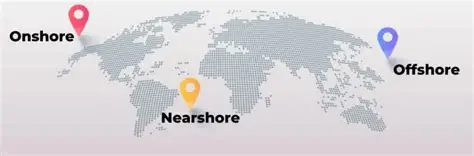
Outsourcing has become a global business strategy, allowing companies to access talent, reduce costs, and improve efficiency. Among the most common outsourcing models are offshore and nearshore outsourcing. While both involve working with external teams in different locations, they differ significantly in terms of distance, cost, communication, and overall management.
Understanding the difference between offshore and nearshore outsourcing is essential for businesses that want to choose the right model for their needs. Each approach has its advantages and trade-offs, and the best choice depends on factors such as budget, project complexity, and communication requirements.
In this article, we’ll explore what offshore and nearshore outsourcing are, how they differ, their benefits and challenges, and how to decide which is right for your business.
What Is Offshore Outsourcing?
Offshore outsourcing refers to hiring a service provider in a distant country, often on a different continent.
Common Offshore Destinations:
- India
- Philippines
- China
- Ukraine
These regions are popular due to lower labor costs and large talent pools.
Key Characteristics of Offshore Outsourcing
- Significant geographical distance
- Large time zone differences
- Lower operational costs
- Access to global talent
Benefits of Offshore Outsourcing
1. Cost Savings
Labor costs are typically much lower compared to domestic hiring.
2. Access to a Large Talent Pool
Companies can find highly skilled professionals worldwide.
3. Scalability
Offshore teams can be scaled quickly for large projects.
4. 24/7 Operations
Time zone differences allow continuous work cycles.
Challenges of Offshore Outsourcing
1. Communication Barriers
Language differences and cultural gaps can create misunderstandings.
2. Time Zone Differences
Coordination can be difficult when teams are far apart.
3. Quality Control
Maintaining consistent quality requires strong oversight.
4. Cultural Differences
Different work styles and expectations may affect collaboration.
What Is Nearshore Outsourcing?
Nearshore outsourcing involves hiring service providers in neighboring or nearby countries, usually within the same or similar time zones.
Examples:
- A company in Germany outsourcing to Poland
- A company in the U.S. outsourcing to Mexico
Key Characteristics of Nearshore Outsourcing
- Shorter geographical distance
- Minimal time zone differences
- Moderate cost savings
- Easier communication
Benefits of Nearshore Outsourcing
1. Better Communication
Similar languages and cultures improve collaboration.
2. Time Zone Alignment
Real-time communication is easier.
3. Faster Project Execution
Less delay in responses and decision-making.
4. Easier Travel
Teams can meet in person if needed.
Challenges of Nearshore Outsourcing
1. Higher Costs Than Offshore
Nearshore services are usually more expensive than offshore options.
2. Limited Talent Pool
Fewer options compared to global offshore markets.
3. Competitive Demand
Popular nearshore regions may have higher demand and pricing.
Offshore vs Nearshore: Key Differences
| Factor | Offshore Outsourcing | Nearshore Outsourcing |
|---|---|---|
| Location | Distant countries | Neighboring countries |
| Cost | Lower | Moderate |
| Time Zone | Large differences | Similar |
| Communication | More challenging | Easier |
| Talent Pool | Very large | Smaller |
| Travel | Difficult | Easier |
When to Choose Offshore Outsourcing
Offshore outsourcing is ideal when:
- Cost reduction is a top priority
- Large-scale projects require many resources
- 24/7 operations are beneficial
- The company can manage communication challenges
When to Choose Nearshore Outsourcing
Nearshore outsourcing is better when:
- Communication is critical
- Real-time collaboration is needed
- Projects are complex or fast-moving
- Cultural alignment is important
Cost Comparison: Offshore vs Nearshore
Offshore:
- Lowest labor costs
- Higher management and communication costs
Nearshore:
- Moderate labor costs
- Lower communication and coordination costs
The total cost depends on both direct and indirect expenses.
Impact on Business Operations
Offshore:
- Greater cost efficiency
- More management effort required
Nearshore:
- Better collaboration
- Faster decision-making
Choosing the right model affects productivity, quality, and timelines.
Hybrid Approach: Combining Offshore and Nearshore
Many companies use a hybrid outsourcing model.
Example:
- Offshore team for development
- Nearshore team for project management
This approach balances cost savings with effective communication.
Risks and How to Mitigate Them
Offshore Risks:
- Miscommunication
- Delays
- Quality issues
Mitigation:
- Clear documentation
- Strong SLAs
- Regular communication
Nearshore Risks:
- Higher costs
- Limited availability
Mitigation:
- Careful vendor selection
- Long-term partnerships
Future Trends in Offshore and Nearshore Outsourcing
Trends:
- Increased use of remote collaboration tools
- Growth of hybrid outsourcing models
- Rising demand for nearshore services
- Automation reducing reliance on location
Businesses are becoming more flexible in choosing outsourcing models.
How to Choose the Right Model
To decide between offshore and nearshore outsourcing, consider:
1. Budget
How much cost savings are required?
2. Communication Needs
Is real-time collaboration essential?
3. Project Complexity
Does the project require close coordination?
4. Timeline
Are fast responses critical?
5. Risk Tolerance
Can the business handle communication and cultural challenges?
Conclusion
Offshore and nearshore outsourcing are both valuable strategies, but they serve different purposes. Offshore outsourcing offers significant cost savings and access to global talent, while nearshore outsourcing provides better communication, collaboration, and efficiency.
The choice between the two depends on your business priorities, project requirements, and operational preferences. In many cases, a combination of both models can deliver the best results.
Ultimately, successful outsourcing is not about choosing the cheapest or closest option—it’s about finding the right balance between cost, quality, and collaboration.
- Arts
- Business
- Computers
- Juegos
- Health
- Home
- Kids and Teens
- Money
- News
- Personal Development
- Recreation
- Regional
- Reference
- Science
- Shopping
- Society
- Sports
- Бизнес
- Деньги
- Дом
- Досуг
- Здоровье
- Игры
- Искусство
- Источники информации
- Компьютеры
- Личное развитие
- Наука
- Новости и СМИ
- Общество
- Покупки
- Спорт
- Страны и регионы
- World

 English
 Russian
 French
 Portuguese
 Deutsch
 Turkish
 Dutch
Dutch
 Italiano
 Arabic
 Romaian
 Portuguese (Brazil)
 Greek
Greek