
How to practice daily?
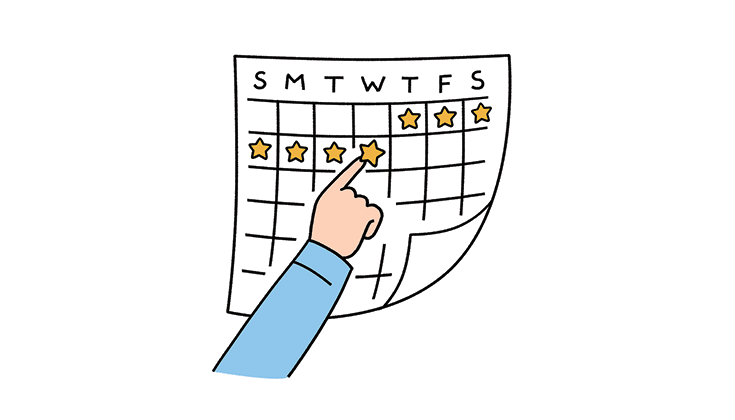
How to Practice Daily Without Burning Out, Falling Behind, or Lying to Yourself
Most people do not fail at daily practice because they lack discipline.
They fail because they misunderstand what practice actually is.
That misunderstanding starts early. School conditions us to associate practice with intensity:
-
long sessions
-
visible effort
-
measurable suffering
-
dramatic productivity
If it hurts, it counts.
If it feels easy, it must not be working.
Which is precisely why so many intelligent people build routines they cannot sustain for more than eleven days.
They mistake emotional excitement for structural durability.
I learned this the embarrassing way.
Several years ago, I became obsessed with self-improvement systems. Reading schedules. Learning frameworks. Skill acquisition models. I built elaborate color-coded calendars that looked impressive enough to belong inside a management consultant’s keynote presentation.
For approximately eight days, I performed like a machine.
Then reality intervened.
A late night disrupted the schedule. One missed session became two. The system collapsed almost instantly because it had been engineered for ideal conditions rather than actual human life.
That experience taught me something uncomfortable:
Daily practice is less about motivation than friction management.
The people who sustain practice for years are rarely operating at peak inspiration. They simply design environments where continuation becomes easier than avoidance.
And once you understand that, daily practice stops looking mystical.
It starts looking mechanical.
Daily Practice Is a Neurological Negotiation
Most advice about consistency sounds suspiciously theatrical.
“Want it badly enough.”
“Push harder.”
“Outwork everyone.”
“Stay hungry.”
This rhetoric survives because it feels emotionally satisfying.
It is also incomplete.
The brain is fundamentally an energy-conservation system. Every repeated behavior enters an internal cost-benefit analysis:
-
How difficult is this?
-
How predictable is the reward?
-
How much cognitive effort is required?
-
Is the routine stable?
-
Can this behavior become automated?
Daily practice succeeds when the brain stops classifying the activity as a recurring threat to energy reserves.
That transition matters more than raw willpower.
Because willpower depletes.
Systems stabilize.
The Biggest Mistake: Practicing Too Much Too Early
Ambitious beginners consistently sabotage themselves by starting at unsustainable intensity.
They attempt:
-
two-hour study blocks
-
seven-day workout schedules
-
massive reading quotas
-
aggressive language drills
-
impossible creative output goals
The logic feels reasonable:
“If I care deeply, I should commit aggressively.”
But the nervous system does not care about your inspirational monologue.
It cares about repeatability.
When practice generates overwhelming cognitive resistance, avoidance begins forming almost immediately.
Which is why many successful long-term practitioners start absurdly small.
Five minutes.
Ten pages.
One exercise.
A single paragraph.
This initially feels insulting to the ego. People worry tiny sessions are “not enough.”
But consistency compounds more effectively than heroic bursts followed by collapse.
A person practicing twenty focused minutes daily for a year will outperform someone alternating between obsessive intensity and total disappearance.
Usually by an enormous margin.
Your Environment Determines More Than Motivation Does
People overestimate internal psychology and underestimate architecture.
By architecture, I mean:
-
physical placement
-
accessibility
-
visual cues
-
environmental friction
-
default behaviors
Consider two scenarios.
Scenario One:
Your guitar sits inside a closet beneath stacked storage bins.
Scenario Two:
Your guitar rests on a stand beside your desk.
Which situation produces more practice over six months?
Not because of motivation.
Because of friction.
The same principle governs:
-
reading
-
coding
-
drawing
-
writing
-
language learning
-
meditation
-
fitness
Human behavior is astonishingly sensitive to environmental resistance.
This realization changed my own writing habits permanently. I used to rely on “feeling ready” before beginning work. Predictably, readiness became rare.
Then I simplified the environment:
-
document already open
-
distractions removed
-
notes visible
-
workspace stable
-
startup steps minimized
Output increased almost immediately.
Not because inspiration improved.
Because activation energy decreased.
Practice Requires Identity, Not Just Scheduling
Here is where many productivity systems quietly fail.
They treat practice as an external obligation instead of an internal identity structure.
There is a difference between:
“I am trying to write consistently”
and:
“I am a person who writes daily.”
The second formulation changes behavioral interpretation.
Missed sessions stop feeling like isolated scheduling problems. They begin conflicting with self-concept.
That creates psychological continuity.
Elite performers in nearly every field tend to internalize practice identity deeply:
-
athletes train because they are athletes
-
musicians practice because they are musicians
-
readers read because reading forms part of self-definition
This does not emerge overnight.
Identity develops through repeated evidence.
Each completed session becomes a small neurological vote reinforcing the narrative.
Motivation Is Wildly Overrated
Motivation is useful for starting.
It is terrible for maintaining.
People wait for emotional readiness because they assume consistent performers operate under permanent inspiration.
Usually the opposite is true.
Long-term practitioners become less emotionally dependent over time.
They rely more heavily on:
-
routines
-
environmental consistency
-
automatic triggers
-
reduced decision-making
-
behavioral momentum
This distinction becomes painfully obvious in creative work.
Writers who depend entirely on inspiration produce erratically. Writers who build procedural habits produce continuously.
The same applies to nearly every skill.
Professionals do not eliminate resistance.
They reduce negotiation.
The Best Daily Practice Sessions Feel Slightly Incomplete
This sounds counterintuitive until you experience it.
Many people end sessions at exhaustion:
-
mentally drained
-
cognitively overloaded
-
emotionally depleted
Then the brain begins associating practice with recovery cost.
A better strategy is stopping while momentum still exists.
That preserves psychological freshness.
The next session feels easier to initiate because the previous one ended before total depletion occurred.
Ernest Hemingway reportedly stopped writing mid-sentence for similar reasons. The unfinished momentum created a smoother reentry point the following day.
I accidentally discovered this while learning programming years ago. The days I quit before burnout produced dramatically better consistency than the days I tried to “maximize productivity.”
Apparently the brain prefers sustainable tension over catastrophic exhaustion.
Track Inputs, Not Just Outcomes
One of the fastest ways to destroy motivation is obsessing exclusively over results.
Results fluctuate unpredictably.
Skill acquisition is uneven.
Some days feel extraordinary.
Others feel pointless.
If your entire emotional system depends on visible progress, inconsistency becomes inevitable.
Instead, track controllable inputs:
-
minutes practiced
-
sessions completed
-
repetitions performed
-
pages studied
-
drills attempted
This creates psychological stability during slow growth phases.
Because there will be slow phases.
Plateaus are not evidence of failure. They are part of neurological consolidation.
The brain often improves invisibly before performance changes become externally measurable.
Daily Practice Should Adapt to Energy Levels
Rigid systems break under variable conditions.
Flexible systems survive.
This does not mean abandoning standards. It means creating multiple acceptable versions of practice.
For example:
-
ideal session
-
moderate session
-
minimum viable session
On high-energy days, perhaps you practice ninety minutes.
On exhausted days, maybe you do ten focused minutes instead of skipping entirely.
That continuity matters enormously.
Missing one day rarely destroys progress.
Breaking behavioral rhythm repeatedly often does.
The goal is preserving identity continuity, not achieving perfect intensity every single day.
Friction Hides in Unexpected Places
People usually notice obvious obstacles:
-
lack of time
-
fatigue
-
distractions
But hidden friction often matters more:
-
unclear goals
-
excessive setup
-
decision overload
-
performance anxiety
-
unrealistic standards
For instance, many aspiring readers fail to practice consistently because they spend more time choosing books than reading them.
Writers often stall because they attempt to produce flawless drafts immediately.
Language learners procrastinate because they fear sounding incompetent.
The friction is psychological, not logistical.
Identifying these invisible resistances changes everything.
Why Tiny Rituals Work So Well
The brain loves predictability.
Rituals create transition cues that reduce cognitive startup costs.
A ritual can be embarrassingly simple:
-
making coffee before studying
-
opening the same notebook
-
sitting in the same chair
-
playing instrumental music
-
reviewing yesterday’s notes first
Over time, these cues become associated with the target behavior itself.
The mind begins preparing automatically.
Athletes do this constantly. Musicians too. So do experienced writers, programmers, and researchers.
Rituals are not superstition.
They are neurological shortcuts.
Burnout Usually Starts Earlier Than You Think
Burnout rarely arrives dramatically.
It accumulates quietly through:
-
excessive intensity
-
lack of recovery
-
emotional perfectionism
-
unstable expectations
-
chronic guilt
Many people continue practicing technically while mentally detaching from the process.
Eventually the system collapses.
One lesson I learned the hard way: resentment is an early warning signal.
When practice begins feeling consistently punitive, something structural usually requires adjustment.
Maybe:
-
session length is too aggressive
-
goals are unrealistic
-
recovery is insufficient
-
comparison has become toxic
-
intrinsic enjoyment disappeared
Sustainable practice should feel demanding but survivable.
That balance matters.
Comparison Quietly Destroys Consistency
The internet creates dangerous benchmarking illusions.
You see:
-
twelve-hour study routines
-
impossible productivity screenshots
-
overnight transformation stories
-
exaggerated success narratives
And suddenly your own progress feels microscopic.
But most sustainable mastery looks profoundly uncinematic.
Quiet repetition.
Boring consistency.
Incremental refinement.
The people who improve long-term are often not the most intense performers in the room. They are the least interrupted.
That distinction is enormous.
What Daily Practice Actually Feels Like
This may disappoint some people.
But genuine long-term practice usually feels surprisingly ordinary.
Not euphoric.
Not cinematic.
Ordinary.
You sit down.
You begin.
Some sessions feel excellent.
Others feel mediocre.
You continue anyway.
Over months, the accumulated repetitions alter capability almost invisibly.
Then eventually you encounter a task that once felt impossible and realize it now feels manageable.
That moment tends to arrive quietly.
Not with fireworks.
Just reduced friction.
The Best Daily Practice Formula
If I had to reduce sustainable practice into one practical framework, it would look something like this:
Make the starting point absurdly easy.
Reduce environmental friction aggressively.
Practice before motivation becomes necessary.
Stop before total exhaustion.
Preserve behavioral continuity at all costs.
Measure consistency more than intensity.
Build identity through repetition.
Allow gradual escalation naturally.
Simple.
Not easy.
But simple.
The Final Lesson Most People Learn Too Late
People imagine mastery emerges from extraordinary effort.
Usually it emerges from ordinary effort repeated longer than most people tolerate.
That is simultaneously frustrating and liberating.
Because it means progress is less dependent on rare talent or endless motivation than many assume.
The challenge is not discovering the perfect system.
The challenge is constructing a life where returning tomorrow feels psychologically manageable.
Daily practice is ultimately a relationship with repetition.
Some people approach that relationship violently:
-
forcing
-
punishing
-
overwhelming themselves
Others learn to cooperate with it.
The second group almost always lasts longer.
And in long-term skill development, durability matters far more than temporary intensity.
That may be the most important lesson of all.
- Arts
- Business
- Computers
- Oyunlar
- Health
- Home
- Kids and Teens
- Money
- News
- Personal Development
- Recreation
- Regional
- Reference
- Science
- Shopping
- Society
- Sports
- Бизнес
- Деньги
- Дом
- Досуг
- Здоровье
- Игры
- Искусство
- Источники информации
- Компьютеры
- Личное развитие
- Наука
- Новости и СМИ
- Общество
- Покупки
- Спорт
- Страны и регионы
- World

 English
 Russian
 French
 Spanish
 Portuguese
 Deutsch
 Dutch
Dutch
 Italiano
 Arabic
 Romaian
 Portuguese (Brazil)
 Greek
Greek