
What Is a Master Franchise?
Most people think franchising is simple.
A business owner buys the rights to operate a branded location.
They pay a franchise fee.
They follow established systems.
They open the doors.
Customers arrive.
Revenue follows.
At least, that's the version most often discussed.
But franchising has another layer.
A much larger one.
A layer where the investor is not merely running a location. They are building an entire network.
Recruiting franchisees.
Supporting operators.
Expanding territories.
Driving regional growth.
In effect, they become something of a franchisor themselves.
This is the world of master franchising.
And for entrepreneurs seeking scale rather than a single-unit business, it can be one of the most fascinating opportunities in the franchise industry.
Yet it is also one of the least understood.
Master franchises involve bigger investments, broader responsibilities, and considerably greater risk. They offer substantial upside, but they demand a very different mindset than traditional franchise ownership.
The distinction matters.
Because buying a franchise and buying a master franchise are not simply different versions of the same investment.
They are fundamentally different business models.
What Is a Master Franchise?
A master franchise is a contractual arrangement in which a franchisor grants an individual or company the rights to develop and manage an entire geographic territory.
Rather than operating a single location, the master franchisee receives the authority to:
- Open company-owned locations
- Recruit franchisees
- Sell franchise rights
- Provide training and support
- Oversee regional development
- Collect certain franchise-related revenues
The territory may cover:
- A city
- A state
- Multiple states
- An entire country
- A specific international market
The scope depends on the agreement.
In practical terms, the master franchisee acts as an intermediary between the franchisor and local franchise owners.
This creates a layered business structure.
And that structure changes everything.
How Master Franchising Works
To understand master franchising, imagine a growing franchise brand entering a new market.
The franchisor faces a challenge.
Expanding directly requires:
- Market knowledge
- Local relationships
- Operational oversight
- Recruitment resources
Building all of that internally can be expensive and slow.
Instead, the company grants master franchise rights to a local entrepreneur.
That entrepreneur becomes responsible for developing the territory.
The franchisor gains growth.
The master franchisee gains significant commercial rights.
The relationship becomes a partnership built around expansion.
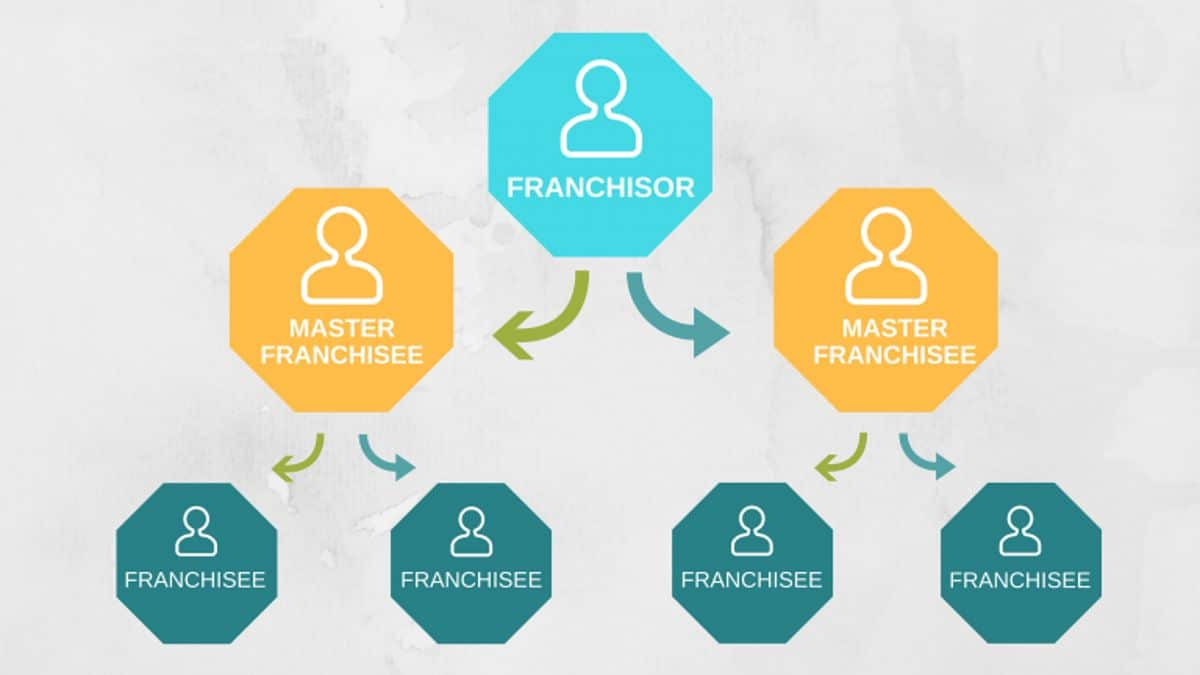
The Typical Structure
The hierarchy usually looks like this:
Franchisor
↓
Master Franchisee
↓
Individual Franchise Owners
↓
Customers
The master franchisee sits squarely in the middle.
That position creates both opportunity and responsibility.
Master Franchise vs Traditional Franchise
Many prospective investors struggle to understand the distinction between these models.
The differences are substantial.
| Factor | Traditional Franchise | Master Franchise |
|---|---|---|
| Primary Role | Operate a location | Develop a territory |
| Investment Level | Moderate | High |
| Revenue Sources | Unit performance | Multiple revenue streams |
| Geographic Scope | Single location or small territory | Large territory |
| Recruitment Responsibility | None | Significant |
| Franchise Sales Rights | No | Yes |
| Support Obligations | Limited | Extensive |
| Operational Complexity | Moderate | High |
A traditional franchise owner focuses primarily on customers.
A master franchisee focuses on franchisees and customers.
The complexity increases considerably.
Why Franchisors Use Master Franchise Agreements
Growth sounds attractive.
Managing growth is more difficult.
Master franchising helps solve several expansion challenges.
Local Expertise
Markets differ.
Consumer preferences vary.
Regulations change.
A local operator often understands nuances that a distant corporate team may overlook.
Faster Expansion
Master franchisees have strong incentives to grow territories quickly.
This can accelerate market penetration.
Reduced Corporate Burden
Instead of supporting dozens of franchisees directly, the franchisor works primarily with the master franchisee.
The structure simplifies oversight.
International Growth
Master franchising is particularly common in international expansion.
Operating in unfamiliar countries presents logistical and cultural challenges.
Local partners often improve execution.
Revenue Streams in a Master Franchise
One reason master franchising attracts experienced investors is the potential for diversified revenue.
Unlike traditional franchisees, master franchisees may earn income from multiple sources.
Franchise Sales
When new franchisees join the system, master franchisees often receive a portion of franchise fees.
Royalties
Ongoing royalty revenue may be shared between the franchisor and master franchisee.
Company-Owned Units
Some master franchisees operate locations directly.
These units generate traditional operating income.
Training and Support Fees
In certain arrangements, support-related revenue streams may also exist.
The result is a more complex financial structure.
And potentially a more scalable one.
The Responsibilities of a Master Franchisee
The opportunity sounds appealing.
The workload deserves equal attention.
Master franchisees often assume responsibilities such as:
- Recruiting franchisees
- Evaluating candidates
- Training operators
- Supporting locations
- Monitoring compliance
- Driving market growth
- Protecting brand standards
These obligations require substantial resources.
The role resembles business development, operations management, coaching, and leadership simultaneously.
It is rarely passive.
A Lesson I Learned From Speaking With Franchise Developers
Several years ago, I attended an industry event where franchise expansion executives discussed growth strategies.
One experienced developer offered an observation that has stayed with me.
He said:
"The mistake people make is thinking a master franchise is a bigger franchise. It isn't. It's a different business."
At first, the distinction seemed semantic.
Then he elaborated.
A single-unit franchise owner focuses on customers.
A master franchisee focuses on building an ecosystem.
Recruitment.
Support.
Leadership.
Expansion.
The skill sets overlap, but they are not identical.
That conversation changed how I evaluate master franchise opportunities.
The opportunity is not merely larger.
The role itself changes fundamentally.
Advantages of Master Franchising
The model offers several compelling benefits.
Greater Growth Potential
Territory development can create substantial scale.
Expansion opportunities often exceed those available to single-unit operators.
Multiple Revenue Sources
Diversification can improve long-term earnings potential.
Regional Market Control
Exclusive territories provide strategic advantages.
Competition within the brand network is often restricted.
Stronger Strategic Influence
Master franchisees frequently play a significant role in regional decision-making.
Their influence extends beyond individual locations.
Challenges and Risks
The rewards can be substantial.
The challenges can be equally substantial.
Higher Capital Requirements
Master franchise agreements often require significant investment.
Financial commitments can reach hundreds of thousands—or even millions—of dollars.
Recruitment Pressure
Growth expectations are typically built into agreements.
Territories must be developed according to schedule.
Failure to meet development targets can create problems.
Operational Complexity
Supporting multiple franchisees requires systems, staff, and expertise.
Complexity increases as networks grow.
Reputation Risk
Poor performance by franchisees can affect territory-wide results.
The master franchisee shares responsibility for maintaining standards.
Who Makes a Good Master Franchisee?
Not every successful franchise owner becomes a successful master franchisee.
The competencies differ.
Strong master franchise candidates often possess:
Leadership Skills
Managing people becomes central to the role.
Sales Experience
Recruiting franchisees requires effective communication and persuasion.
Financial Resources
Territory development requires capital.
Strategic Thinking
Growth plans must balance short-term execution and long-term objectives.
Operational Discipline
Consistency remains essential across expanding networks.
Experience helps.
Capability matters more.
Questions to Ask Before Investing
Prospective investors should conduct extensive due diligence.
Key questions include:
What Territory Is Included?
Geographic rights should be clearly defined.
What Development Targets Exist?
Growth obligations must be realistic.
How Are Royalties Shared?
Revenue structures vary significantly.
What Support Does the Franchisor Provide?
Training and guidance influence success.
What Is the Brand's Growth History?
Past performance offers valuable insight.
Master franchise agreements deserve careful evaluation.
The stakes are too high for assumptions.
Is a Master Franchise Right for You?
The answer depends on objectives.
If someone wants to operate a business directly, a traditional franchise may be a better fit.
If someone wants to build and manage a network, master franchising becomes more attractive.
The distinction is crucial.
One model emphasizes operations.
The other emphasizes expansion.
Neither is inherently superior.
Each serves different ambitions.
Conclusion: Master Franchising Is About Building Systems, Not Stores
At first glance, master franchising appears to be an amplified version of franchise ownership.
Bigger territory.
Bigger investment.
Bigger potential returns.
Yet that description misses something important.
Master franchising is not merely a larger franchise.
It is a leadership business.
A development business.
A growth business.
The focus shifts from serving customers directly to creating conditions that allow others to serve customers successfully.
That shift transforms the nature of the opportunity.
The most effective master franchisees understand this intuitively.
They recognize that their true product is not a restaurant, fitness center, service company, or retail outlet.
Their product is a network.
A system.
An ecosystem capable of expanding while maintaining consistency.
And perhaps that is what makes master franchising so intriguing.
It sits at the intersection of entrepreneurship and infrastructure.
Not simply building a business.
Building a framework through which many businesses can grow.
- Arts
- Business
- Computers
- Spellen
- Health
- Home
- Kids and Teens
- Money
- News
- Personal Development
- Recreation
- Regional
- Reference
- Science
- Shopping
- Society
- Sports
- Бизнес
- Деньги
- Дом
- Досуг
- Здоровье
- Игры
- Искусство
- Источники информации
- Компьютеры
- Личное развитие
- Наука
- Новости и СМИ
- Общество
- Покупки
- Спорт
- Страны и регионы
- World

 English
 Russian
 French
 Spanish
 Portuguese
 Deutsch
 Turkish
 Italiano
 Arabic
 Romaian
 Portuguese (Brazil)
 Greek
Greek