
What part of the brain controls creativity?
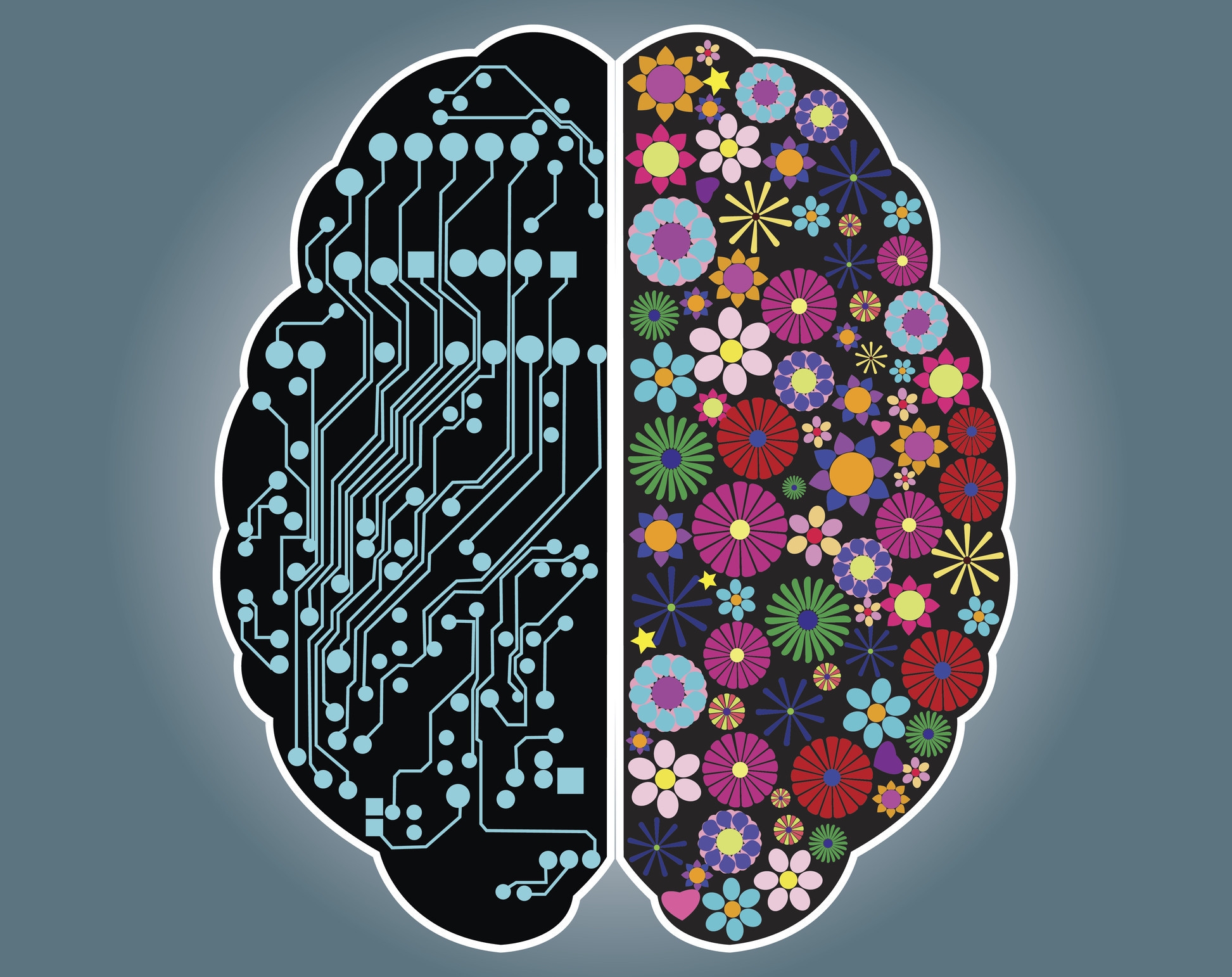
What Part of the Brain Controls Creativity?
Creativity is often treated like a magical substance.
A mysterious force.
A lightning strike reserved for artists, inventors, musicians, and the occasional eccentric genius who wakes up at three in the morning with an idea capable of changing a culture.
Yet the deeper we look into the brain, the stranger the story becomes.
Because creativity does not appear to live in a single place.
There is no hidden chamber behind the forehead. No “creative center” glowing like a neon sign inside the skull.
The brain refuses to cooperate with that simple narrative.
Instead, creativity emerges from conversation.
Not conversation between people.
Conversation between networks.
Electrical negotiations.
Temporary alliances.
Creative thought is less like a single musician playing a solo and more like an orchestra discovering a melody while performing it.
The question, then, is not merely what part of the brain controls creativity.
The more interesting question is why so many parts must work together before creativity can appear at all.
The Myth of the Creative Hemisphere
For decades, popular culture embraced a seductive idea.
Left-brained people were logical.
Right-brained people were creative.
The theory spread because it felt true.
Artists seemed different from accountants. Poets appeared different from engineers. The explanation was elegant enough to fit on a poster.
Reality turned out to be considerably messier.
While certain functions are more dominant in one hemisphere than the other, modern neuroscience shows creativity engages both sides of the brain extensively.
A songwriter improvising melodies recruits regions from both hemispheres.
A scientist generating hypotheses activates networks throughout the brain.
A designer solving visual problems relies on systems distributed across multiple areas.
Creativity is not confined to the right hemisphere.
It is distributed.
This discovery changed everything.
The search shifted from identifying a single creative location to understanding how different brain systems cooperate.
Creativity Lives in Networks, Not Regions
One lesson emerges repeatedly from neuroscience research.
Creative thinking depends less on isolated brain structures and more on communication between networks.
Three networks appear particularly important:
-
The Default Mode Network (DMN)
-
The Executive Control Network (ECN)
-
The Salience Network (SN)
Together, they form the foundation of creative cognition.
When these systems coordinate effectively, ideas emerge that are both original and useful.
Without cooperation, creativity often stalls.
Let's examine each one.
The Default Mode Network: Where Ideas Wander
The Default Mode Network becomes active when the mind drifts inward.
Daydreaming.
Imagining.
Remembering.
Visualizing possibilities.
Thinking about alternate futures.
For years, scientists believed this network represented inactivity because it became more active when people stopped focusing on external tasks.
Later, researchers realized the opposite.
The brain was incredibly busy.
Just busy internally.
The Default Mode Network includes regions such as:
-
Medial prefrontal cortex
-
Posterior cingulate cortex
-
Precuneus
-
Angular gyrus
These areas help generate mental simulations.
They connect memories.
They imagine scenarios.
They blend unrelated concepts.
This blending process sits near the heart of creativity.
When a novelist imagines a fictional world or an entrepreneur combines two unrelated business ideas, the Default Mode Network is heavily involved.
It produces raw material.
The sparks.
The fragments.
The unusual combinations.
But sparks alone are not enough.
The Executive Control Network: The Editor
Many people imagine creativity as pure freedom.
Unlimited possibility.
No rules.
Yet every creative breakthrough eventually faces a practical question:
Does this idea actually work?
That responsibility belongs largely to the Executive Control Network.
This network includes:
-
Dorsolateral prefrontal cortex
-
Posterior parietal cortex
If the Default Mode Network generates possibilities, the Executive Control Network evaluates them.
It acts like an internal editor.
A sculptor may imagine hundreds of forms.
The Executive Control Network helps determine which form deserves attention.
A composer may hear dozens of melodic variations.
The Executive Control Network helps select the strongest sequence.
Without evaluation, creativity becomes chaos.
Without imagination, evaluation becomes repetition.
Innovation requires both.
The Salience Network: The Switchboard Operator
The third major player receives less public attention but may be equally important.
The Salience Network.
Its primary regions include:
-
Anterior insula
-
Anterior cingulate cortex
This network acts like a switchboard operator.
Its job is deciding what deserves attention.
Thousands of thoughts pass through the mind every day.
Most vanish instantly.
Occasionally, something feels important.
Interesting.
Promising.
The Salience Network helps identify those moments.
It shifts attention between internal imagination and external focus.
In creative work, this ability becomes invaluable.
A musician hears an accidental note and recognizes potential.
A writer notices an unusual phrase and pauses.
An inventor observes an everyday inconvenience and suddenly sees opportunity.
The Salience Network often helps determine which signals survive long enough to become ideas.
The Prefrontal Cortex: Creativity's Command Center
Although creativity is distributed, one region appears repeatedly in research.
The prefrontal cortex.
Located behind the forehead, this area supports:
-
Planning
-
Decision-making
-
Goal management
-
Cognitive flexibility
-
Abstract thinking
Many neuroscientists consider it one of the most important contributors to creative behavior.
Creative individuals frequently demonstrate enhanced cognitive flexibility.
They can shift perspectives.
Reframe problems.
Generate alternative interpretations.
The prefrontal cortex plays a major role in these abilities.
Yet there is a fascinating paradox.
Sometimes creativity increases when parts of the prefrontal cortex become less active.
This phenomenon appears during improvisation.
What Happens During Improvisation?
Researchers studying jazz musicians uncovered something remarkable.
When experienced performers improvise, certain self-monitoring regions reduce activity.
Meanwhile, regions associated with self-expression become more active.
In simple terms:
The inner critic quiets down.
The creative voice gets louder.
This does not mean judgment disappears completely.
Rather, excessive filtering temporarily relaxes.
The musician stops asking whether every note is perfect.
The performer enters a state where ideas flow more freely.
Many writers, painters, and entrepreneurs describe similar experiences.
A period where creation precedes evaluation.
Generate first.
Judge later.
Neuroscience suggests this strategy may align with how the brain naturally supports creativity.
The Role of Memory in Creative Thinking
Creativity is often mistaken for invention from nothing.
The brain rarely works that way.
New ideas usually emerge from existing material.
Memories.
Experiences.
Observations.
Fragments gathered across years.
The hippocampus, a structure deeply involved in memory formation, plays an important role here.
Creative thinking frequently depends on retrieving information and recombining it in unexpected ways.
A filmmaker may draw from childhood memories.
A scientist may connect findings from unrelated fields.
A designer may merge influences collected over decades.
Originality often comes from recombination rather than creation from emptiness.
The brain functions less like a factory and more like a remix studio.
A Lesson I Learned While Studying Creativity
Several years ago, I spent weeks researching a complex project.
Every morning I sat down expecting breakthrough insights.
Nothing happened.
The harder I pushed, the worse the work became.
Then one afternoon I left my desk and went for a long walk.
No notebook.
No agenda.
No objective.
Halfway through the walk, connections started appearing.
Ideas that seemed unrelated suddenly aligned.
Problems that felt impossible became surprisingly simple.
The experience taught me something neuroscience later confirmed.
Creativity often emerges during oscillation.
Focus.
Release.
Focus again.
The brain needs periods of intense concentration, but it also benefits from moments when attention relaxes.
Many breakthroughs occur not while forcing solutions but while allowing networks to interact more freely.
This pattern appears repeatedly among artists, entrepreneurs, scientists, and inventors.
The lesson was simple.
Productivity and creativity are not identical.
Sometimes stepping away is part of the work.
Brain Regions Associated With Creativity
The following table summarizes major brain regions and their creative functions.
| Brain Region/Network | Primary Function | Role in Creativity |
|---|---|---|
| Default Mode Network | Internal thought and imagination | Generates ideas, associations, and mental simulations |
| Executive Control Network | Evaluation and planning | Refines, tests, and develops ideas |
| Salience Network | Attention switching | Identifies promising concepts |
| Prefrontal Cortex | Decision-making and flexibility | Supports problem-solving and innovation |
| Hippocampus | Memory formation and retrieval | Recombines experiences into novel ideas |
| Anterior Cingulate Cortex | Conflict monitoring | Helps detect unconventional solutions |
| Temporal Lobes | Knowledge processing | Contributes to insight and semantic associations |
| Parietal Cortex | Information integration | Combines diverse inputs into coherent concepts |
The table reveals a recurring theme.
No single area owns creativity.
Each contributes a piece.
Creativity emerges from the interaction.
Why Some People Seem More Creative
This question fascinates nearly everyone.
If creativity depends on the same brain structures we all possess, why do some individuals appear dramatically more creative?
Research points toward several possibilities.
Greater Network Connectivity
Highly creative individuals often demonstrate stronger communication between networks that are usually separated.
Ideas travel more freely.
Connections form more easily.
Unexpected associations become more common.
Higher Cognitive Flexibility
Creative people frequently shift perspectives faster.
They tolerate ambiguity.
They entertain multiple interpretations simultaneously.
Increased Openness
Psychological studies consistently link creativity with openness to experience.
Curiosity expands the brain's library of raw material.
More inputs create more opportunities for unusual combinations.
Persistence
Contrary to romantic myths, creativity often involves enormous effort.
Many successful creators produce large quantities of work before discovering exceptional ideas.
The brain becomes more creative through repeated engagement.
Practice matters.
A lot.
Can Creativity Be Trained?
The evidence suggests yes.
Creativity is not a fixed resource.
It behaves more like a skill.
Brain networks strengthen through use.
Several activities appear particularly beneficial.
Exposure to Diverse Experiences
Novel environments create new neural associations.
Travel.
Reading outside familiar subjects.
Learning new skills.
Cross-disciplinary exploration.
All increase the brain's inventory of potential connections.
Mind-Wandering
Unstructured thinking activates systems associated with creative insight.
This does not mean endless distraction.
It means allowing occasional space for reflection.
Creative Practice
Writing.
Drawing.
Music.
Design.
Problem-solving.
Regular creative activity reinforces neural pathways involved in innovation.
Sleep
Sleep contributes significantly to memory consolidation and idea integration.
Many insights emerge after periods of rest because the brain continues processing information offline.
The Neuroscience of Insight
Occasionally creativity arrives suddenly.
A solution appears fully formed.
An answer materializes seemingly from nowhere.
Psychologists call this the insight experience.
The famous "aha" moment.
Brain imaging studies suggest insight involves rapid integration of previously disconnected information.
Before conscious awareness catches up, neural systems may already be assembling the solution.
The conscious mind experiences the result as sudden revelation.
The process feels mysterious.
The underlying mechanisms are biological.
Still remarkable.
Just biological.
What Artificial Intelligence Reveals About Human Creativity
Recent developments in artificial intelligence have renewed interest in the neuroscience of creativity.
Machines can generate text, images, music, and code.
This raises a provocative question.
If creativity can be simulated, what makes human creativity unique?
One possible answer lies in lived experience.
Human creativity emerges from emotion, memory, embodiment, relationships, sensory experience, and personal history.
The brain does not merely process information.
It experiences existence.
Every memory alters future associations.
Every conversation reshapes perception.
Every loss and every discovery becomes creative fuel.
Creativity is not simply output.
It is transformation.
The brain continuously transforms experience into possibility.
That process remains profoundly human.
The Real Answer to the Creativity Question
So what part of the brain controls creativity?
The most accurate answer is one many people initially find unsatisfying.
No single part does.
Creativity is not governed by a lone structure.
It emerges from collaboration among multiple regions and networks.
The Default Mode Network imagines.
The Executive Control Network evaluates.
The Salience Network directs attention.
The prefrontal cortex manages flexibility.
The hippocampus supplies memory.
Other regions contribute constantly.
Creativity is a conversation.
A negotiation.
A temporary alliance among systems that evolved for many different purposes.
And perhaps that is the most inspiring discovery of all.
The brain did not evolve a dedicated creativity machine.
Instead, creativity emerged as a byproduct of connection.
The ability to link experiences.
To merge memories.
To imagine alternatives.
To see what is not yet visible.
Every creative breakthrough begins the same way.
Not with a single brain region lighting up.
But with multiple systems deciding, however briefly, to work together.
That cooperation is where originality lives.
And every human brain possesses the machinery required to begin.
- Arts
- Business
- Computers
- الألعاب
- Health
- الرئيسية
- Kids and Teens
- مال
- News
- Personal Development
- Recreation
- Regional
- Reference
- Science
- Shopping
- Society
- Sports
- Бизнес
- Деньги
- Дом
- Досуг
- Здоровье
- Игры
- Искусство
- Источники информации
- Компьютеры
- Личное развитие
- Наука
- Новости и СМИ
- Общество
- Покупки
- Спорт
- Страны и регионы
- World

 English
 Russian
 French
 Spanish
 Portuguese
 Deutsch
 Turkish
 Dutch
Dutch
 Italiano
 Romaian
 Portuguese (Brazil)
 Greek
Greek