
What Is the Best POS System for Retail? The Better Question Is Why You’re Asking.
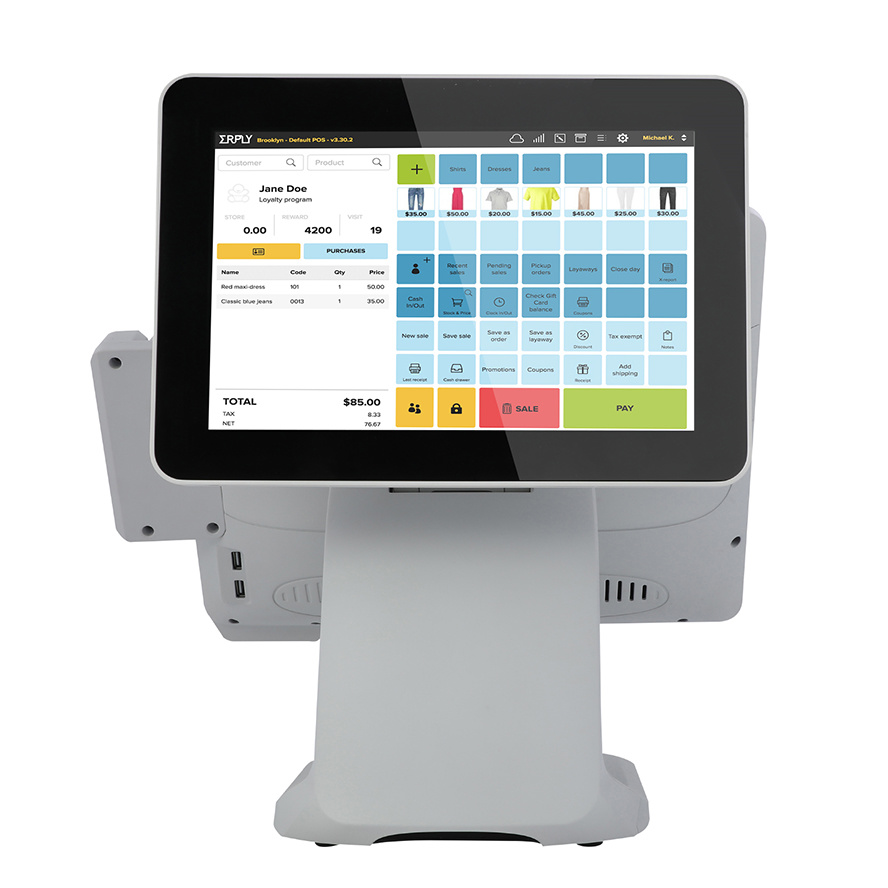
A retailer once told me she needed a new POS system because checkout lines were getting longer.
Reasonable concern. Long lines frustrate customers. Frustrated customers leave. Leaving customers rarely become loyal customers.
But after spending time in the store, watching shoppers move through the aisles, observing employee interactions, and examining sales data, a different picture emerged.
The checkout process wasn't the problem.
Inventory accuracy was.
Employees were constantly leaving the sales floor to verify stock availability. Customers were waiting for answers. Transactions were delayed before they ever reached the register. The POS system wasn't failing at checkout; it was failing as an information system.
That experience reinforced a lesson I have encountered repeatedly in retail: businesses often shop for POS systems as if they are purchasing payment technology. In reality, they are purchasing a retail operating system.
Which brings us to the question everyone asks:
What is the best POS system for retail?
The answer is simultaneously simple and frustrating.
There is no universally best POS system.
There is only the best POS system for a particular retail strategy.
And that distinction matters more than most software feature lists would suggest.
Why the POS System Has Become the Center of Retail
Retail used to be organized around products.
Today it is organized around information.
A customer discovers a product on social media, checks inventory online, visits a store, purchases through a mobile device, earns loyalty points, and later requests a return through another channel.
The customer experiences one journey.
The retailer manages dozens of interconnected systems.
The POS system sits in the middle of that complexity.
Modern retail POS platforms now handle:
- Payment processing
- Inventory management
- Customer profiles
- Loyalty programs
- Omnichannel fulfillment
- Employee management
- Sales reporting
- Demand forecasting
Notice something interesting.
Actual payment processing represents only one item on the list.
Yet many businesses still evaluate POS systems primarily on payment capabilities.
That's like evaluating a modern automobile solely by examining the steering wheel.
The steering wheel matters.
It just isn't the whole vehicle.
What Makes a Retail POS System Truly Great?
Before comparing providers, it helps to understand the criteria.
The strongest retail POS systems excel across five dimensions.
Inventory Visibility
Retail success depends on having the right product in the right place at the right time.
A POS system should provide real-time inventory updates across every channel.
When inventory data becomes unreliable, nearly everything else suffers.
Omnichannel Integration
Customers no longer distinguish between online and offline shopping.
Retailers who maintain separate systems for stores and e-commerce often create friction.
The best POS platforms create a single source of truth.
Customer Intelligence
A transaction reveals what was purchased.
A sophisticated POS system reveals who purchased it, how often, and under what circumstances.
That distinction creates opportunities for personalization.
Ease of Use
Complex software frequently impresses buyers and frustrates employees.
Retail environments move quickly.
Training time matters.
Usability matters.
Speed matters.
Scalability
A POS system should support growth rather than constrain it.
What works for a single boutique may become problematic across twenty locations.
The smartest retailers evaluate not only today's requirements but tomorrow's ambitions.
The Leading POS Systems for Retail
Several platforms consistently dominate industry discussions.
Each has strengths. Each has tradeoffs.
And each reflects a different philosophy about retail management.
Shopify POS: Best for Omnichannel Retail
Shopify built its reputation online.
Then it expanded into physical retail.
That history matters.
Because Shopify's greatest strength is not payment processing. It is channel integration.
Retailers can manage:
- Online stores
- Physical locations
- Inventory
- Customer records
- Marketing campaigns
from a unified ecosystem.
For brands operating across multiple channels, the convenience is significant.
A customer who purchases online appears in the same database as a customer who purchases in-store.
The result feels less like managing separate businesses and more like managing a single brand.
Strengths
- Exceptional e-commerce integration
- Unified inventory management
- Strong app ecosystem
- Easy scalability
Potential Drawbacks
- Advanced features often require higher-tier plans
- Heavy dependence on Shopify's ecosystem
Square for Retail: Best for Small Businesses
Square transformed payment acceptance by making it accessible.
Its retail platform continues that philosophy.
The software is intuitive, affordable, and quick to implement.
For independent retailers, simplicity can be a competitive advantage.
Many small business owners do not have dedicated IT departments.
They need systems that work immediately.
Square excels in that environment.
Strengths
- Easy setup
- Transparent pricing
- Strong mobile functionality
- User-friendly interface
Potential Drawbacks
- Less customization for large enterprises
- Advanced inventory capabilities are limited compared with enterprise competitors
Lightspeed Retail: Best for Inventory-Heavy Operations
Some retailers manage hundreds of SKUs.
Others manage tens of thousands.
The difference matters.
Lightspeed has built much of its reputation around sophisticated inventory management.
Businesses with extensive catalogs often appreciate the depth of control available.
Features include:
- Purchase order management
- Vendor tracking
- Inventory forecasting
- Multi-location inventory visibility
For specialty retailers, these capabilities can become extremely valuable.
Strengths
- Advanced inventory tools
- Detailed reporting
- Multi-store management
Potential Drawbacks
- Learning curve for new users
- Higher costs than entry-level solutions
Clover: Best for Hardware Flexibility
Many POS vendors tightly control hardware configurations.
Clover takes a somewhat different approach.
Its ecosystem includes multiple device formats:
- Mobile terminals
- Countertop systems
- Self-service options
- Portable checkout devices
Retailers gain flexibility in designing customer experiences.
That flexibility can be particularly useful for businesses experimenting with store layouts or mobile checkout strategies.
Strengths
- Versatile hardware options
- Reliable payment processing
- Flexible deployment
Potential Drawbacks
- Pricing complexity
- Features vary by provider relationship
Vend by Lightspeed: Best for Boutique Retail
Boutique retailers often require something different from national chains.
Their emphasis tends to be:
- Customer relationships
- Curated assortments
- Personalized service
Vend's interface reflects those priorities.
The platform balances inventory management with customer engagement tools, making it attractive for specialty stores.
Strengths
- Clean interface
- Strong customer management
- Effective inventory controls
Potential Drawbacks
- Fewer enterprise-level capabilities
- May not scale as efficiently for very large operations
Retail POS Comparison Table
| Feature | Shopify POS | Square for Retail | Lightspeed Retail | Clover | Vend by Lightspeed |
|---|---|---|---|---|---|
| Best For | Omnichannel brands | Small retailers | Inventory-heavy retailers | Flexible operations | Boutiques |
| Ease of Use | 9/10 | 10/10 | 7/10 | 8/10 | 9/10 |
| Inventory Management | 8/10 | 7/10 | 10/10 | 7/10 | 8/10 |
| E-commerce Integration | 10/10 | 8/10 | 8/10 | 6/10 | 7/10 |
| Scalability | 10/10 | 7/10 | 9/10 | 8/10 | 7/10 |
| Hardware Flexibility | 7/10 | 8/10 | 8/10 | 10/10 | 7/10 |
| Reporting & Analytics | 9/10 | 8/10 | 10/10 | 8/10 | 8/10 |
| Typical Retail Fit | Growing brands | Independent stores | Multi-location operations | Mixed-format retail | Specialty shops |
The table is useful.
But tables can be misleading.
Retail technology decisions rarely hinge on a single score.
They hinge on strategic alignment.
The Most Expensive POS Mistake Retailers Make
Retailers frequently compare features before comparing objectives.
This sequence seems logical.
It often isn't.
A business pursuing rapid omnichannel growth should prioritize integration.
A specialty retailer managing thousands of products should prioritize inventory sophistication.
A local boutique may prioritize ease of use.
The mistake occurs when businesses buy software designed for someone else's strategy.
More features do not automatically create more value.
In fact, unnecessary complexity frequently reduces value.
That reality becomes especially apparent during implementation.
The Hidden Cost Nobody Mentions
When retailers evaluate POS systems, they naturally focus on subscription fees.
That is understandable.
It is also incomplete.
The larger costs often involve:
- Employee training
- Data migration
- Workflow disruption
- Integration projects
- Process redesign
These costs are less visible than monthly invoices.
Yet they often determine whether implementation succeeds.
I once worked with a retailer that selected a highly sophisticated platform because leadership wanted every advanced capability available.
The software was impressive.
Employees hated it.
Training took months. Adoption lagged. Operational efficiency declined before eventually recovering.
The technology wasn't the problem.
The mismatch was.
Since then, I have become skeptical of feature abundance as a decision criterion.
Retail success rarely comes from having the most features.
It comes from having the right ones.
How AI Is Reshaping Retail POS Systems
The next evolution of POS platforms extends beyond transactions.
Artificial intelligence is beginning to influence:
- Demand forecasting
- Inventory replenishment
- Product recommendations
- Labor scheduling
- Customer segmentation
These developments shift the role of the POS system.
Historically, POS platforms documented what happened.
Increasingly, they help predict what may happen next.
That distinction transforms the software from a reporting tool into a decision-support system.
Retailers who understand this shift gain access to a different kind of competitive advantage—not merely operational efficiency, but strategic foresight.
So, What Is the Best POS System for Retail?
If your business revolves around omnichannel commerce, Shopify POS is difficult to ignore.
If simplicity and affordability are priorities, Square remains compelling.
If inventory complexity defines your operation, Lightspeed often stands out.
If hardware flexibility matters, Clover deserves consideration.
If boutique retailing is your focus, Vend offers a strong balance of functionality and usability.
Yet the most important insight is this:
The best POS system is not necessarily the one with the longest feature list, the most advanced analytics, or the largest market share.
It is the one that amplifies your retail strategy.
Conclusion: Stop Buying a POS System. Start Designing a Retail System.
The language retailers use often reveals how they think.
When someone says they are shopping for a POS system, the phrase implies a checkout solution.
That framing is outdated.
Modern POS platforms influence inventory, customer relationships, fulfillment, marketing, staffing, forecasting, and profitability.
They shape how information moves through the organization.
Which means choosing a POS system is no longer a technology decision.
It is a business model decision.
And perhaps that is the most provocative realization of all.
Retailers spend enormous energy debating products, promotions, and pricing strategies. Yet the system that connects all those decisions frequently receives far less strategic attention.
The best retailers understand otherwise.
They recognize that a POS system is not simply where commerce happens.
It is where retail intelligence begins.
- Arts
- Business
- Computers
- Jogos
- Health
- Início
- Kids and Teens
- Money
- News
- Personal Development
- Recreation
- Regional
- Reference
- Science
- Shopping
- Society
- Sports
- Бизнес
- Деньги
- Дом
- Досуг
- Здоровье
- Игры
- Искусство
- Источники информации
- Компьютеры
- Личное развитие
- Наука
- Новости и СМИ
- Общество
- Покупки
- Спорт
- Страны и регионы
- World

 English
 Russian
 French
 Spanish
 Portuguese
 Deutsch
 Turkish
 Dutch
Dutch
 Italiano
 Arabic
 Romaian
 Greek
Greek