
The Importance of Preschool: Laying the Foundation for Lifelong Learning
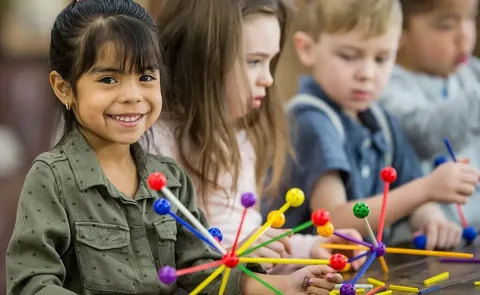
Preschool is often seen as the first formal experience for young children before they enter elementary school. Though the term “preschool” may seem simple, the impact of early childhood education on a child’s development is profound. This article explores the significance of preschool, its benefits, and how it contributes to a child's overall growth and success in school and beyond.
What is Preschool?
Preschool, also referred to as nursery school, pre-kindergarten (Pre-K), or early childhood education, generally serves children ages 3 to 5. It is a structured learning environment designed to prepare young children for the academic, social, and emotional demands of primary school. In preschool, children participate in a variety of activities such as play, arts and crafts, singing, basic math, and reading activities, which all help to promote cognitive, physical, and social development.
The Benefits of Preschool
-
Cognitive Development: Preschool provides a structured environment that introduces children to the basics of reading, writing, and mathematics. Through activities like storytelling, letter recognition, and simple counting games, children begin to develop essential academic skills that will form the foundation for future learning. Early exposure to concepts such as shapes, colors, and numbers can give children a head start in their educational journey.
-
Social Skills: One of the most important aspects of preschool is socialization. Children learn to interact with their peers in a safe, supportive environment. They begin to develop crucial social skills such as sharing, taking turns, working in groups, and resolving conflicts. These experiences build empathy, cooperation, and communication, which are vital skills for navigating both school and life.
-
Emotional Development: Preschool also plays a key role in helping children regulate their emotions. Being in an environment where they learn to follow routines, listen to teachers, and work with others, children begin to understand the value of patience, persistence, and managing their feelings in different situations. Emotional resilience developed in preschool can help children handle the challenges they will encounter as they grow older.
-
School Readiness: One of the main goals of preschool is to prepare children for kindergarten and beyond. Research shows that children who attend preschool are more likely to perform better academically and socially in later years. They are often more confident, have better language skills, and are more familiar with the structure of a classroom setting. Preschool helps smooth the transition into elementary school by familiarizing children with school routines and expectations.
-
Parental Support: For many parents, sending their child to preschool provides them with the opportunity to return to work or focus on other personal responsibilities. Moreover, preschool often serves as a valuable resource for parents, offering guidance on child development and parenting strategies. It fosters a collaborative relationship between parents and educators, which can lead to better outcomes for the child.
Types of Preschool Programs
Preschool programs can vary in structure, philosophy, and educational approach. Some common types of preschool include:
-
Montessori: This approach is based on the teachings of Dr. Maria Montessori, emphasizing self-directed learning and exploration. Children are encouraged to learn at their own pace, choosing from a variety of hands-on activities designed to foster independence and critical thinking.
-
Reggio Emilia: Originating in Italy, this method emphasizes creativity, exploration, and collaboration. It focuses on the child as a “competent” learner, with an emphasis on arts, language, and play as a means of expression.
-
Waldorf: This approach values imagination, storytelling, and play as central to learning. It emphasizes a holistic development that includes intellectual, emotional, and physical growth, and follows a rhythm that mimics natural life cycles.
-
Traditional Preschool: This is the most common form of preschool, offering a structured curriculum with a focus on early literacy, numeracy, and social skills. Teachers provide guidance through both play-based and teacher-led activities.
The Role of Play in Preschool
Play is at the heart of most preschool programs. Research has shown that play is not only fun for young children but is also essential for their overall development. Through play, children practice problem-solving, creativity, and motor skills. They learn about their world, test their ideas, and develop relationships with others.
Types of play in preschool can include:
- Free Play: Children choose their activities, such as building blocks or role-playing games, which allows for imagination and social interaction.
- Guided Play: Teachers might provide certain materials or set up scenarios that encourage children to explore specific concepts.
- Structured Play: This could involve activities such as organized games, group songs, or art projects that help children follow directions and work with others.
Choosing the Right Preschool
When selecting a preschool for your child, it’s important to consider several factors, including:
- Curriculum and teaching philosophy: Does the preschool’s approach align with your educational values?
- Classroom environment: Is it clean, safe, and nurturing? Does it provide a variety of engaging activities?
- Teacher qualifications: Are the teachers experienced and trained in early childhood education?
- Location and schedule: Is the preschool convenient and does its schedule fit with your family’s needs?
- Social and emotional support: Does the preschool focus on nurturing children’s social and emotional well-being, along with their academic development?
Conclusion
Preschool is much more than just a stepping stone to kindergarten; it is a critical period in a child’s development that lays the groundwork for future learning. It supports the development of cognitive, social, emotional, and physical skills, while helping children grow into confident, capable learners. Whether through structured academic activities, guided play, or social interaction, preschool offers young children the tools they need to succeed in life and learning.
Choosing the right preschool can make all the difference in a child’s academic and social journey. By giving children the chance to explore, grow, and engage with others in a safe, supportive environment, preschool helps shape the foundations of lifelong learning and success.
- Arts
- Business
- Computers
- الألعاب
- Health
- الرئيسية
- Kids and Teens
- مال
- News
- Personal Development
- Recreation
- Regional
- Reference
- Science
- Shopping
- Society
- Sports
- Бизнес
- Деньги
- Дом
- Досуг
- Здоровье
- Игры
- Искусство
- Источники информации
- Компьютеры
- Личное развитие
- Наука
- Новости и СМИ
- Общество
- Покупки
- Спорт
- Страны и регионы
- World

 English
 Russian
 French
 Spanish
 Portuguese
 Deutsch
 Turkish
 Dutch
Dutch
 Italiano
 Romaian
 Portuguese (Brazil)
 Greek
Greek