
What role does technology play in business forecasting?
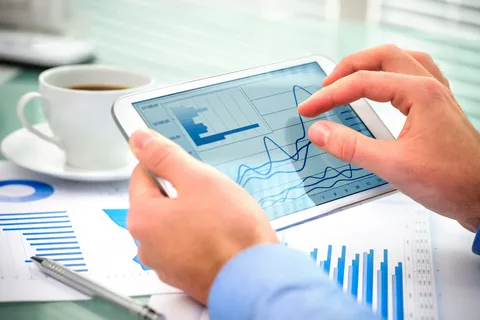
In today’s rapidly evolving business landscape, forecasting has become an indispensable tool for guiding strategic decisions, resource allocation, and long-term planning. The process of forecasting relies on predicting future trends based on historical data and market analysis. However, the sheer volume of data and the complexity of factors influencing business outcomes can make accurate forecasting a challenging task. This is where technology, particularly advanced software and artificial intelligence (AI) tools, comes into play. Technology has revolutionized the way businesses approach forecasting, making it faster, more accurate, and highly actionable.
The Importance of Technology in Business Forecasting
Traditional forecasting methods often involved manual data collection, spreadsheet models, and basic statistical techniques. While these methods provided valuable insights, they were time-consuming, prone to errors, and limited in their ability to process large, complex datasets. With the advent of modern technology, businesses can now tap into powerful tools that automate and optimize forecasting processes.
Technology enhances forecasting in several key ways:
-
Handling Big Data: Today’s businesses generate vast amounts of data from various sources—sales transactions, customer interactions, market trends, and social media activity, among others. Advanced forecasting software and AI tools can handle this data overload, extracting relevant insights in real time. These tools are equipped with the capacity to process and analyze large datasets far more efficiently than traditional methods, leading to faster and more accurate forecasts.
-
Identifying Patterns and Trends: One of the core functions of forecasting is identifying patterns and trends within historical data that can be used to predict future outcomes. AI-powered tools excel at recognizing hidden patterns, correlations, and trends that might be overlooked by human analysts. Through machine learning algorithms, these tools continuously improve their accuracy as they process more data, leading to better predictions over time.
-
Real-Time Insights: Traditional forecasting often relied on periodic updates, leaving businesses with outdated information by the time decisions needed to be made. With technology, particularly real-time data analytics, businesses can continuously monitor key performance indicators (KPIs) and adjust forecasts accordingly. This allows companies to stay agile and responsive to market changes, enhancing their ability to act on fresh insights quickly.
-
Scenario Modeling and Simulation: Advanced forecasting software enables businesses to create multiple forecasting scenarios based on different assumptions. This helps in understanding how various factors—such as changes in market demand, shifts in supply chains, or economic fluctuations—could impact business outcomes. By simulating different scenarios, businesses can prepare for a range of possible futures, making them more resilient to uncertainty.
-
Improving Accuracy and Reducing Bias: One of the challenges with traditional forecasting methods was the potential for human bias, particularly when interpreting historical data or making subjective assumptions. AI tools, on the other hand, use algorithms to remove or reduce these biases by relying on data-driven insights rather than human intuition. As a result, forecasts generated through AI-powered tools tend to be more accurate and objective, leading to better decision-making.
AI and Machine Learning in Forecasting
At the forefront of technological advancements in business forecasting are artificial intelligence (AI) and machine learning (ML). These technologies allow businesses to move beyond simple trend analysis and engage in more sophisticated predictive modeling.
-
Machine Learning: ML algorithms analyze historical data to identify patterns and learn from them, improving their predictions over time. For example, in retail forecasting, ML models can predict which products are likely to be in high demand based on customer behavior, regional preferences, and seasonal trends.
-
Deep Learning: A more advanced subset of machine learning, deep learning, can process vast amounts of unstructured data such as images, audio, and text. This allows businesses to forecast based on a broader set of variables, from customer sentiment on social media to geopolitical events that might impact global markets.
-
Natural Language Processing (NLP): NLP algorithms help businesses analyze unstructured data from sources such as news articles, social media posts, and customer reviews. This can provide valuable insights into market sentiment and trends, offering a more comprehensive view for forecasting.
Benefits of Technology in Forecasting
The integration of advanced forecasting tools brings several tangible benefits to businesses:
-
Increased Efficiency: Automation of data collection and analysis speeds up the forecasting process, reducing the time spent on manual tasks and allowing businesses to focus on strategy and decision-making.
-
Better Decision-Making: With more accurate, data-driven insights at their disposal, business leaders can make informed decisions, optimize resources, and identify growth opportunities with greater precision.
-
Cost Savings: By improving forecasting accuracy, businesses can minimize waste, reduce inventory costs, and avoid overproduction or stockouts. This leads to more efficient operations and cost savings.
-
Enhanced Competitive Advantage: Companies using advanced forecasting technology can anticipate market shifts and customer needs more effectively than competitors who rely on outdated methods. This helps businesses stay ahead of the curve in a highly competitive marketplace.
Conclusion
In the modern business environment, technology plays an essential role in enhancing the forecasting process. Advanced software and AI tools not only streamline the collection and analysis of vast datasets but also provide businesses with real-time insights, improve accuracy, and reduce biases. By leveraging machine learning, deep learning, and other AI technologies, companies can make more informed decisions, stay agile, and ultimately achieve a competitive edge. As businesses continue to evolve, the role of technology in forecasting will only become more vital, enabling organizations to thrive in a dynamic and unpredictable market.
- Arts
- Business
- Computers
- Oyunlar
- Health
- Home
- Kids and Teens
- Money
- News
- Personal Development
- Recreation
- Regional
- Reference
- Science
- Shopping
- Society
- Sports
- Бизнес
- Деньги
- Дом
- Досуг
- Здоровье
- Игры
- Искусство
- Источники информации
- Компьютеры
- Личное развитие
- Наука
- Новости и СМИ
- Общество
- Покупки
- Спорт
- Страны и регионы
- World

 English
 Russian
 French
 Spanish
 Portuguese
 Deutsch
 Dutch
Dutch
 Italiano
 Arabic
 Romaian
 Portuguese (Brazil)
 Greek
Greek