
What is a Startup, and How Does it Differ from a Traditional Business?
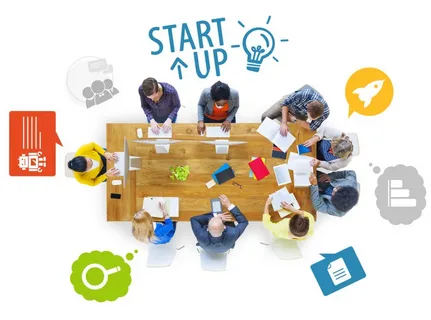
In today’s fast-paced and ever-evolving business landscape, the term startup has become a buzzword, often used to describe dynamic and disruptive companies. But what exactly is a startup, and how does it differ from a traditional business? While both types of companies are established with the goal of generating profit, the ways in which they operate, scale, and innovate differ significantly.
What is a Startup?
A startup is a newly established company focused on developing a unique product, service, or solution to meet a specific market need. Startups are designed to scale rapidly, often with the goal of reaching significant market share or achieving a high valuation in a relatively short period. Unlike traditional businesses, which might focus on steady, incremental growth, startups tend to operate with a higher level of risk and a more aggressive growth strategy.
Startups are often founded by entrepreneurs with a vision for disrupting existing industries or solving problems in innovative ways. These companies are typically fueled by investment from venture capitalists, angel investors, or crowdfunding, allowing them to rapidly expand their operations and market presence.
How Does a Startup Differ from a Traditional Business?
While startups and traditional businesses both share the ultimate goal of profitability, there are several key differences that set them apart.
1. Growth and Scaling
The primary distinction between a startup and a traditional business is the speed and scale of growth. Startups are specifically designed to scale rapidly, often through technology or a unique value proposition. This scalability is central to their business model, which relies on quickly capturing a large customer base or expanding into new markets.
In contrast, traditional businesses often follow a more measured and incremental growth path. They may prioritize long-term stability over rapid expansion and are typically less focused on achieving exponential growth within a short time frame.
2. Innovation and Disruption
Startups are typically built around innovation, aiming to disrupt existing industries or create entirely new ones. They often develop products or services that are highly innovative, solving problems in ways that have never been done before. This drive for innovation often leads to the creation of breakthrough technologies or entirely new business models, such as the sharing economy (e.g., Uber or Airbnb).
Traditional businesses, on the other hand, tend to focus on maintaining and improving existing products and services. While they may innovate to some degree, their primary goal is usually to sustain their market position rather than radically disrupt the status quo.
3. Risk and Uncertainty
Startups operate under extreme uncertainty and face a high level of risk. Many startups fail in the early stages due to factors such as market competition, funding challenges, or product-market fit issues. However, their founders are often willing to take these risks in exchange for the potential of high returns. As a result, startups are more likely to pivot or change direction multiple times before finding a successful business model.
Traditional businesses, in contrast, tend to operate in more stable and predictable environments. They may not face the same level of uncertainty, as they often build on established products, services, and customer bases. Traditional businesses generally have more time to adjust their strategies and are not as pressured to scale quickly.
4. Funding and Financial Structure
Startups often rely on external funding from venture capitalists, angel investors, or crowdfunding to fuel their rapid growth. These investors are looking for high returns, which creates a sense of urgency for the startup to scale quickly and become profitable. The financial structure of a startup is typically more complex, involving multiple rounds of funding and a focus on achieving high valuations.
Traditional businesses, in contrast, are usually self-funded or rely on more traditional forms of financing such as bank loans or revenue from operations. Their financial structure is typically less volatile, and they often prioritize profitability over the pursuit of rapid growth.
5. Organizational Structure
Startups tend to have a flat organizational structure, with fewer layers of management. This allows for greater flexibility and quicker decision-making. Employees in startups often wear multiple hats, contributing to various aspects of the business and playing a key role in shaping the company’s direction.
Traditional businesses, on the other hand, often have more hierarchical organizational structures, with clearly defined roles and responsibilities. Decision-making can be slower, and there is typically a more established chain of command.
Conclusion
A startup is a newly established company designed to scale quickly, often under conditions of extreme uncertainty, and focused on creating innovative products or services to meet market needs. Startups aim for rapid growth and market disruption, relying on external funding and a flexible organizational structure to fuel their ambitions. In contrast, traditional businesses often prioritize steady growth, stability, and sustainability, operating in more predictable markets and with a more structured approach to management. Both types of companies play important roles in the economy, but they operate in fundamentally different ways.
- Arts
- Business
- Computers
- Games
- Health
- Home
- Kids and Teens
- Money
- News
- Personal Development
- Recreation
- Regional
- Reference
- Science
- Shopping
- Society
- Sports
- Бизнес
- Деньги
- Дом
- Досуг
- Здоровье
- Игры
- Искусство
- Источники информации
- Компьютеры
- Личное развитие
- Наука
- Новости и СМИ
- Общество
- Покупки
- Спорт
- Страны и регионы
- World

 Russian
 French
 Spanish
 Portuguese
 Deutsch
 Turkish
 Dutch
Dutch
 Italiano
 Arabic
 Romaian
 Portuguese (Brazil)
 Greek
Greek