
How Do I Determine the Right Price for My Product?
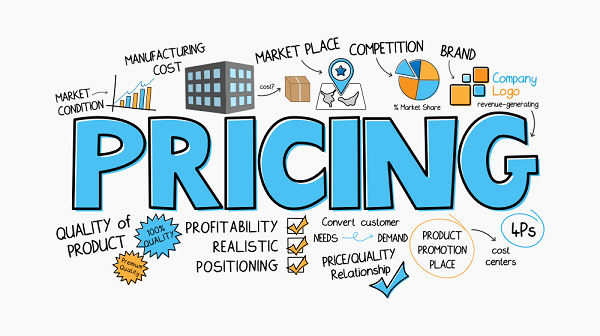
Pricing is one of the most important strategic decisions any business makes. Set your price too high, and you risk losing customers to competitors. Set it too low, and you might not cover your costs or may even undervalue your product. Determining the right price is a balancing act that requires careful consideration of costs, market demand, customer psychology, and competitive dynamics.
This article explores proven methods and practical steps to help businesses determine the right price for their products.
1. Start with Your Costs
Before anything else, you must understand your cost structure. Pricing below your costs is unsustainable.
-
Fixed Costs: Expenses that don’t change with production (rent, salaries, utilities).
-
Variable Costs: Expenses tied directly to production (raw materials, packaging, shipping).
-
Total Cost per Unit = (Fixed Costs ÷ Units Produced) + Variable Cost per Unit.
Example: If fixed costs are $50,000 per month and variable costs are $20 per product, producing 10,000 units means:
-
Fixed cost per unit = $50,000 ÷ 10,000 = $5
-
Total cost per unit = $5 + $20 = $25
Any price below $25 would be unprofitable. This establishes your minimum pricing floor.
2. Analyze Customer Willingness to Pay
While costs establish the floor, customer demand sets the ceiling. Customers only buy when they perceive the value exceeds the price.
Ways to measure willingness to pay:
-
Surveys & Interviews: Ask customers what they would expect to pay.
-
A/B Testing: Offer the same product at different prices to different customer segments.
-
Historical Data: Review past promotions or competitor benchmarks.
If customers see your product as premium or unique, you can charge more. If it’s seen as a commodity, you may need to compete on price.
3. Understand Competitor Pricing
Your product doesn’t exist in isolation. Customers often compare before making a purchase.
-
Price Matching: Position your product close to competitor averages.
-
Premium Pricing: Charge more if your product offers superior features, design, or brand reputation.
-
Penetration Pricing: Price lower to quickly capture market share.
Example: Starbucks charges more than local cafés because of its brand, convenience, and customer experience—even though the base product (coffee) is widely available.
4. Factor in Market Conditions
Economic conditions heavily influence what customers are willing or able to pay.
-
Boom Markets: Customers may be less price-sensitive, allowing higher margins.
-
Recessions: Consumers become more price-conscious, favoring budget options.
-
Global Events: Supply chain shortages, currency fluctuations, or regulatory changes may force adjustments.
For example, during high inflation, companies often raise prices gradually rather than in sharp increments to avoid customer backlash.
5. Use Proven Pricing Strategies
There are several structured approaches businesses use to set prices:
-
Cost-Plus Pricing: Add a markup percentage to your cost per unit. (E.g., $25 cost + 40% markup = $35 selling price.)
-
Value-Based Pricing: Price based on the perceived value to customers, not just cost. Luxury goods often use this approach.
-
Dynamic Pricing: Adjust prices in real-time based on demand (used by airlines, hotels, and ride-sharing apps).
-
Psychological Pricing: $9.99 feels more affordable than $10 due to customer perception.
-
Bundle Pricing: Combine products at a discount to increase overall sales.
6. Account for Your Business Goals
Your pricing strategy should align with your overall objectives:
-
Maximizing Profit: Focus on margins, possibly at the expense of volume.
-
Growing Market Share: Set lower prices initially to attract customers.
-
Premium Positioning: Price high to signal quality or exclusivity.
-
Survival Mode: During downturns, cover costs to stay afloat, even at slim margins.
For example, Tesla balances profitability with its mission of accelerating electric vehicle adoption.
7. Consider Customer Psychology
Human behavior often defies pure logic. Pricing can influence perception.
-
Charm Pricing: $4.99 feels significantly cheaper than $5.
-
Anchor Pricing: Showing a higher-priced option makes the mid-tier choice seem more affordable.
-
Decoy Pricing: Offering three pricing tiers nudges customers toward the middle option.
-
Premium Effect: Some customers equate higher prices with higher quality.
Understanding these dynamics helps you frame prices more effectively.
8. Test and Iterate
Pricing isn’t static—it should evolve as markets and products change.
-
Pilot Programs: Test new pricing models in small markets before rolling out.
-
Monitor Key Metrics: Track conversion rates, sales volume, profit margins, and customer churn.
-
Adjust Regularly: Don’t be afraid to refine prices as you learn.
Example: SaaS companies often test different subscription tiers and adjust based on adoption patterns.
9. Don’t Forget Distribution and Channels
How you sell your product affects its pricing.
-
Direct-to-Consumer (DTC): Cuts out middlemen, enabling more competitive pricing.
-
Retail: Retailers add their own markups, raising final prices.
-
Online Marketplaces: Platforms like Amazon charge fees that must be factored into pricing.
A brand selling both in retail stores and online must ensure consistency while accounting for different cost structures.
10. Evaluate Long-Term Impact
Short-term price cuts may boost sales but can hurt long-term brand positioning.
-
Discount Dependency: Customers may wait for sales rather than pay full price.
-
Brand Dilution: Frequent discounts may weaken a premium brand image.
-
Profitability Risks: Aggressive pricing wars can erode margins across an industry.
It’s important to balance immediate revenue goals with long-term brand sustainability.
Final Thoughts
Determining the right price for your product isn’t a one-time decision—it’s an ongoing process that blends data, strategy, and psychology. The best pricing strategies consider costs, customer demand, competitors, and broader market forces while aligning with company objectives.
By starting with costs, analyzing customer willingness to pay, studying competitors, applying structured pricing strategies, and continuously testing and adjusting, businesses can set prices that attract customers, sustain profitability, and reinforce brand positioning.
Remember: pricing is both a science and an art.
- Arts
- Business
- Computers
- الألعاب
- Health
- الرئيسية
- Kids and Teens
- مال
- News
- Personal Development
- Recreation
- Regional
- Reference
- Science
- Shopping
- Society
- Sports
- Бизнес
- Деньги
- Дом
- Досуг
- Здоровье
- Игры
- Искусство
- Источники информации
- Компьютеры
- Личное развитие
- Наука
- Новости и СМИ
- Общество
- Покупки
- Спорт
- Страны и регионы
- World

 English
 Russian
 French
 Spanish
 Portuguese
 Deutsch
 Turkish
 Dutch
Dutch
 Italiano
 Romaian
 Portuguese (Brazil)
 Greek
Greek