
What is a Good Credit Score?
What is a Good Credit Score?
When it comes to personal finance, few numbers carry as much weight as your credit score. This three-digit figure can influence your ability to borrow money, the interest rates you receive, and even your chances of renting an apartment or landing certain jobs. But what exactly is a "good" credit score, and how can you achieve one?
Understanding Credit Scores
A credit score is a numerical representation of your creditworthiness, based on your credit history. In the U.S., the most widely used scoring models are FICO and VantageScore, both of which range from 300 to 850. The higher your score, the more likely you are to be viewed as a responsible borrower.
What Is Considered a Good Credit Score?
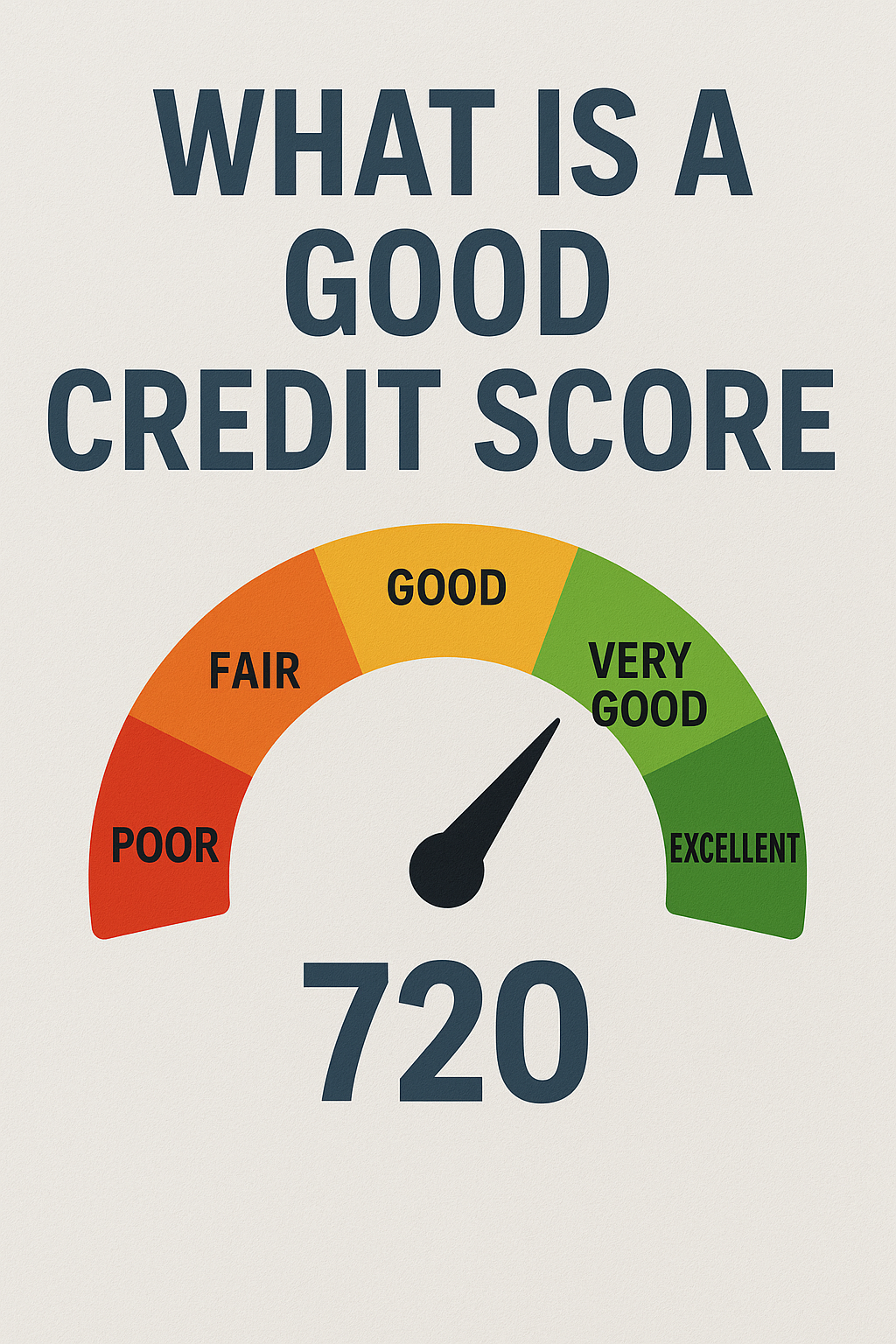
While exact cutoffs vary slightly between scoring models, here’s a common breakdown:
-
Excellent (800 – 850): Exceptional credit history, making you eligible for the best rates and offers.
-
Very Good (740 – 799): Above-average borrower, usually offered competitive interest rates.
-
Good (670 – 739): Considered acceptable by most lenders; you’ll likely qualify for loans and credit cards with decent terms.
-
Fair (580 – 669): Some lenders may approve you, but you may face higher interest rates and fees.
-
Poor (300 – 579): Significant risk for lenders; approval is difficult and comes with steep costs.
In most cases, a score of 670 or higher is generally seen as "good."
Why a Good Credit Score Matters
A good credit score can open financial doors and save you money in the long run. With a higher score, you’re more likely to:
-
Qualify for loans and credit cards with better terms.
-
Secure lower interest rates, which can save thousands over the life of a loan.
-
Enjoy higher credit limits, giving you more financial flexibility.
-
Improve housing opportunities, as landlords often check credit.
-
Build trust with employers in industries where financial responsibility matters.
How to Build and Maintain a Good Credit Score
Improving your credit score takes time and consistency, but it’s achievable with smart habits:
-
Pay bills on time – Late payments are one of the biggest factors lowering scores.
-
Keep credit utilization low – Aim to use less than 30% of your available credit.
-
Maintain a long credit history – Older accounts add to your credibility.
-
Limit hard inquiries – Applying for too many new accounts at once can hurt your score.
-
Diversify your credit mix – Having both revolving credit (like credit cards) and installment loans (like car loans) can help.
The Bottom Line
A "good" credit score typically starts around 670, but the higher you go, the more financial opportunities you’ll unlock. By paying bills on time, managing debt wisely, and building a strong credit history, you can steadily climb the credit score ladder—and enjoy the financial freedom that comes with it.
Would you like me to make this article SEO-optimized for a blog (with keywords, meta description, and headings structured for search engines), or should I keep it more reader-friendly and simple?
- Arts
- Business
- Computers
- Παιχνίδια
- Health
- Κεντρική Σελίδα
- Kids and Teens
- Money
- News
- Personal Development
- Recreation
- Regional
- Reference
- Science
- Shopping
- Society
- Sports
- Бизнес
- Деньги
- Дом
- Досуг
- Здоровье
- Игры
- Искусство
- Источники информации
- Компьютеры
- Личное развитие
- Наука
- Новости и СМИ
- Общество
- Покупки
- Спорт
- Страны и регионы
- World

 English
 Russian
 French
 Spanish
 Portuguese
 Deutsch
 Turkish
 Dutch
Dutch
 Italiano
 Arabic
 Romaian
 Portuguese (Brazil)