
What Is the Difference Between Debt and Equity Financing?
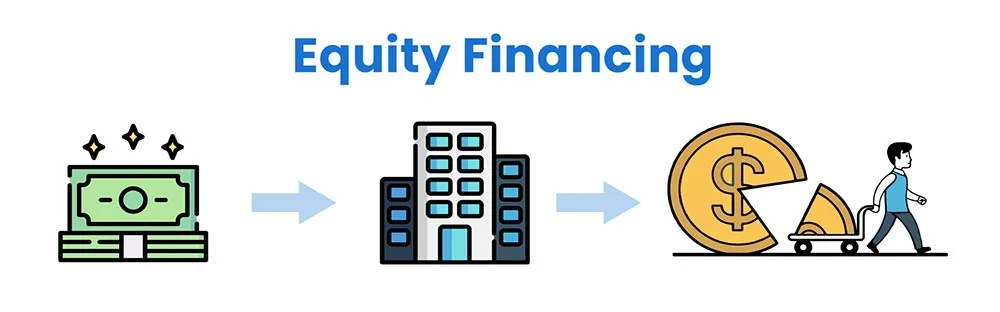
What Is the Difference Between Debt and Equity Financing?
Raising capital is one of the most important challenges faced by businesses at every stage of growth. Whether a company is a small startup or a large corporation, it often needs external funding to launch products, expand operations, invest in technology, or enter new markets. Two of the most common ways to raise this capital are debt financing and equity financing.
Although both methods provide businesses with the funds they need, they differ significantly in terms of cost, risk, ownership, control, and long-term impact. Understanding the differences between debt and equity financing is essential for entrepreneurs, managers, and investors when making financial decisions.
This article explains what debt and equity financing are, how they work, their advantages and disadvantages, and how businesses choose between them.
Understanding Debt Financing
What Is Debt Financing?
Debt financing occurs when a business borrows money and agrees to repay it over time, usually with interest. The borrowed funds must be paid back according to a fixed schedule, regardless of whether the business is profitable.
Common forms of debt financing include:
-
Bank loans
-
Business lines of credit
-
Bonds
-
Credit cards
-
Government or institutional loans
In debt financing, the lender does not gain ownership in the business. The relationship is purely contractual: the business receives money now and promises repayment later.
Key Features of Debt Financing
-
Repayment Obligation
The business must repay the principal amount plus interest within a specified period. -
Interest Cost
Interest is the cost of borrowing and varies depending on risk, creditworthiness, and market conditions. -
No Ownership Dilution
Lenders do not receive shares or voting rights. -
Fixed Terms
Loan terms, such as interest rate and repayment schedule, are defined in advance.
Advantages of Debt Financing
1. Retention of Ownership and Control
Business owners maintain full ownership and decision-making power since lenders do not gain equity.
2. Predictable Costs
Fixed repayment schedules make it easier to plan cash flow and budgets.
3. Tax Benefits
Interest payments are often tax-deductible, reducing the effective cost of borrowing.
4. Suitable for Profitable Businesses
Established companies with steady cash flows can manage regular repayments effectively.
Disadvantages of Debt Financing
1. Mandatory Repayment
Debt must be repaid even if the business is struggling or losing money.
2. Cash Flow Pressure
Regular repayments can strain cash flow, especially for young or seasonal businesses.
3. Risk of Default
Failure to repay can lead to penalties, damaged credit, or even bankruptcy.
4. Collateral Requirements
Lenders may require assets as collateral, putting business property at risk.
Understanding Equity Financing
What Is Equity Financing?
Equity financing involves raising capital by selling ownership shares in the business to investors. Instead of repayment, investors receive an ownership stake and may earn returns through dividends or appreciation in the company’s value.
Common sources of equity financing include:
-
Angel investors
-
Venture capital firms
-
Private equity investors
-
Crowdfunding platforms
-
Public stock offerings (IPOs)
In equity financing, investors become partial owners of the business.
Key Features of Equity Financing
-
Ownership Sharing
Investors receive equity, which represents a percentage of the company. -
No Mandatory Repayment
There is no obligation to repay the invested capital. -
Profit Sharing
Investors may receive dividends or returns when the company grows or is sold. -
Shared Risk
If the business fails, investors typically lose their investment.
Advantages of Equity Financing
1. No Debt Burden
Since there are no loan repayments, equity financing reduces financial pressure on cash flow.
2. Lower Financial Risk
The business is not legally required to return investor funds.
3. Access to Expertise and Networks
Many equity investors provide mentorship, strategic advice, and valuable connections.
4. Ideal for High-Growth Startups
Companies with limited cash flow but high growth potential benefit from equity financing.
Disadvantages of Equity Financing
1. Loss of Ownership and Control
Founders must share decision-making authority with investors.
2. Profit Sharing
Future profits must be shared, which can be costly if the company becomes highly successful.
3. Complex Legal and Regulatory Process
Equity deals often involve detailed contracts, valuations, and compliance requirements.
4. Potential Conflicts
Different visions between founders and investors can lead to disagreements.
Key Differences Between Debt and Equity Financing
| Aspect | Debt Financing | Equity Financing |
|---|---|---|
| Ownership | No ownership given | Ownership is shared |
| Repayment | Mandatory repayment with interest | No repayment required |
| Risk to Business | Higher financial risk | Lower financial risk |
| Control | Retained by owners | Shared with investors |
| Cost | Interest payments | Share of future profits |
| Cash Flow Impact | Regular outflows | No fixed payments |
| Tax Benefits | Interest often deductible | No tax deduction |
| Suitability | Stable, profitable firms | Startups, high-growth firms |
How Businesses Choose Between Debt and Equity Financing
Choosing between debt and equity financing depends on several factors:
1. Stage of the Business
-
Startups often rely on equity financing due to limited cash flow.
-
Established businesses may prefer debt to avoid ownership dilution.
2. Cash Flow Stability
-
Predictable cash flows support debt repayments.
-
Uncertain cash flows favor equity financing.
3. Risk Tolerance
-
Risk-averse owners may avoid debt.
-
Owners confident in growth may accept equity dilution.
4. Cost Considerations
-
Debt is usually cheaper in the short term.
-
Equity may be more expensive long term if the business grows significantly.
5. Control Preferences
-
Owners who value control prefer debt.
-
Owners open to shared governance may choose equity.
Combining Debt and Equity Financing
Many businesses use a hybrid approach, combining both debt and equity financing. This strategy balances risk, control, and cost by:
-
Using equity to fund early growth
-
Adding debt once cash flow stabilizes
This mix is often referred to as a company’s capital structure.
Conclusion
Debt and equity financing are two fundamental ways businesses raise capital, each with distinct characteristics, benefits, and risks. Debt financing allows companies to retain ownership but creates repayment obligations and financial pressure. Equity financing reduces repayment risk and provides strategic support but requires sharing ownership and profits.
There is no universally “better” option. The right choice depends on a company’s stage, financial stability, growth goals, and tolerance for risk and control sharing. By understanding the differences between debt and equity financing, businesses can make informed decisions that support long-term success and sustainability.
- Arts
- Business
- Computers
- Giochi
- Health
- Home
- Kids and Teens
- Money
- News
- Personal Development
- Recreation
- Regional
- Reference
- Science
- Shopping
- Society
- Sports
- Бизнес
- Деньги
- Дом
- Досуг
- Здоровье
- Игры
- Искусство
- Источники информации
- Компьютеры
- Личное развитие
- Наука
- Новости и СМИ
- Общество
- Покупки
- Спорт
- Страны и регионы
- World

 English
 Russian
 French
 Spanish
 Portuguese
 Deutsch
 Turkish
 Dutch
Dutch
 Arabic
 Romaian
 Portuguese (Brazil)
 Greek
Greek