
What Is A/B Testing in Advertising?
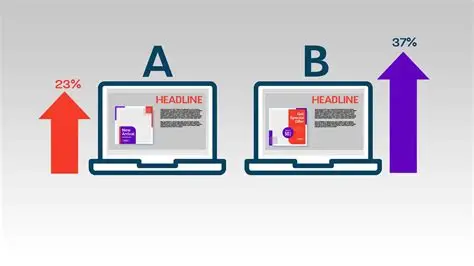
In modern advertising, assumptions about what will work are no longer enough. Consumer behavior is complex, platforms are dynamic, and competition for attention is intense. What resonates with one audience may fail with another. To address this uncertainty, advertisers use A/B testing—a systematic approach to comparing variations of ads to determine which performs better.
A/B testing, also called split testing, allows advertisers to make decisions based on data rather than intuition. By testing different elements of an ad—headlines, visuals, calls to action, or entire campaigns—marketers can optimize performance, increase engagement, and maximize return on investment.
This article explores A/B testing in advertising in depth. It explains what it is, how it works, which elements to test, how to analyze results, and how it fits into broader advertising strategies. A/B testing is essential for anyone looking to create data-driven, high-performing ads in today’s competitive marketing environment.
What Is A/B Testing?
A/B testing is a controlled experiment in which two or more versions of an advertisement (or ad element) are shown to comparable audiences to measure which performs better. One version is the "control" (original), and the other is the "variant" (changed version). Performance metrics are tracked to determine which version achieves the desired outcome.
In essence, A/B testing isolates variables to understand their impact. This scientific approach removes guesswork from advertising decisions and allows continuous improvement.
Why A/B Testing Matters in Advertising
A/B testing is critical because it helps advertisers:
-
Optimize engagement, clicks, and conversions
-
Identify which messaging resonates with audiences
-
Reduce wasted ad spend
-
Make data-driven decisions instead of relying on intuition
-
Improve overall campaign performance over time
Without testing, advertisers may assume certain strategies work when in reality, small adjustments could yield significantly better results.
Key Principles of A/B Testing
Successful A/B testing relies on several core principles:
1. Isolation of variables
Only one element should be changed between versions at a time (for simple A/B tests). This ensures results can be attributed to that specific change.
2. Random assignment
Audience members should be randomly assigned to control or variant groups to minimize bias.
3. Statistical significance
Tests should collect enough data to confirm that observed differences are unlikely due to chance.
4. Consistency
Tests should run under similar conditions, avoiding external factors that could skew results.
Following these principles ensures that A/B testing delivers reliable, actionable insights.
Elements to Test in Advertising
Almost any component of an advertisement can be tested. Common elements include:
Headlines
Headlines often determine whether users engage with an ad. Testing different wordings, tones, or benefit statements can reveal what captures attention most effectively.
Visuals
Images, videos, graphics, and color schemes play a crucial role in ad performance. Visual variations can significantly influence engagement and recall.
Calls to Action (CTAs)
CTA wording, placement, and style can be tested to see which prompts users to act. Small wording changes like “Buy Now” vs. “Get Yours Today” may have measurable impacts.
Copy Length and Style
The tone, length, and format of ad copy can be optimized through testing. Short, punchy copy may work better on social media, while detailed copy may perform better in email or landing pages.
Offer or Incentives
Testing different offers, discounts, or benefits allows advertisers to see which motivates action most effectively.
Targeting and Audience Segments
A/B testing is not limited to creative elements. Testing which audience segments respond best helps refine targeting strategies and reduce wasted ad spend.
How to Set Up an A/B Test
Setting up an A/B test involves several steps:
1. Define the objective
Clearly state what you want to learn, such as increasing click-through rate, conversions, or engagement.
2. Choose the variable to test
Select a single element (headline, image, CTA) to change in the variant ad.
3. Create the control and variant
Develop the original ad and the modified version for testing.
4. Split your audience randomly
Ensure equal and unbiased distribution between control and variant groups.
5. Run the test
Deploy the ads simultaneously under similar conditions to ensure comparability.
6. Measure results
Track performance metrics based on your objective (clicks, conversions, engagement, etc.).
7. Analyze and conclude
Determine which version performs better and implement the findings in your campaign.
Tools for A/B Testing in Advertising
A variety of platforms and tools make A/B testing accessible:
-
Google Ads: Offers built-in split testing for search and display campaigns
-
Facebook Ads Manager: Allows testing of creatives, audiences, and placements
-
Email Marketing Platforms: Tools like Mailchimp or HubSpot provide A/B testing features
-
Landing Page Builders: Platforms like Unbounce or Instapage enable testing variations of page copy and design
Using these tools simplifies the testing process and ensures accurate measurement.
Interpreting Results
Understanding results is key to effective A/B testing. Metrics must align with the original objective, and differences should be statistically significant.
Statistical Significance
Statistical significance determines whether observed differences are likely real rather than random. Larger sample sizes and more impressions increase reliability.
Actionable Insights
Once a winning variant is identified, implement the changes across campaigns. Avoid overgeneralizing from a single test; context matters.
Multivariate Testing
While A/B testing focuses on one variable at a time, multivariate testing examines multiple elements simultaneously. This approach is useful for complex ads where interactions between elements may impact performance.
Multivariate testing requires larger sample sizes but can provide deeper insights into ad optimization.
Benefits of A/B Testing
A/B testing offers multiple advantages:
-
Data-driven optimization improves ROI
-
Reduces assumptions and guesswork
-
Enhances audience understanding
-
Encourages iterative improvement
-
Builds confidence in advertising decisions
By continuously testing and refining, advertisers can consistently improve campaign outcomes.
Challenges and Limitations
A/B testing has limitations:
-
Small sample sizes may lead to unreliable results
-
External factors (seasonality, platform changes) can influence outcomes
-
Testing too many variables at once can cause confusion
-
Results may not generalize to other audiences or channels
Recognizing these challenges ensures tests are designed and interpreted appropriately.
Best Practices for A/B Testing in Advertising
1. Test one element at a time (for simple tests)
2. Ensure sufficient sample size to achieve statistical significance
3. Use clear, measurable objectives
4. Run tests long enough to capture consistent patterns
5. Document learnings for future campaigns
6. Combine A/B testing with audience insights for maximum relevance
7. Continuously iterate and refine campaigns
Following best practices ensures that A/B testing drives meaningful improvements.
A/B Testing Across Advertising Channels
A/B testing is relevant across multiple channels:
-
Social Media Ads: Test visuals, headlines, and CTAs
-
Search Ads: Test headlines, descriptions, and ad extensions
-
Email Campaigns: Test subject lines, content, and sending times
-
Display and Programmatic Ads: Test banners, copy, and placements
Each channel may require adjustments to testing methodology, but the principles remain the same.
The Role of A/B Testing in the Customer Journey
A/B testing helps optimize each stage of the customer journey:
-
Awareness: Test messaging that grabs attention
-
Consideration: Test copy and visuals that educate and persuade
-
Conversion: Test CTAs, offers, and landing pages for maximum action
Testing across the funnel ensures consistent performance improvement.
Case Study Examples
Example 1: Headline Testing
A company tests two headlines on a social media ad: “Lose Weight Fast” vs. “Achieve Your Fitness Goals.” The second variant achieves higher engagement due to a more positive and aspirational tone.
Example 2: CTA Testing
An e-commerce brand tests “Shop Now” versus “Get Yours Today.” The latter generates more conversions, showing the impact of phrasing and urgency.
Example 3: Visual Testing
A display ad uses two images of the same product: one with a plain background and one in a lifestyle setting. The lifestyle image generates higher click-through rates, highlighting the importance of context.
Ethical Considerations in A/B Testing
Ethical A/B testing ensures that experiments do not mislead or harm audiences. Advertisers should avoid:
-
Deceptive messaging
-
Manipulative urgency
-
Exploiting vulnerable populations
Transparency and integrity are essential to maintain trust while testing.
The Future of A/B Testing
The future of A/B testing includes:
-
Integration with AI to predict high-performing variants
-
Real-time testing across multiple channels
-
Personalized testing based on individual user behavior
-
Continuous iteration to maximize efficiency and ROI
As advertising becomes increasingly data-driven, A/B testing will remain a core optimization tool.
Conclusion
A/B testing is a critical tool for modern advertisers. By systematically comparing ad variations, marketers can make data-driven decisions that improve engagement, conversions, and return on investment. Testing headlines, visuals, copy, CTAs, and targeting strategies helps remove guesswork and maximize performance.
A/B testing is not a one-time activity—it is an ongoing process of learning, refinement, and optimization. Advertisers who embrace testing and data-driven decision-making will consistently outperform those who rely solely on intuition.
In today’s competitive advertising environment, A/B testing is essential for creating high-performing, audience-focused campaigns.
- Arts
- Business
- Computers
- Giochi
- Health
- Home
- Kids and Teens
- Money
- News
- Personal Development
- Recreation
- Regional
- Reference
- Science
- Shopping
- Society
- Sports
- Бизнес
- Деньги
- Дом
- Досуг
- Здоровье
- Игры
- Искусство
- Источники информации
- Компьютеры
- Личное развитие
- Наука
- Новости и СМИ
- Общество
- Покупки
- Спорт
- Страны и регионы
- World

 English
 Russian
 French
 Spanish
 Portuguese
 Deutsch
 Turkish
 Dutch
Dutch
 Arabic
 Romaian
 Portuguese (Brazil)
 Greek
Greek