
What Is Profit vs. Revenue?
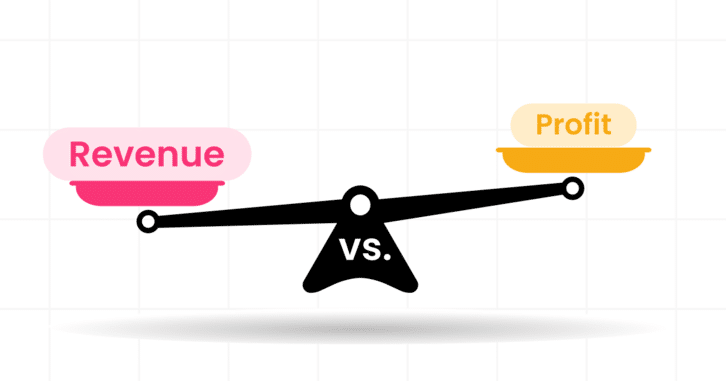
What Is Profit vs. Revenue?
When people talk about business success, two words come up again and again: revenue and profit. They’re often used interchangeably in casual conversation, but in reality, they mean very different things. Understanding the difference between profit and revenue is essential for anyone studying business, managing money, running a company, or even just reading the news about big corporations.
This article breaks down what revenue and profit really are, how they’re calculated, why both matter, and common mistakes people make when confusing the two.
What Is Revenue?
Revenue is the total amount of money a business earns from selling its products or services during a specific period of time.
It is sometimes called:
-
Sales
-
Turnover
-
Top-line income
Revenue is calculated before any expenses are taken out.
Simple Definition
Revenue = All money coming into the business from sales
Example
Imagine you run a small lemonade stand:
-
You sell 100 cups of lemonade
-
Each cup costs $2
Your revenue is:
100 × $2 = $200
That $200 is your revenue, even though you had costs like lemons, sugar, cups, and ice.
What Is Profit?
Profit is the money a business keeps after all expenses have been paid.
It answers the question:
“After paying for everything, how much money did we actually make?”
Simple Definition
Profit = Revenue − Expenses
Example
Using the lemonade stand again:
-
Revenue: $200
-
Costs (lemons, sugar, cups, ice): $120
Profit:
$200 − $120 = $80
That $80 is profit—the money you actually earned.
Key Difference Between Revenue and Profit
| Feature | Revenue | Profit |
|---|---|---|
| What it measures | Total sales | Money left after expenses |
| Includes costs? | ❌ No | ✅ Yes |
| Shows business size | ✅ Yes | ❌ Not always |
| Shows business success | ❌ Not by itself | ✅ Yes |
A business can have high revenue but low profit, or even no profit at all.
Types of Profit
Profit isn’t just one number. Businesses usually track three main types of profit, each showing a different level of financial performance.
1. Gross Profit
Gross profit shows how much money is left after paying for the direct cost of making or delivering a product.
Formula:
Gross Profit = Revenue − Cost of Goods Sold (COGS)
Example:
-
Revenue: $1,000
-
Cost of materials and production: $600
Gross profit:
$1,000 − $600 = $400
Gross profit helps answer:
“Are we pricing our products correctly?”
2. Operating Profit
Operating profit subtracts everyday business expenses like:
-
Rent
-
Salaries
-
Utilities
-
Marketing
Formula:
Operating Profit = Gross Profit − Operating Expenses
This shows how well the core business is run.
3. Net Profit
Net profit is the final number—what’s left after all expenses, including:
-
Taxes
-
Interest
-
One-time costs
Formula:
Net Profit = Total Revenue − All Expenses
This is often called the “bottom line.”
Why Revenue Alone Can Be Misleading
Many people assume that high revenue automatically means success. That’s not always true.
Example: High Revenue, Low Profit
A company earns:
-
Revenue: $10 million
-
Expenses: $9.8 million
Profit:
$200,000
That’s a very small profit compared to revenue.
Example: Low Revenue, High Profit
Another business earns:
-
Revenue: $1 million
-
Expenses: $500,000
Profit:
$500,000
Even with lower revenue, the second business is actually healthier.
Can a Business Have Revenue but No Profit?
Yes—this happens all the time.
A business can:
-
Break even (profit = $0)
-
Lose money (negative profit)
This is common with:
-
Startups
-
New restaurants
-
Companies investing heavily in growth
As long as revenue exists, profit might come later—but only if expenses are controlled.
Why Profit Matters More Than Revenue
Revenue shows activity, but profit shows success.
Profit matters because it:
-
Pays owners and investors
-
Funds growth and expansion
-
Protects the business during hard times
-
Determines long-term survival
A business with no profit cannot survive forever, no matter how high its revenue is.
Real-World Example: Big Companies
Large companies often report billions in revenue, but their profit margins can be small.
For example:
-
A retail company may earn massive revenue
-
But high costs (rent, staff, shipping) reduce profit
This is why investors always look at profit, not just sales.
Profit Margin: Connecting Profit and Revenue
Profit margin shows how much profit a business makes for every dollar of revenue.
Formula:
Profit Margin = (Profit ÷ Revenue) × 100
Example:
-
Profit: $20
-
Revenue: $100
Profit margin:
(20 ÷ 100) × 100 = 20%
A higher profit margin usually means a more efficient business.
Common Mistakes People Make
Mistake 1: “Revenue is how much the business makes”
Not true—revenue is how much it earns before costs.
Mistake 2: “More sales always mean more profit”
If costs rise faster than sales, profit can actually drop.
Mistake 3: “Profit and income are the same”
Income can mean different things depending on context, but profit has a specific accounting meaning.
Revenue vs. Profit in Personal Finance
The same idea applies to individuals:
-
Revenue = your salary
-
Profit = money left after expenses
If you earn $2,000 a month but spend $1,900, your “profit” is only $100.
This is why budgeting matters.
Final Summary
-
Revenue is the total money a business earns from sales.
-
Profit is what remains after all expenses are paid.
-
Revenue shows how big a business is.
-
Profit shows how successful and sustainable it is.
-
A business can survive short-term without profit, but not long-term.
Understanding the difference between profit and revenue helps you:
-
Read financial news correctly
-
Make smarter business decisions
-
Better manage your own money
In business, revenue gets attention—but profit keeps the lights on.
- Arts
- Business
- Computers
- Games
- Health
- Home
- Kids and Teens
- Money
- News
- Personal Development
- Recreation
- Regional
- Reference
- Science
- Shopping
- Society
- Sports
- Бизнес
- Деньги
- Дом
- Досуг
- Здоровье
- Игры
- Искусство
- Источники информации
- Компьютеры
- Личное развитие
- Наука
- Новости и СМИ
- Общество
- Покупки
- Спорт
- Страны и регионы
- World

 Russian
 French
 Spanish
 Portuguese
 Deutsch
 Turkish
 Dutch
Dutch
 Italiano
 Arabic
 Romaian
 Portuguese (Brazil)
 Greek
Greek