
What Is Billboard Advertising?
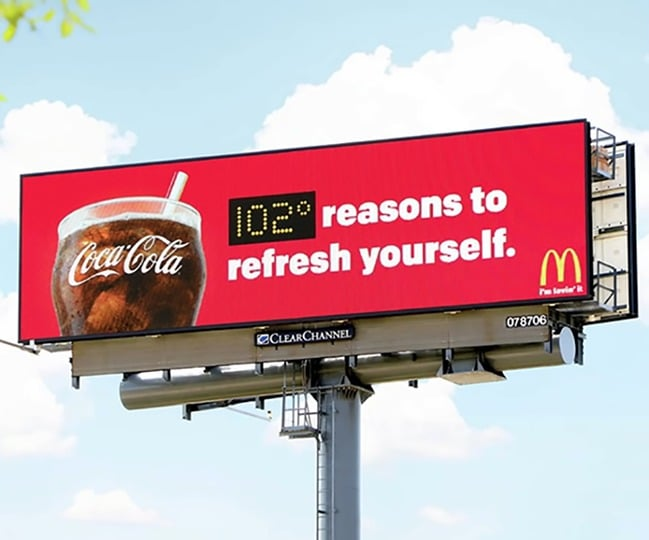
Billboard advertising is one of the oldest and most recognizable forms of advertising in the world. Long before digital ads, search engines, and social media, billboards dominated highways, city streets, and public spaces, delivering bold messages to mass audiences. Despite the rapid growth of digital marketing, billboard advertising has not disappeared—instead, it has evolved.
Today, billboard advertising blends traditional out-of-home (OOH) exposure with digital technology, data targeting, and creative storytelling. From massive highway signs to digital displays in urban centers, billboards remain a powerful way to build brand awareness and influence consumer behavior at scale.
This article explains what billboard advertising is, how it works, the different types of billboards, how campaigns are planned, and whether billboards still make sense in the modern advertising landscape.
What Is Billboard Advertising?
Billboard advertising is a form of out-of-home (OOH) advertising that uses large physical displays placed in high-traffic locations to promote brands, products, or messages.
Billboards are designed to:
-
Capture attention quickly
-
Reach large audiences
-
Reinforce brand recognition
Unlike digital ads, billboards cannot be skipped, blocked, or ignored easily.
The Purpose of Billboard Advertising
Billboards are primarily used for:
-
Brand awareness
-
Message reinforcement
-
Market presence
They are less about immediate clicks and more about long-term impact.
How Billboard Advertising Works
Billboard advertising works by placing visual messages in locations where people naturally pass by.
Key elements include:
-
Location selection
-
Display size and format
-
Creative design
-
Campaign duration
Exposure builds through repetition rather than interaction.
The Psychology Behind Billboard Advertising
Billboards rely on:
-
Repetition
-
Simplicity
-
Visual memory
Repeated exposure helps imprint brand messages subconsciously.
Types of Billboard Advertising
Billboards come in many formats, each serving different goals.
Traditional Static Billboards
Static billboards are printed displays.
Characteristics:
-
Fixed image
-
Long-term placement
-
Cost-effective for extended campaigns
They are common on highways and major roads.
Digital Billboards
Digital billboards use LED screens.
Advantages include:
-
Rotating ads
-
Dynamic content
-
Time-based messaging
Multiple advertisers share the same screen.
Mobile Billboards
Mobile billboards are ads mounted on vehicles.
They offer:
-
Flexible routing
-
Event-based targeting
-
Short-term campaigns
They are often used for promotions or launches.
Street Furniture Advertising
Street furniture includes:
-
Bus shelters
-
Benches
-
Kiosks
These billboards reach pedestrians and commuters.
Wallscapes and Building Wraps
Wallscapes are large ads painted or installed on buildings.
They provide:
-
Massive visibility
-
Urban dominance
-
Strong brand statements
These are premium placements.
Transit Billboards
Transit ads appear on:
-
Buses
-
Trains
-
Subways
They reach daily commuters consistently.
Choosing the Right Billboard Location
Location is the most important factor.
Consider:
-
Traffic volume
-
Demographics
-
Speed of traffic
-
Visibility and angle
A great location beats great design in many cases.
Traffic and Impressions
Billboard performance is often measured by:
-
Daily traffic counts
-
Estimated impressions
These metrics estimate how many people see the ad.
Billboard Audience Targeting
Traditional billboards target broadly.
Modern targeting considers:
-
Neighborhood demographics
-
Commute patterns
-
Nearby businesses
Digital billboards improve targeting further.
Creative Rules for Billboard Advertising
Billboards must communicate instantly.
Best practices include:
-
Short headlines
-
Large fonts
-
Strong contrast
-
Minimal text
Drivers have only seconds to absorb the message.
The Role of Visual Design
Visuals matter more than words.
Effective billboards use:
-
Bold imagery
-
Clear brand marks
-
Simple color palettes
Complex designs fail at speed.
Message Simplicity and Clarity
One idea per billboard.
Avoid:
-
Long explanations
-
Small text
-
Multiple CTAs
Simplicity increases recall.
Brand Recognition vs Direct Response
Billboards favor branding over direct action.
However, they can support:
-
Website traffic
-
Store visits
-
Search demand
They influence behavior indirectly.
Measuring Billboard Effectiveness
Measurement is more challenging than digital ads.
Common methods include:
-
Traffic and impression estimates
-
Brand lift studies
-
Search volume increases
-
Sales correlation
Effectiveness is often directional, not precise.
Billboard Advertising and Brand Awareness
Billboards excel at:
-
Repetition
-
Visibility
-
Market presence
They help brands feel established and credible.
Billboards and the Marketing Funnel
Billboards work best at:
-
Top-of-funnel awareness
-
Mid-funnel consideration
They rarely close sales alone.
Integrating Billboards With Digital Marketing
Billboards work best when combined with digital.
Examples:
-
Billboard + Google Ads
-
Billboard + social media
-
Billboard + QR codes
Cross-channel reinforcement improves recall.
Billboards and Search Behavior
Billboards often increase:
-
Branded searches
-
Direct website visits
This indirect effect is valuable.
Digital Billboards and Programmatic Buying
Some digital billboards are bought programmatically.
Benefits include:
-
Time-based targeting
-
Weather-based triggers
-
Audience data integration
OOH is becoming smarter.
Cost Structure of Billboard Advertising
Costs depend on:
-
Location
-
Size
-
Format
-
Duration
Premium urban placements cost significantly more.
Short-Term vs Long-Term Billboard Campaigns
Short-term campaigns:
-
Promotions
-
Events
Long-term campaigns:
-
Brand building
-
Market dominance
Duration affects effectiveness.
Advantages of Billboard Advertising
Key advantages include:
-
Massive reach
-
High visibility
-
Non-skippable exposure
-
Strong brand recall
Billboards create presence.
Limitations of Billboard Advertising
Limitations include:
-
Limited messaging
-
Difficult attribution
-
High upfront costs
Billboards are not ideal for all goals.
Billboards for Small Businesses
Local businesses can use billboards effectively.
Best use cases:
-
Local brand awareness
-
Store openings
-
Community presence
Hyper-local placements reduce cost.
Billboards for National Brands
National brands use billboards to:
-
Reinforce brand dominance
-
Support large campaigns
-
Create cultural moments
Scale amplifies impact.
Billboard Advertising Regulations
Billboards are regulated by:
-
Local zoning laws
-
State regulations
-
Highway restrictions
Compliance is required before placement.
Environmental and Aesthetic Concerns
Some communities restrict billboards due to:
-
Visual clutter
-
Environmental impact
Digital billboards face additional scrutiny.
Creativity as a Competitive Advantage
The best billboards:
-
Are memorable
-
Are clever
-
Spark conversation
Creativity multiplies effectiveness.
Famous Billboard Campaigns
Iconic campaigns succeed because of:
-
Simplicity
-
Cultural relevance
-
Strong visuals
They become part of public consciousness.
The Future of Billboard Advertising
Billboards are evolving, not disappearing.
Trends include:
-
Data-driven placement
-
Dynamic creative
-
Integration with mobile
OOH is becoming smarter and more measurable.
When Billboard Advertising Makes Sense
Billboards are best when:
-
Brand awareness is the goal
-
Markets are geographically concentrated
-
Budgets allow repetition
They are not performance-only tools.
When Billboards Are Not Ideal
Avoid billboards when:
-
You need immediate conversions
-
Budgets are extremely limited
-
Measurement must be exact
Choose the channel that fits the goal.
Strategic Role of Billboards Today
Billboards provide:
-
Visibility
-
Authority
-
Brand reinforcement
They complement—not replace—digital ads.
Conclusion
Billboard advertising remains a powerful and relevant marketing channel, even in a digital-first world. While it lacks the precise targeting and attribution of online advertising, it delivers something digital often cannot: unavoidable, high-impact visibility in the real world. From highways and city centers to digital screens and transit systems, billboards continue to shape brand perception and influence consumer behavior.
When used strategically—especially alongside digital channels—billboards can amplify awareness, strengthen brand presence, and drive meaningful business outcomes. The key is understanding what billboards do best and using them for the right purpose.
- Arts
- Business
- Computers
- Παιχνίδια
- Health
- Κεντρική Σελίδα
- Kids and Teens
- Money
- News
- Personal Development
- Recreation
- Regional
- Reference
- Science
- Shopping
- Society
- Sports
- Бизнес
- Деньги
- Дом
- Досуг
- Здоровье
- Игры
- Искусство
- Источники информации
- Компьютеры
- Личное развитие
- Наука
- Новости и СМИ
- Общество
- Покупки
- Спорт
- Страны и регионы
- World

 English
 Russian
 French
 Spanish
 Portuguese
 Deutsch
 Turkish
 Dutch
Dutch
 Italiano
 Arabic
 Romaian
 Portuguese (Brazil)