
What Is a Good CAC to LTV Ratio?
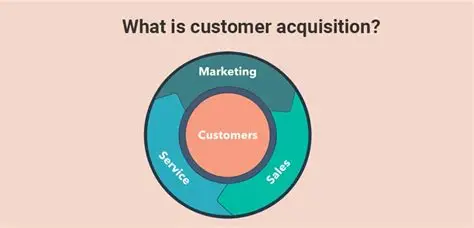
For any business, understanding the relationship between Customer Acquisition Cost (CAC) and Customer Lifetime Value (LTV) is critical. The CAC to LTV ratio is one of the most important metrics in growth strategy, marketing efficiency, and investor evaluation. It tells you whether your customer acquisition efforts are profitable, sustainable, and scalable.
This article provides a detailed guide to the CAC to LTV ratio, including how to calculate it, what a “good” ratio looks like across industries, how to optimize it, and how startups and established companies can use it to make strategic decisions.
What Is CAC to LTV Ratio?
The CAC to LTV ratio compares the cost of acquiring a customer with the revenue that customer will generate over their lifetime.
Formula:
CAC to LTV Ratio=Customer Lifetime Value (LTV)Customer Acquisition Cost (CAC)\text{CAC to LTV Ratio} = \frac{\text{Customer Lifetime Value (LTV)}}{\text{Customer Acquisition Cost (CAC)}}
Or, expressed as a ratio:
LTV : CAC=Revenue per Customer Over Lifetime:Acquisition Cost per Customer\text{LTV : CAC} = \text{Revenue per Customer Over Lifetime} : \text{Acquisition Cost per Customer}
This ratio answers a simple but powerful question:
For every dollar spent acquiring a customer, how much revenue do you generate over their lifetime?
Example:
-
CAC = $100
-
LTV = $300
LTV:CAC = 300 ÷ 100 = 3:1
This means for every $1 spent on acquisition, the business earns $3 over the customer’s lifetime.
Why CAC to LTV Ratio Matters
The CAC to LTV ratio is essential for several reasons:
-
Profitability Check
Determines if customer acquisition is generating enough revenue to cover costs and profit. -
Growth Planning
Helps evaluate if the business can scale acquisition efficiently. -
Investor Confidence
Investors look for healthy LTV:CAC ratios to ensure sustainable growth. -
Marketing Efficiency
Guides budget allocation and channel prioritization. -
Retention Insights
Indicates how well the business retains customers over time.
Understanding LTV and CAC Individually
Customer Acquisition Cost (CAC)
CAC is the total cost to acquire a customer:
-
Marketing spend
-
Sales salaries and commissions
-
Tools and software
-
Overhead related to acquisition
Accurate CAC calculation ensures the ratio reflects true efficiency.
Customer Lifetime Value (LTV)
LTV measures the total revenue a customer generates over their lifetime.
LTV Formula:
LTV=Average Revenue per Customer×Gross Margin×Average Customer Lifespan\text{LTV} = \text{Average Revenue per Customer} \times \text{Gross Margin} \times \text{Average Customer Lifespan}
Example:
-
Average revenue per month: $50
-
Gross margin: 80%
-
Average customer lifespan: 12 months
LTV = 50 × 0.8 × 12 = $480
Industry Benchmarks for CAC to LTV Ratio
A “good” LTV:CAC ratio varies by industry:
| Industry | Recommended LTV:CAC Ratio |
|---|---|
| SaaS (B2B) | 3:1 – 5:1 |
| SaaS (B2C) | 3:1 |
| Ecommerce | 3:1 |
| Mobile Apps | 3:1 – 4:1 |
| Subscription Services | 3:1 |
| High-Ticket B2B Sales | 4:1 – 6:1 |
Rule of Thumb:
-
<1: Losing money on acquisition
-
1–3: Marginally profitable
-
3–5: Healthy, scalable
-
>5: Possibly underinvesting in acquisition (could grow faster)
How to Calculate a “Good” LTV:CAC Ratio
Step-by-step:
-
Calculate CAC:
Total acquisition cost ÷ number of customers acquired. -
Calculate LTV:
Average revenue × gross margin × average customer lifespan. -
Divide LTV by CAC:
LTV ÷ CAC = LTV:CAC ratio. -
Compare to benchmarks:
Evaluate against industry norms and growth goals.
Example Calculation:
-
Total marketing + sales cost = $50,000
-
Customers acquired = 500
-
CAC = 50,000 ÷ 500 = $100
-
Average monthly revenue = $50
-
Gross margin = 80%
-
Average customer lifespan = 12 months
-
LTV = 50 × 0.8 × 12 = $480
-
LTV:CAC ratio = 480 ÷ 100 = 4.8:1 → Healthy and scalable
Factors That Affect the CAC to LTV Ratio
Several factors influence this ratio:
1. Customer Retention
Longer retention increases LTV and improves the ratio.
2. Gross Margin
Higher gross margins increase LTV. Lower margins require tighter CAC control.
3. Pricing
Higher pricing can boost LTV if it does not reduce conversion rates.
4. Marketing Efficiency
Optimizing CAC reduces the denominator, improving the ratio.
5. Sales Cycle
Longer, complex sales cycles may increase CAC and affect ratios, especially in B2B.
6. Product Expansion
Upselling and cross-selling increase LTV.
Optimizing CAC to LTV Ratio
A good ratio is not static. Businesses can improve it through two levers: lowering CAC or increasing LTV.
1. Lower Customer Acquisition Cost
-
Optimize ad campaigns
-
Focus on high-performing channels
-
Target ideal customer profiles
-
Leverage organic and referral channels
-
Reduce friction in the conversion process
Lower CAC improves profitability immediately.
2. Increase Customer Lifetime Value
-
Improve retention and loyalty
-
Introduce upselling and cross-selling
-
Enhance product value to encourage longer usage
-
Personalize experiences to increase satisfaction
-
Encourage subscriptions or recurring purchases
Increasing LTV maximizes the return on acquisition spend.
CAC to LTV Ratio for Startups
Startups face unique challenges:
-
CAC is often high due to brand awareness costs
-
LTV may be unknown in early stages
-
Ratios may appear unfavorable initially
Best approach for startups:
-
Focus on learning and early adopters
-
Track CAC and LTV separately for early channels
-
Aim for progressive improvement rather than perfect ratios
-
Use ratio to decide whether to scale or optimize channels
CAC to LTV Ratio in Mature Companies
For established businesses:
-
LTV:CAC is often more stable
-
Channel optimization and retention programs can significantly improve ratios
-
Investors use ratios to assess efficiency and growth potential
-
A high ratio may indicate underinvestment in growth channels
Common Misconceptions
-
“Higher LTV:CAC is always better”
-
Extremely high ratios may indicate under-spending on acquisition.
-
-
“CAC alone matters”
-
CAC without LTV context can be misleading.
-
-
“Short-term profit is sufficient”
-
LTV considers long-term revenue, which is essential for sustainable growth.
-
Using CAC to LTV Ratio Strategically
Businesses use the ratio to:
-
Evaluate channel performance: Identify which channels generate the best LTV relative to CAC.
-
Set acquisition budgets: Allocate marketing dollars efficiently.
-
Plan for scaling: Ensure growth does not erode profitability.
-
Guide retention initiatives: Improving retention directly improves the ratio.
-
Communicate with investors: Demonstrates efficiency and long-term viability.
How to Track CAC to LTV Ratio Over Time
-
Monitor monthly or quarterly CAC and LTV
-
Track by channel or cohort
-
Compare trends against growth goals
-
Identify shifts in retention, churn, or cost efficiency
-
Adjust marketing and product strategies accordingly
Regular tracking allows proactive adjustments, not reactive fixes.
Practical Tips to Improve CAC to LTV Ratio
-
Target high-value customers first
-
Focus on retention early
-
Optimize conversion funnels
-
Test pricing strategies
-
Offer upsells, cross-sells, or subscriptions
-
Reduce acquisition friction
-
Leverage referrals and organic growth
Incremental improvements compound over time, improving the ratio and sustainable growth.
Case Study Examples
Example 1: SaaS Company
-
CAC: $200
-
Average LTV: $800
-
LTV:CAC = 4:1 → Healthy, scalable
-
Strategies used: email nurturing, referral programs, upselling
Example 2: Ecommerce Brand
-
CAC: $50
-
Average LTV: $120
-
LTV:CAC = 2.4:1 → Needs optimization
-
Strategies used: abandoned cart recovery, loyalty program, targeted social ads
Example 3: Mobile App
-
CAC: $5
-
Average LTV: $20
-
LTV:CAC = 4:1 → Efficient acquisition
-
Strategies used: viral sharing, in-app purchases, referral incentives
Final Thoughts
The CAC to LTV ratio is the ultimate efficiency metric for growth-oriented businesses. It combines acquisition cost, retention, pricing, and profitability into a single number that drives smarter decision-making.
Healthy LTV:CAC ratios allow businesses to:
-
Spend confidently on growth
-
Scale efficiently
-
Retain customers longer
-
Optimize retention and upselling strategies
-
Attract investors and stakeholders
The ideal ratio varies by business model, industry, and growth stage—but a ratio of around 3:1 is generally considered strong. By continuously monitoring and optimizing both CAC and LTV, businesses create a foundation for profitable, scalable, and sustainable growth.
- Arts
- Business
- Computers
- Games
- Health
- Home
- Kids and Teens
- Money
- News
- Personal Development
- Recreation
- Regional
- Reference
- Science
- Shopping
- Society
- Sports
- Бизнес
- Деньги
- Дом
- Досуг
- Здоровье
- Игры
- Искусство
- Источники информации
- Компьютеры
- Личное развитие
- Наука
- Новости и СМИ
- Общество
- Покупки
- Спорт
- Страны и регионы
- World

 Russian
 French
 Spanish
 Portuguese
 Deutsch
 Turkish
 Dutch
Dutch
 Italiano
 Arabic
 Romaian
 Portuguese (Brazil)
 Greek
Greek