
What Is Customer Acquisition for B2B vs B2C?
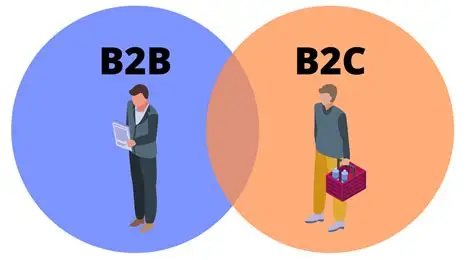
Customer acquisition looks very different depending on whether a business sells to other businesses (B2B) or directly to consumers (B2C). While the goal—acquiring customers—is the same, the process, cost, timelines, decision-makers, and strategies vary significantly.
Understanding the differences between B2B and B2C customer acquisition is critical for building effective marketing and sales strategies, allocating budgets correctly, and setting realistic growth expectations.
This article explores customer acquisition in B2B vs B2C in depth, covering strategies, channels, metrics, costs, funnels, and real-world considerations.
What Is Customer Acquisition in B2B and B2C?
At its core, customer acquisition is the process of turning prospects into paying customers. However, who the customer is fundamentally changes how acquisition works.
B2B Customer Acquisition
B2B (business-to-business) acquisition targets:
-
Companies
-
Teams
-
Decision-makers within organizations
Purchases are often rational, budget-driven, and involve multiple stakeholders.
B2C Customer Acquisition
B2C (business-to-consumer) acquisition targets:
-
Individual consumers
-
End users
Purchases are often emotional, faster, and made by a single decision-maker.
The Core Differences Between B2B and B2C Acquisition
| Area | B2B | B2C |
|---|---|---|
| Buyer | Organizations | Individuals |
| Decision-makers | Multiple | One |
| Sales cycle | Long | Short |
| CAC | High | Lower |
| LTV | High | Lower (on average) |
| Volume | Low | High |
| Messaging | Rational, value-based | Emotional, benefit-driven |
| Funnel complexity | High | Lower |
These differences influence every aspect of acquisition strategy.
B2B Customer Acquisition Explained
Who Is Involved in B2B Buying Decisions?
B2B purchases often involve:
-
End users
-
Managers
-
Executives
-
Procurement teams
-
Finance departments
Each stakeholder has different priorities, making acquisition more complex.
B2B Acquisition Funnel
A typical B2B acquisition funnel includes:
-
Awareness
-
Lead generation
-
Lead qualification
-
Sales engagement
-
Proposal and negotiation
-
Closed deal
Marketing and sales must work closely together throughout the process.
B2B Acquisition Strategies
Common B2B acquisition strategies include:
-
Content marketing and SEO
-
Account-based marketing (ABM)
-
Paid search and LinkedIn ads
-
Webinars and events
-
Email outreach
-
Partnerships
B2B strategies prioritize education and trust over speed.
B2B Acquisition Channels
High-performing B2B channels often include:
-
SEO for high-intent keywords
-
LinkedIn and Google Ads
-
Email marketing
-
Industry events
-
Referrals and partnerships
Channel selection depends heavily on deal size and target audience.
B2B Customer Acquisition Cost (CAC)
B2B CAC is typically higher due to:
-
Sales team salaries
-
Longer sales cycles
-
Custom demos and proposals
However, higher LTV often justifies the cost.
B2B Metrics That Matter
Key B2B acquisition metrics include:
-
CAC by segment
-
Cost per qualified lead
-
Sales cycle length
-
Lead-to-opportunity conversion
-
LTV:CAC ratio
-
Payback period
Efficiency and predictability matter more than volume.
B2C Customer Acquisition Explained
How B2C Buying Decisions Work
B2C purchases are usually:
-
Faster
-
Emotion-driven
-
Price-sensitive
-
Influenced by brand and social proof
This allows for simpler, more direct acquisition funnels.
B2C Acquisition Funnel
A typical B2C funnel includes:
-
Awareness
-
Interest
-
Consideration
-
Purchase
-
Repeat purchase or loyalty
Marketing often owns most of the funnel.
B2C Acquisition Strategies
Common B2C strategies include:
-
Paid social advertising
-
Influencer marketing
-
SEO and content
-
Email marketing
-
Referral programs
-
Promotions and discounts
Speed and scale are central to B2C acquisition.
B2C Acquisition Channels
High-performing B2C channels often include:
-
Social media ads
-
Google Shopping and search ads
-
SEO
-
Email and SMS
-
Affiliate marketing
Channel effectiveness varies by product and audience.
B2C Customer Acquisition Cost (CAC)
B2C CAC is typically:
-
Lower per customer
-
More sensitive to conversion rates
-
Highly affected by ad costs
Small changes in conversion rates can significantly impact profitability.
B2C Metrics That Matter
Key B2C acquisition metrics include:
-
CAC by channel
-
Conversion rate
-
Average order value (AOV)
-
Repeat purchase rate
-
Customer lifetime value (LTV)
-
Payback period
Volume and efficiency are prioritized.
Differences in Messaging and Content
B2B Messaging
-
Focuses on ROI, efficiency, and risk reduction
-
Uses data, case studies, and proof
-
Appeals to logic and business outcomes
B2C Messaging
-
Focuses on benefits, emotions, and identity
-
Uses storytelling and visuals
-
Appeals to desire, convenience, or status
Messaging alignment is critical for conversion.
Differences in Sales Cycles
B2B Sales Cycles
-
Weeks to months (or longer)
-
Multiple touchpoints
-
High-touch interactions
B2C Sales Cycles
-
Minutes to days
-
Often self-serve
-
Fewer interactions
Longer sales cycles increase acquisition cost and complexity.
Differences in Attribution and Measurement
B2B Attribution
-
Multi-touch journeys
-
CRM-based tracking
-
Sales-assisted attribution
B2C Attribution
-
Simpler attribution models
-
Faster feedback loops
-
Campaign-level analysis
Measurement frameworks must match the acquisition model.
SEO in B2B vs B2C Acquisition
B2B SEO
-
Targets niche, high-value keywords
-
Focuses on educational content
-
Supports long-term lead generation
B2C SEO
-
Targets high-volume keywords
-
Focuses on product and category pages
-
Drives faster conversions
SEO strategies differ significantly between models.
Paid Advertising in B2B vs B2C
B2B Paid Ads
-
Higher CPCs
-
Lower volume
-
Focus on lead generation
B2C Paid Ads
-
Lower CPCs (generally)
-
High volume
-
Focus on direct conversions
Creative and targeting strategies must adapt accordingly.
Retention’s Role in B2B vs B2C Acquisition
B2B Retention
-
Contracts and renewals
-
Expansion and upsells
-
Account management
B2C Retention
-
Loyalty programs
-
Email and SMS
-
Repeat purchases
Retention directly impacts LTV and acquisition sustainability in both models.
Hybrid Models: B2B2C and PLG
Some businesses blur the lines.
Product-Led Growth (PLG)
-
Self-serve acquisition
-
Freemium or trials
-
Marketing-driven conversions
B2B2C Models
-
Selling to businesses that serve consumers
-
Complex acquisition and retention dynamics
Hybrid models require blended strategies.
Common Mistakes When Applying the Wrong Model
-
Using B2C tactics in B2B sales
-
Expecting instant ROI in B2B
-
Overcomplicating B2C funnels
-
Ignoring sales alignment in B2B
-
Underinvesting in brand for B2C
Understanding the model prevents costly errors.
How to Choose the Right Acquisition Strategy
Ask key questions:
-
Who is the buyer?
-
How complex is the decision?
-
What is the LTV?
-
How long is the sales cycle?
-
What channels do customers trust?
Strategy should follow reality, not trends.
The Future of B2B and B2C Customer Acquisition
Trends shaping both models include:
-
AI-driven personalization
-
First-party data strategies
-
Community-led growth
-
Creator and influencer partnerships
-
Privacy-focused tracking
While tactics evolve, core differences remain.
Final Thoughts
Customer acquisition for B2B and B2C requires fundamentally different approaches. While both aim to drive growth, the strategies, timelines, costs, and metrics vary widely.
Businesses that clearly understand whether they operate in a B2B or B2C context—and design acquisition systems accordingly—are far more likely to scale efficiently and profitably.
- Arts
- Business
- Computers
- Games
- Health
- Home
- Kids and Teens
- Money
- News
- Personal Development
- Recreation
- Regional
- Reference
- Science
- Shopping
- Society
- Sports
- Бизнес
- Деньги
- Дом
- Досуг
- Здоровье
- Игры
- Искусство
- Источники информации
- Компьютеры
- Личное развитие
- Наука
- Новости и СМИ
- Общество
- Покупки
- Спорт
- Страны и регионы
- World

 Russian
 French
 Spanish
 Portuguese
 Deutsch
 Turkish
 Dutch
Dutch
 Italiano
 Arabic
 Romaian
 Portuguese (Brazil)
 Greek
Greek