
How Do I Avoid Annoying Customers with Remarketing Ads? A Complete Guide to Respectful and Effective Retargeting
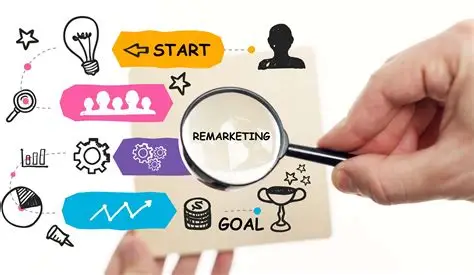
How Do I Avoid Annoying Customers with Remarketing Ads? A Complete Guide to Respectful and Effective Retargeting
Introduction
Remarketing is designed to remind, not to irritate.
When done well, it feels helpful and relevant. When done poorly, it feels invasive and repetitive. Many consumers today associate remarketing with “being followed around the internet,” which damages trust and brand perception.
Across platforms such as Google Ads, Meta Platforms, Inc., and YouTube, advertisers must balance personalization with respect.
In 2026, as privacy awareness grows and competition intensifies, avoiding customer annoyance is essential for sustainable remarketing success.
This article explains why remarketing becomes annoying, how customers perceive it, and how to design campaigns that feel valuable rather than intrusive.
Why Remarketing Becomes Annoying
Customers usually feel irritated when remarketing crosses certain boundaries.
Common causes include:
-
Excessive repetition
-
Irrelevant ads
-
Poor timing
-
Outdated offers
-
Lack of privacy transparency
-
No way to opt out
Understanding these triggers is the first step.
The Psychology of Customer Perception
Users evaluate ads subconsciously.
They ask:
-
“Why am I seeing this?”
-
“Is this useful to me?”
-
“Is this too personal?”
-
“Is this never going away?”
If answers are negative, irritation grows.
Principle 1: Respect Frequency Limits
The Problem
Too many impressions create fatigue.
The Solution
Apply frequency caps.
Recommended ranges:
-
Display: 2–4/day
-
Social: 1–2/day
-
Video: 1/day
Adjust by intent level.
Principle 2: Segment Audiences Properly
The Problem
Everyone sees the same ad.
The Solution
Segment by behavior.
Examples:
-
Product viewers
-
Cart abandoners
-
Buyers
-
Blog readers
Tailored ads feel helpful.
Principle 3: Match Messaging to Intent
The Problem
Low-intent users see aggressive sales ads.
The Solution
Align messaging with funnel stage.
| Stage | Message Type |
|---|---|
| Awareness | Education |
| Consideration | Benefits |
| Decision | Offers |
| Loyalty | Rewards |
Context matters.
Principle 4: Use Creative Rotation
The Problem
Same ad repeated endlessly.
The Solution
Rotate 3–5 creatives.
Refresh every 2–4 weeks.
Variety reduces irritation.
Principle 5: Exclude Converted Users
The Problem
Customers see ads for items they bought.
The Solution
Create automatic exclusions.
Remove:
-
Purchasers
-
Subscribers
-
Leads
This shows respect.
Principle 6: Control Timing and Recency
The Problem
Users are targeted months later.
The Solution
Set appropriate durations.
Examples:
-
Cart abandoners: 7–14 days
-
Product viewers: 14–30 days
-
Visitors: 30–60 days
Outdated ads feel creepy.
Principle 7: Prioritize Value Over Promotion
The Problem
Every ad pushes a sale.
The Solution
Provide value.
Examples:
-
Tips
-
Guides
-
Reviews
-
Demos
-
Free tools
Helpful ads build trust.
Principle 8: Be Transparent About Data Use
The Problem
Users feel secretly tracked.
The Solution
Disclose data usage.
Provide:
-
Clear privacy policies
-
Cookie banners
-
Opt-out links
Transparency reduces discomfort.
Principle 9: Design Subtle, High-Quality Creatives
The Problem
Loud, flashy banners feel spammy.
The Solution
Use clean, professional designs.
Focus on:
-
Simplicity
-
Brand consistency
-
Readability
Quality builds credibility.
Principle 10: Use Sequential Messaging
The Problem
Same message forever.
The Solution
Use storytelling.
Example:
-
Brand story
-
Product benefit
-
Social proof
-
Offer
Progression feels natural.
Understanding Cultural and Contextual Sensitivity
Ads should respect context.
Avoid:
-
Showing ads on sensitive content
-
Targeting during inappropriate moments
-
Tone-deaf messaging
Context matters.
Example: Travel Brand Campaign
A travel agency improves remarketing by:
-
Limiting frequency
-
Rotating creatives
-
Showing destination guides
-
Excluding recent bookers
Results:
-
24% higher CTR
-
Lower negative feedback
-
Better brand perception
Respect improved performance.
Using AI to Reduce Annoyance
Modern platforms use AI to predict irritation.
AI analyzes:
-
Engagement decline
-
Ad hiding behavior
-
Frequency thresholds
Systems reduce exposure automatically.
Feedback Signals to Monitor
Watch for:
-
Ad hides
-
Blocks
-
Negative comments
-
Unsubscribes
-
Spam complaints
These indicate discomfort.
Cross-Channel Coordination
Uncoordinated ads increase annoyance.
Example:
User sees same offer on:
-
Display
-
Social
-
Video
-
Email
Simultaneously.
Coordinate messaging.
Privacy-First Remarketing
Privacy-focused strategies include:
-
First-party data usage
-
Consent-based targeting
-
Server-side tracking
-
Limited retention
Respect strengthens loyalty.
When Aggressive Remarketing Is Appropriate
Short-term intensity may work for:
-
Flash sales
-
Event deadlines
-
Limited inventory
Use briefly.
Return to normal after.
Common Mistakes That Increase Annoyance
-
No frequency caps
-
No exclusions
-
Over-personalization
-
Misleading offers
-
Clickbait creatives
-
Poor landing pages
Avoid these.
Best Practices Summary
-
Segment audiences
-
Limit frequency
-
Rotate creatives
-
Exclude converters
-
Provide value
-
Be transparent
-
Monitor feedback
-
Respect timing
The Future of Respectful Remarketing
Emerging trends include:
-
Personalized frequency limits
-
Consent-driven targeting
-
Predictive fatigue modeling
-
User-controlled preferences
Advertising will become more user-centric.
Balancing Performance and Respect
High conversions and customer respect are not opposites.
Respectful remarketing leads to:
-
Higher trust
-
Better lifetime value
-
Lower churn
-
Stronger brands
Long-term wins.
Conclusion
Avoiding customer annoyance is not about showing fewer ads—it is about showing better ads. When remarketing is relevant, timely, transparent, and valuable, users appreciate it instead of resenting it.
In 2026, with increasing privacy awareness and competition, respectful remarketing is a competitive advantage. Brands that prioritize user experience will outperform those that rely on aggressive tactics.
Great remarketing feels like a helpful reminder, not an unwanted interruption.
- Arts
- Business
- Computers
- الألعاب
- Health
- الرئيسية
- Kids and Teens
- مال
- News
- Personal Development
- Recreation
- Regional
- Reference
- Science
- Shopping
- Society
- Sports
- Бизнес
- Деньги
- Дом
- Досуг
- Здоровье
- Игры
- Искусство
- Источники информации
- Компьютеры
- Личное развитие
- Наука
- Новости и СМИ
- Общество
- Покупки
- Спорт
- Страны и регионы
- World

 English
 Russian
 French
 Spanish
 Portuguese
 Deutsch
 Turkish
 Dutch
Dutch
 Italiano
 Romaian
 Portuguese (Brazil)
 Greek
Greek