
What Is the Difference Between SEM and SEO? A Complete Comparison Guide for 2026
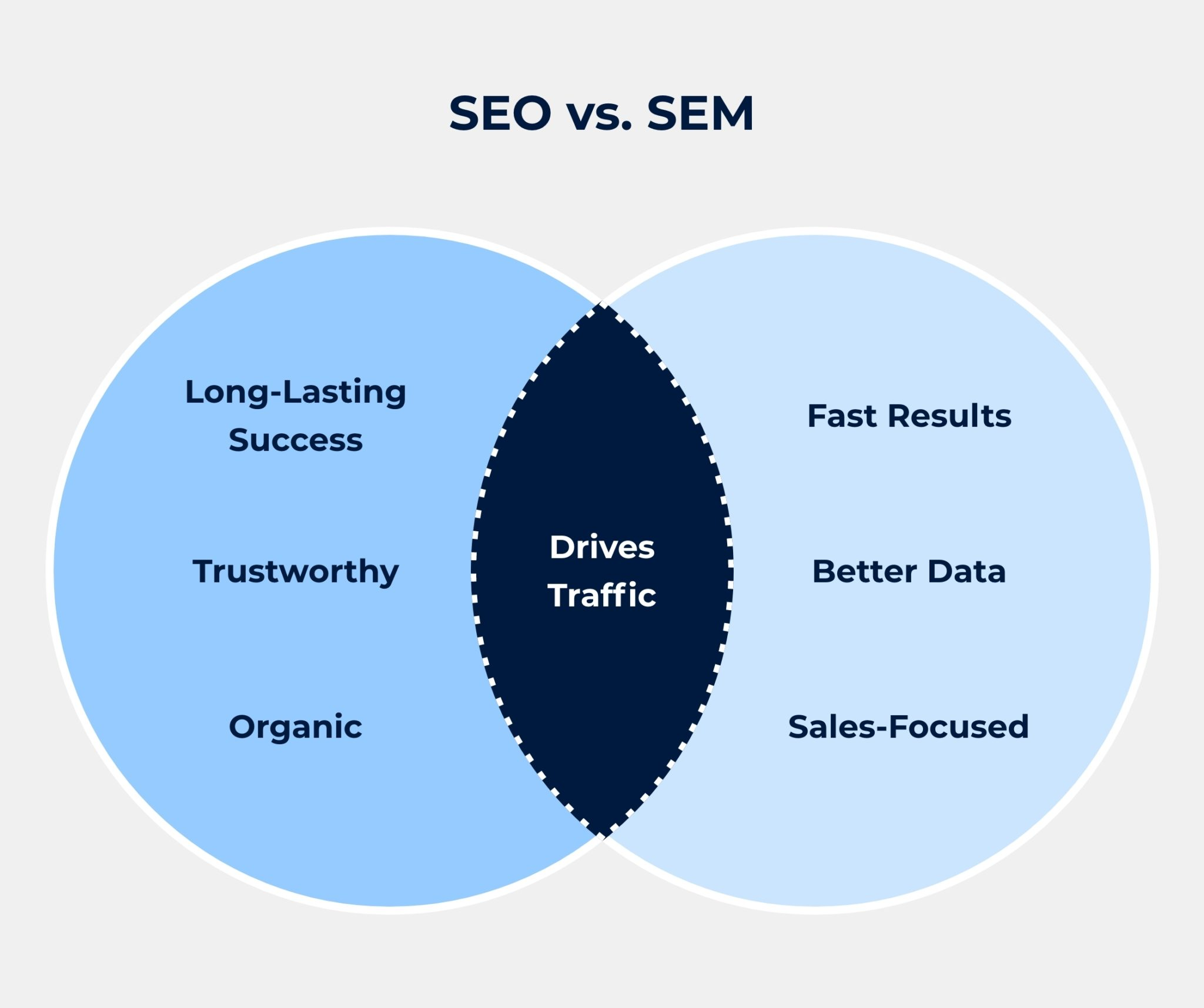
What Is the Diff
When businesses want more visibility on search engines, they usually turn to two main strategies: Search Engine Marketing (SEM) and Search Engine Optimization (SEO).
Both aim to place your website in front of people who are actively searching for information, products, or services. However, they work in very different ways, require different investments, and deliver results on different timelines.
In 2026, companies using platforms like Google, Google Ads, and Microsoft Advertising must understand how SEM and SEO complement—and compete with—each other.
This article explains the differences between SEM and SEO, their advantages and limitations, and how to use both effectively for sustainable growth.
Understanding SEM and SEO
What Is SEM?
Search Engine Marketing (SEM) refers to paid advertising on search engines.
It includes:
-
Pay-per-click (PPC) ads
-
Shopping ads
-
Local search ads
-
Call ads
-
Sponsored listings
You pay to appear in prominent positions.
Traffic stops when you stop paying.
What Is SEO?
Search Engine Optimization (SEO) is the practice of improving your website so it ranks higher in organic (unpaid) search results.
It includes:
-
Content optimization
-
Technical improvements
-
Backlink building
-
User experience enhancement
-
Site structure optimization
You earn rankings instead of buying them.
Traffic continues without direct payment.
Simple Definition
SEM = Paid visibility
SEO = Earned visibility
Both aim for search dominance.
Core Differences Between SEM and SEO
| Factor | SEM | SEO |
|---|---|---|
| Cost | Pay per click | Free (time & resources) |
| Speed | Immediate | Slow |
| Longevity | Stops with budget | Long-lasting |
| Control | High | Limited |
| Scalability | Budget-based | Content-based |
| Risk | Budget waste | Algorithm changes |
These differences shape strategy.
Speed: Immediate vs Long-Term Results
SEM Speed
SEM delivers traffic almost instantly.
Once campaigns are live:
-
Ads appear within hours
-
Leads can arrive same day
-
Sales can start immediately
This makes SEM ideal for:
-
New businesses
-
Product launches
-
Seasonal campaigns
SEO Speed
SEO takes time.
Typical timeline:
-
3–6 months for early results
-
6–12 months for strong rankings
-
12+ months for authority
SEO rewards patience.
Speed Comparison
SEM wins short-term.
SEO wins long-term.
Cost Structure and Budgeting
SEM Costs
SEM operates on bidding systems.
You pay for:
-
Clicks
-
Conversions
-
Impressions (sometimes)
Costs depend on:
-
Competition
-
Industry
-
Keywords
-
Quality Score
Popular industries can see very high CPCs.
SEO Costs
SEO does not charge per click.
Costs include:
-
Content creation
-
Tools
-
Technical optimization
-
Staff or agencies
Traffic itself is “free,” but building it is not.
Cost Comparison
| Cost Type | SEM | SEO |
|---|---|---|
| Ongoing Spend | High | Moderate |
| Scalability Cost | Increases | Decreases |
| ROI Timeline | Short-term | Long-term |
SEO usually becomes cheaper over time.
Traffic Quality and Intent
SEM Traffic
SEM targets high-intent users.
You choose keywords like:
-
“Buy laptop online”
-
“Emergency dentist near me”
These users are ready to act.
Conversion rates are often high.
SEO Traffic
SEO captures a wider range of intent.
Includes:
-
Informational searches
-
Research queries
-
Comparison searches
-
Transactional searches
SEO builds relationships across the funnel.
Quality Comparison
SEM = High immediate intent
SEO = Broad long-term engagement
Control and Flexibility
SEM Control
With SEM, you control:
-
Keywords
-
Budgets
-
Locations
-
Schedules
-
Devices
-
Audiences
Changes take effect quickly.
This makes SEM highly flexible.
SEO Control
SEO control is indirect.
Search engines decide rankings.
You can influence but not dictate results.
Algorithm updates may change visibility.
Control Comparison
SEM = Direct control
SEO = Influential control
Placement and Visibility
SEM Placement
SEM ads appear:
-
At top of results
-
Above organic listings
-
In shopping sections
-
In local packs
They dominate prime real estate.
SEO Placement
SEO results appear below ads.
However, many users trust organic results more.
Top organic rankings are extremely valuable.
Visibility Comparison
SEM buys premium space.
SEO earns authority.
Trust and Credibility
SEM Trust
Some users distrust ads.
They know businesses paid to appear.
However, strong brands still convert well.
SEO Trust
Organic results are seen as more credible.
High rankings imply authority and relevance.
This builds long-term brand trust.
Trust Comparison
SEO generally builds more credibility.
SEM builds faster exposure.
Data and Measurement
SEM Measurement
SEM offers precise tracking.
You can measure:
-
Cost per click
-
Cost per lead
-
ROAS
-
Impression share
Results are immediate and granular.
SEO Measurement
SEO relies on:
-
Rankings
-
Organic traffic
-
Engagement
-
Conversions
Data is slower and less predictable.
Measurement Comparison
SEM = Highly measurable
SEO = Long-term analytics
Scalability and Growth
SEM Scalability
SEM scales by increasing budget.
More money = more traffic (usually).
However, costs rise with scale.
SEO Scalability
SEO scales by building authority.
More content and links = more traffic.
Marginal costs decrease over time.
Scalability Comparison
SEM = Linear growth
SEO = Compounding growth
Risk and Stability
SEM Risks
-
Rising CPCs
-
Budget depletion
-
Click fraud
-
Platform policy changes
Traffic can disappear instantly.
SEO Risks
-
Algorithm updates
-
Ranking drops
-
Competitor content
-
Technical issues
Traffic loss is usually gradual.
Stability Comparison
SEO is generally more stable long-term.
SEM is more volatile.
Use Cases for SEM
SEM is ideal when:
-
You need immediate traffic
-
You are launching new products
-
You operate in competitive niches
-
You want precise targeting
-
You run promotions
SEM excels at short-term campaigns.
Use Cases for SEO
SEO is ideal when:
-
You want sustainable traffic
-
You are building authority
-
You have long sales cycles
-
You publish content regularly
-
You want lower long-term costs
SEO excels at long-term growth.
How SEM and SEO Work Together
Integrated Strategy
Top-performing companies combine both.
Example:
-
SEM for quick sales
-
SEO for long-term visibility
Each supports the other.
Data Sharing
SEM data helps SEO by:
-
Identifying high-converting keywords
-
Testing headlines
-
Validating demand
SEO insights help SEM by:
-
Improving landing pages
-
Enhancing relevance
-
Reducing CPCs
Brand Dominance
Using both allows you to:
-
Appear in ads
-
Rank organically
-
Dominate results pages
This maximizes click share.
Budget Allocation Strategies
Startup Model
-
70% SEM
-
30% SEO
Focus on quick traction.
Growth Model
-
50% SEM
-
50% SEO
Balance speed and stability.
Authority Model
-
30% SEM
-
70% SEO
Focus on long-term leadership.
Budgets should evolve over time.
Impact of AI and Privacy on SEM and SEO
AI in SEM
AI manages:
-
Bidding
-
Targeting
-
Creative testing
-
Attribution
Automation dominates.
AI in SEO
AI helps with:
-
Content creation
-
Keyword analysis
-
Technical audits
-
User intent modeling
SEO is becoming more data-driven.
Privacy Regulations
Privacy laws favor:
-
First-party data
-
Transparent practices
-
Trust-based engagement
Both SEM and SEO must adapt.
Common Myths About SEM and SEO
Myth 1: “SEO Is Free”
SEO requires major investment.
Myth 2: “SEM Guarantees Sales”
Bad campaigns waste money.
Myth 3: “SEO Replaces SEM”
They serve different purposes.
Myth 4: “SEM Hurts SEO”
They are independent systems.
Myth 5: “One Is Enough”
Most businesses need both.
Choosing Between SEM and SEO
Ask yourself:
-
Do I need results now? → SEM
-
Do I want sustainable traffic? → SEO
-
Do I have budget? → SEM
-
Do I have time? → SEO
-
Do I want brand authority? → SEO
Most answers point to combination strategies.
Real-World Example
Online Course Platform
SEM:
-
Runs ads for “learn Python online”
-
Gets instant signups
SEO:
-
Publishes tutorials and guides
-
Ranks for “Python for beginners”
Result:
-
Short-term sales + long-term growth
Future of SEM and SEO
By 2030:
-
SEM will be more automated and predictive
-
SEO will focus more on experience and authority
-
Both will be deeply integrated with AI
-
User intent will drive rankings more than keywords
Search marketing will become more holistic.
Conclusion
The difference between SEM and SEO lies in how visibility is achieved.
SEM delivers immediate, paid exposure through bidding and advertising. SEO builds long-term, unpaid visibility through optimization and authority.
SEM offers speed, control, and precise targeting. SEO offers trust, stability, and compounding growth. Each has strengths and weaknesses, and neither can fully replace the other.
In 2026, the most successful businesses do not choose between SEM and SEO. They combine both into a unified search strategy that delivers fast results today and sustainable growth tomorrow.
M and SEO? A Complete Comparison Guide for 2026
- Arts
- Business
- Computers
- Oyunlar
- Health
- Home
- Kids and Teens
- Money
- News
- Personal Development
- Recreation
- Regional
- Reference
- Science
- Shopping
- Society
- Sports
- Бизнес
- Деньги
- Дом
- Досуг
- Здоровье
- Игры
- Искусство
- Источники информации
- Компьютеры
- Личное развитие
- Наука
- Новости и СМИ
- Общество
- Покупки
- Спорт
- Страны и регионы
- World

 English
 Russian
 French
 Spanish
 Portuguese
 Deutsch
 Dutch
Dutch
 Italiano
 Arabic
 Romaian
 Portuguese (Brazil)
 Greek
Greek