
What Is a User Acquisition Funnel?
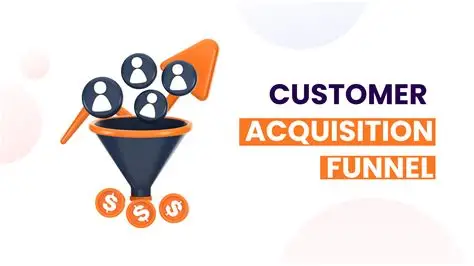
A user acquisition funnel is a structured framework that maps the journey a potential user takes from first discovering your brand to becoming an active, paying, and retained customer.
It helps businesses understand:
-
How users find them
-
What actions users take
-
Where users drop off
-
How to improve conversions
-
How to optimize marketing spend
In 2026, user acquisition funnels are more data-driven and personalized than ever. They connect marketing, product, and analytics into a single performance system.
The classic user acquisition funnel follows this path:
Awareness → Interest → Consideration → Conversion → Retention
Let’s break down each stage in detail.
1. Awareness Stage
At the top of the funnel (TOFU), users become aware of your brand or product.
They may not know your company yet — or even realize they have a specific problem.
Goal:
Generate visibility and attention.
Common Channels:
-
Social media ads
-
Video ads on YouTube
-
Search ads on Google
-
Organic SEO content
-
Influencer promotions
-
Display advertising
At this stage, the focus is not aggressive selling. Instead, it’s about:
-
Educating
-
Entertaining
-
Creating curiosity
-
Presenting a clear value proposition
Metrics to track:
-
Impressions
-
Reach
-
Video views
-
Click-through rate (CTR)
The goal is to move users into the next stage.
2. Interest Stage
Now the user is curious and actively exploring.
They may:
-
Visit your website
-
Click on your ad
-
Watch a product demo
-
Read a blog post
Goal:
Engage users and deepen understanding.
Content here should:
-
Explain benefits
-
Address pain points
-
Show social proof
-
Demonstrate functionality
Common tools:
-
Landing pages
-
Email capture forms
-
Free trials
-
Lead magnets
Metrics to track:
-
Time on page
-
Bounce rate
-
Email sign-ups
-
Trial starts
If engagement is low, messaging or targeting may need refinement.
3. Consideration Stage
At this stage, users are evaluating options.
They compare your product to competitors.
They assess:
-
Features
-
Pricing
-
Reviews
-
Reputation
Goal:
Build trust and reduce friction.
Effective tactics include:
-
Case studies
-
Testimonials
-
Product comparison pages
-
FAQ sections
-
Retargeting ads
Platforms like Meta allow retargeting campaigns to bring back interested users who didn’t convert initially.
Metrics to track:
-
Return visits
-
Demo bookings
-
Add-to-cart actions
-
Email engagement
The consideration stage is critical — this is where many potential users drop off.
4. Conversion Stage
This is where the user takes the desired action.
Conversions vary depending on your business model:
-
App download
-
Subscription purchase
-
Product checkout
-
Account registration
Goal:
Minimize friction and maximize clarity.
Best practices:
-
Clear call-to-action
-
Fast-loading pages
-
Simple forms
-
Transparent pricing
-
Mobile optimization
Metrics to track:
-
Conversion rate
-
CPA (Cost per acquisition)
-
CAC (Customer acquisition cost)
-
ROAS (Return on ad spend)
Strong onboarding immediately after conversion increases long-term success.
5. Retention Stage
Retention is often considered part of the acquisition funnel because profitability depends on it.
Acquiring users is expensive.
Keeping them is more cost-efficient.
Goal:
Increase lifetime value (LTV).
Retention tactics include:
-
Email nurturing
-
Push notifications
-
Loyalty programs
-
Regular product updates
-
Personalized experiences
Metrics to track:
-
Day 1 retention
-
Day 7 retention
-
Monthly active users (MAU)
-
Churn rate
-
LTV
If retention is low, acquisition performance suffers — even if conversion rates are strong.
Visualizing the Funnel
A funnel narrows because:
-
Many people see your brand
-
Fewer engage
-
Even fewer convert
-
Only a portion stay long term
For example:
10,000 impressions
→ 1,000 clicks
→ 300 sign-ups
→ 120 paying customers
→ 80 retained after 3 months
Understanding drop-off points helps optimize performance.
Why the User Acquisition Funnel Matters
A funnel:
-
Identifies bottlenecks
-
Improves marketing efficiency
-
Reduces acquisition cost
-
Aligns marketing and product
-
Increases profitability
Without a funnel structure, marketing efforts become scattered and reactive.
Full-Funnel Optimization
Modern user acquisition focuses on optimizing the entire journey — not just conversions.
Example improvements:
-
Better targeting → Improves awareness efficiency
-
Stronger creatives → Boosts click-through rate
-
Improved landing pages → Raises conversion rate
-
Better onboarding → Increases retention
-
Referral incentives → Expands top-of-funnel
Every stage impacts overall profitability.
User Acquisition Funnel vs Sales Funnel
They are similar but slightly different.
A sales funnel focuses primarily on closing revenue.
A user acquisition funnel focuses on acquiring and activating users — especially important for:
-
Apps
-
SaaS platforms
-
Subscription businesses
In digital businesses, acquisition and retention are tightly connected.
Common Funnel Mistakes
-
Ignoring top-of-funnel awareness
-
Weak value proposition
-
Complicated onboarding
-
Not retargeting interested users
-
Tracking only conversions, not retention
-
Scaling before validating unit economics
Funnel optimization is continuous.
Funnel Example for a Mobile App
Awareness:
Video ad on TikTok
Interest:
Landing page with demo video
Consideration:
Retargeting ad offering limited-time bonus
Conversion:
App store download
Retention:
Push notifications + in-app tutorials
Each stage must align with the next.
User Acquisition Funnels in 2026
Modern funnels are:
-
Multi-channel
-
Personalized
-
AI-optimized
-
Privacy-compliant
-
Data-integrated
AI tools automatically adjust bids and targeting.
However, strategic planning still determines success.
Measuring Funnel Performance
Track metrics at each stage:
Top-of-Funnel:
-
Reach
-
CTR
Mid-Funnel:
-
Engagement rate
-
Trial sign-ups
Bottom-of-Funnel:
-
Conversion rate
-
CPA
Post-Conversion:
-
Retention rate
-
LTV
-
Churn
Improvement in even one stage can dramatically increase profitability.
Final Thoughts
A user acquisition funnel is a structured path that turns strangers into loyal users.
It includes:
-
Awareness
-
Interest
-
Consideration
-
Conversion
-
Retention
Successful businesses optimize every stage, not just the final sale.
When your funnel is clear, measurable, and continuously optimized, user acquisition becomes predictable, scalable, and profitable.
The funnel is not just a marketing concept — it is the blueprint for sustainable growth.
- Arts
- Business
- Computers
- Games
- Health
- Home
- Kids and Teens
- Money
- News
- Personal Development
- Recreation
- Regional
- Reference
- Science
- Shopping
- Society
- Sports
- Бизнес
- Деньги
- Дом
- Досуг
- Здоровье
- Игры
- Искусство
- Источники информации
- Компьютеры
- Личное развитие
- Наука
- Новости и СМИ
- Общество
- Покупки
- Спорт
- Страны и регионы
- World

 Russian
 French
 Spanish
 Portuguese
 Deutsch
 Turkish
 Dutch
Dutch
 Italiano
 Arabic
 Romaian
 Portuguese (Brazil)
 Greek
Greek