
How does work-life balance affect productivity?
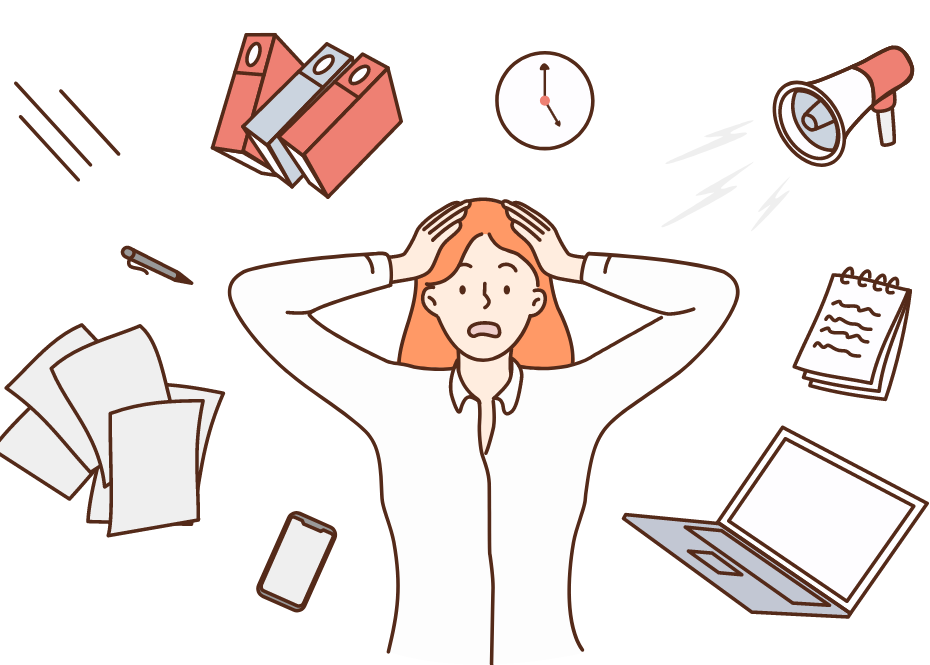
How Does Work-Life Balance Affect Productivity?
Work-life balance is often discussed as a personal wellness goal, but its effects extend directly into performance, output quality, and long-term productivity. In practical terms, productivity is not just about how many hours you work—it is about how effectively you convert time, energy, and attention into meaningful results. Work-life balance is one of the primary factors that determines whether that conversion is efficient or degraded.
To understand the relationship properly, it is important to move beyond simplistic assumptions like “working more equals more output” or “rest equals less productivity.” The reality is more complex: work-life balance functions as a system regulator that stabilizes cognitive performance, emotional resilience, and sustained output capacity over time.
1. Productivity Is an Energy System, Not Just a Time System
Most traditional views of productivity focus on time:
-
More hours → more output
-
Fewer distractions → more efficiency
However, modern cognitive science and organizational psychology emphasize that productivity is fundamentally energy-based.
Human performance depends on:
-
Cognitive energy (focus, attention, decision-making ability)
-
Emotional energy (motivation, stress tolerance)
-
Physical energy (fatigue, sleep quality)
Work-life balance directly regulates all three.
Key insight:
Without recovery outside of work, energy depletes faster than it can be replenished, leading to declining output quality even if hours increase.
2. How Poor Work-Life Balance Reduces Productivity
When work dominates life without adequate recovery, several productivity-damaging mechanisms appear.
2.1 Cognitive fatigue accumulation
Sustained overwork leads to:
-
Reduced attention span
-
Slower processing speed
-
Increased error rates
-
Difficulty switching between tasks
This is not subjective—it reflects measurable declines in executive function.
2.2 Decision fatigue
Every workday involves hundreds of micro-decisions:
-
What to prioritize
-
How to respond
-
When to switch tasks
Without recovery time, decision-making quality degrades, resulting in:
-
Poor prioritization
-
Avoidance of complex tasks
-
Reactive rather than strategic behavior
2.3 Emotional depletion
Poor work-life balance often leads to chronic stress exposure, which results in:
-
Irritability
-
Reduced motivation
-
Lower tolerance for frustration
This directly impacts collaboration, creativity, and persistence.
2.4 Burnout progression
Over time, sustained imbalance can lead to burnout, characterized by:
-
Emotional exhaustion
-
Detachment from work
-
Reduced sense of achievement
At this stage, productivity does not just decline—it often collapses.
3. How Work-Life Balance Enhances Productivity
Work-life balance is not a passive “rest state”—it actively improves performance capacity.
3.1 Recovery improves cognitive performance
Rest periods allow the brain to:
-
Consolidate memory
-
Restore attention capacity
-
Reset stress hormones
This leads to:
-
Faster thinking
-
Better problem-solving
-
Improved focus stability
A well-rested mind is significantly more efficient per unit of time.
3.2 Emotional regulation increases work quality
Balanced individuals tend to:
-
Handle stress more effectively
-
Maintain composure under pressure
-
Recover quickly from setbacks
This improves:
-
Decision quality
-
Communication effectiveness
-
Leadership capability
Emotional stability is a productivity multiplier in collaborative environments.
3.3 Motivation sustainability
Intrinsic motivation is heavily influenced by recovery and life satisfaction.
When life includes:
-
Relationships
-
Leisure
-
Meaningful non-work activities
Work becomes:
-
More engaging
-
Less psychologically draining
-
Easier to sustain long-term
Sustainable motivation leads to consistent output rather than volatile bursts.
4. The Productivity Curve: Diminishing Returns of Overwork
Productivity does not scale linearly with working hours. Instead, it follows a diminishing returns curve.
Initially:
-
Additional hours increase output
Eventually:
-
Each additional hour produces less output than the previous one
Finally:
-
Excess work leads to fatigue-induced inefficiency
This means:
After a certain threshold, working more reduces total effective productivity.
Work-life balance ensures individuals stay closer to the optimal efficiency zone rather than entering the exhaustion zone.
5. Focus Quality vs Focus Quantity
Work-life balance improves not just how long you can focus, but how deeply.
Poor balance:
-
Frequent distractions
-
Mental fatigue
-
Shallow focus cycles
Strong balance:
-
Longer deep work sessions
-
Reduced cognitive noise
-
Higher-quality attention
Deep work produces disproportionately higher output compared to fragmented attention.
6. The Role of Sleep in Productivity Regulation
Sleep is one of the most direct mediators between work-life balance and productivity.
Effects of insufficient sleep:
-
Reduced working memory capacity
-
Impaired logical reasoning
-
Slower reaction times
-
Reduced creativity
Even small reductions in sleep accumulate into large performance losses over time.
Key insight:
No productivity system can compensate for chronic sleep deprivation.
Work-life balance protects sleep integrity by preventing work from encroaching into recovery time.
7. Creativity and Cognitive Recovery
Creative problem-solving relies heavily on diffuse thinking modes, which occur during rest.
When work-life balance is poor:
-
Continuous task pressure reduces mental flexibility
-
Cognitive patterns become rigid
-
Problem-solving becomes repetitive
When balance is strong:
-
The mind has time to wander
-
New associations form
-
Insight generation increases
This is particularly important in roles involving strategy, design, engineering, and innovation.
8. Long-Term vs Short-Term Productivity
Work-life imbalance often produces a misleading short-term productivity spike.
Short-term effect:
-
More hours worked
-
Temporary output increase
Long-term effect:
-
Fatigue accumulation
-
Motivation decline
-
Performance deterioration
Work-life balance prioritizes sustainable productivity trajectories, not temporary peaks.
9. Workplace Performance and Interpersonal Efficiency
Productivity is not only individual—it is also social.
Poor work-life balance leads to:
-
Reduced patience with colleagues
-
Lower communication quality
-
Increased conflict
-
Reduced collaboration efficiency
Balanced individuals:
-
Communicate more clearly
-
Collaborate more effectively
-
Contribute to healthier team dynamics
Team productivity is often constrained more by interpersonal friction than technical skill.
10. The Role of Boundaries in Productivity Optimization
Boundaries between work and personal life are not restrictive—they are enabling structures.
Without boundaries:
-
Work expands endlessly
-
Recovery is fragmented
-
Attention is constantly divided
With boundaries:
-
Focus periods become more intense
-
Recovery becomes complete
-
Cognitive load decreases
This separation allows both systems—work and life—to function at higher quality.
11. Energy Cycling: The Hidden Productivity Mechanism
Human performance operates in cycles:
-
High energy → deep work
-
Low energy → recovery
Work-life balance respects these cycles instead of forcing constant output.
Ignoring energy cycles leads to:
-
Burnout
-
Reduced efficiency
-
Emotional instability
Respecting them leads to:
-
Higher sustained output
-
Better mental clarity
-
Lower effort per task
12. The Compounding Effect of Balance Over Time
Work-life balance is not just a daily optimization—it compounds over time.
Balanced individuals:
-
Maintain healthier stress levels
-
Experience fewer productivity crashes
-
Build sustainable habits
-
Avoid burnout cycles
Over months and years, this leads to significantly higher cumulative output than overworked individuals.
13. Common Misconception: “Balance Reduces Ambition”
A frequent misunderstanding is that work-life balance reduces drive.
In reality:
-
Excessive work reduces long-term capacity
-
Balanced systems increase consistency
-
Consistency produces more output than burnout cycles
High performers are not those who work the most—they are those who sustain performance the longest.
14. Practical Productivity Implications of Work-Life Balance
If applied correctly, work-life balance leads to:
-
Higher focus intensity during work hours
-
Lower error rates
-
Better decision-making
-
Increased creativity
-
More stable motivation
-
Reduced burnout risk
This translates into measurable improvements in both output quality and consistency.
Conclusion
Work-life balance is not separate from productivity—it is one of its foundational determinants. Productivity depends on sustained cognitive, emotional, and physical capacity, all of which are directly regulated by how well work is balanced with rest, recovery, and personal life.
In simple terms:
-
Overwork increases short-term output but reduces long-term efficiency
-
Balanced work patterns optimize both performance quality and sustainability
-
Recovery is not the opposite of productivity—it is part of the productivity system
The most effective productivity strategy is not maximizing work hours, but maximizing effective output per unit of energy over time. Work-life balance is what makes that possible.
- Arts
- Business
- Computers
- Jeux
- Health
- Domicile
- Kids and Teens
- Argent
- News
- Personal Development
- Recreation
- Regional
- Reference
- Science
- Shopping
- Society
- Sports
- Бизнес
- Деньги
- Дом
- Досуг
- Здоровье
- Игры
- Искусство
- Источники информации
- Компьютеры
- Личное развитие
- Наука
- Новости и СМИ
- Общество
- Покупки
- Спорт
- Страны и регионы
- World

 English
 Russian
 Spanish
 Portuguese
 Deutsch
 Turkish
 Dutch
Dutch
 Italiano
 Arabic
 Romaian
 Portuguese (Brazil)
 Greek
Greek