
Can you be successful and still have work-life balance?
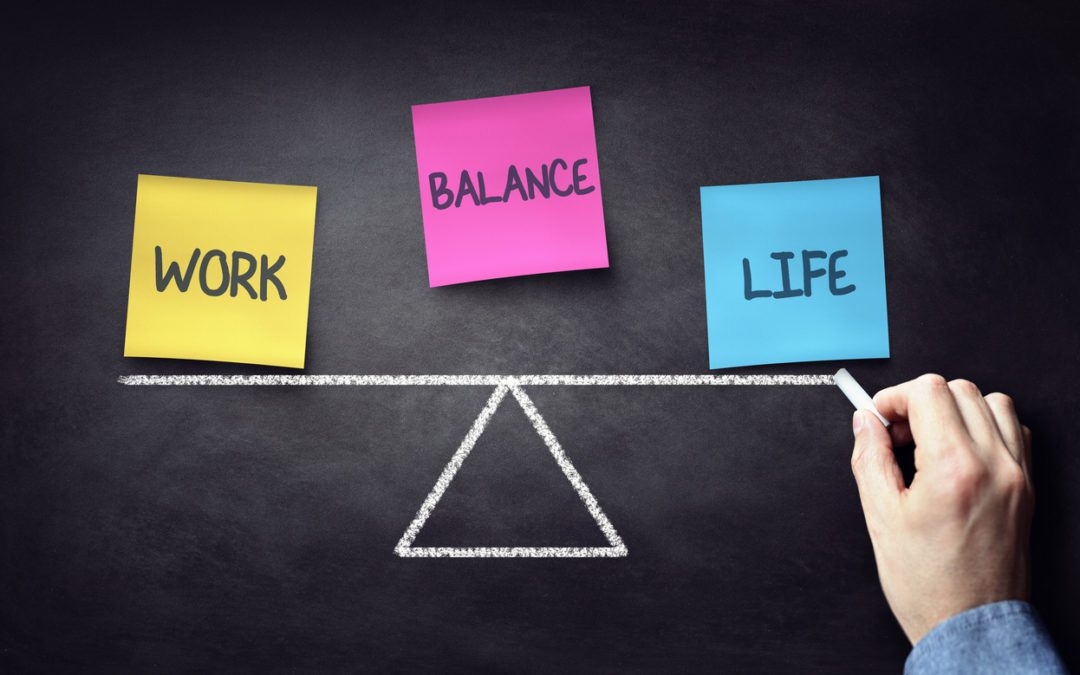
Can You Be Successful and Still Have Work-Life Balance?
The idea that success and work-life balance are mutually exclusive is one of the most persistent narratives in modern work culture. It is often reinforced by stories of high achievers who sacrifice sleep, relationships, and personal time in pursuit of excellence. However, this narrative is incomplete and, in many cases, misleading.
Success and work-life balance are not inherently incompatible. The real issue is not whether they can coexist, but under what conditions they reinforce each other—or come into conflict.
To understand this properly, we need to define success more precisely, examine the trade-offs involved in different career stages, and analyze the systems that allow both high performance and sustainable living.
1. Redefining “Success” Beyond Overwork
A major problem in this discussion is that “success” is often defined narrowly as:
-
High income
-
Senior job titles
-
Rapid career progression
-
Long working hours
But this definition ignores other dimensions of success, such as:
-
Health and longevity
-
Emotional stability
-
Relationship quality
-
Autonomy and control over time
-
Long-term sustainability of performance
If success includes only career output, then work-life balance may appear incompatible. But if success includes life quality, then balance becomes part of success itself.
Key insight:
A sustainable definition of success must include the ability to maintain performance without degrading health or personal life over time.
2. Why the “No Balance Required for Success” Myth Exists
The belief that success requires sacrificing balance comes from several sources:
2.1 Survivor bias
We often hear stories of extreme overworkers who became successful, but we do not see:
-
Those who burned out and dropped out
-
Those whose health declined
-
Those who achieved success but could not sustain it
2.2 Early-stage intensity requirements
Certain phases of life genuinely require intense effort:
-
Starting a business
-
Studying for critical exams
-
Building initial career credibility
During these phases, imbalance may temporarily increase output.
2.3 Cultural reinforcement
Many industries normalize overwork as a status symbol, equating:
-
Being busy → being valuable
-
Long hours → dedication
This creates distorted expectations about what success requires.
3. The Productivity Paradox: More Work ≠ More Output
One of the most important realities that challenges the “no balance” myth is the productivity paradox.
Beyond a certain threshold:
-
Additional work hours produce diminishing returns
-
Cognitive performance declines
-
Error rates increase
-
Decision quality drops
This means that excessive work does not scale success linearly.
Key principle:
Success depends on effective output, not raw input hours.
Work-life balance directly influences this by maintaining cognitive efficiency and emotional stability.
4. How Work-Life Balance Actually Supports Success
Rather than competing with success, work-life balance often enables it.
4.1 Sustained performance over time
Success is rarely the result of short bursts—it is usually the result of:
-
Years of consistent effort
-
Stable performance habits
-
Avoidance of burnout cycles
Work-life balance ensures continuity.
4.2 Better decision-making under pressure
Balanced individuals tend to have:
-
Lower stress levels
-
Better emotional regulation
-
Improved cognitive clarity
This leads to higher-quality decisions, which is critical in leadership, entrepreneurship, and technical roles.
4.3 Creativity and innovation
Rest periods are essential for:
-
Pattern recognition
-
Insight generation
-
Problem reframing
Overwork reduces cognitive flexibility, while balance restores it.
4.4 Reduced burnout risk
Burnout is a major productivity killer. It causes:
-
Loss of motivation
-
Cognitive fatigue
-
Emotional detachment
Work-life balance acts as a protective buffer.
5. The Real Conflict: Intensity vs Sustainability
The tension is not between success and balance—it is between:
-
Short-term intensity
-
Long-term sustainability
Certain goals require bursts of high intensity, but sustained success requires recovery cycles.
Example:
-
Athletes train intensely but also prioritize rest
-
Elite performers cycle between stress and recovery
Work-life balance is not absence of effort—it is structured recovery within effort cycles.
6. High Achievers Who Maintain Balance
Contrary to popular belief, many highly successful individuals prioritize balance, but in structured ways.
They typically:
-
Protect recovery time
-
Maintain strict boundaries
-
Delegate effectively
-
Focus on high-impact tasks only
Their success is not despite balance—it is often because of it.
7. The Role of Systems Over Willpower
People who combine success with balance do not rely on constant discipline. Instead, they use systems:
Examples:
-
Time-blocking schedules
-
Clear work boundaries
-
Prioritized task lists
-
Delegation structures
Systems reduce cognitive load and prevent overwork from becoming default behavior.
8. Energy Management as the Hidden Factor
Success is not just about time—it is about energy availability.
Work-life balance supports:
-
Physical recovery (sleep, health)
-
Emotional stability (relationships, downtime)
-
Mental clarity (reduced overload)
Without energy, time becomes irrelevant.
9. When Work-Life Imbalance Is Temporary and Strategic
There are situations where imbalance is intentional:
-
Launching a product
-
Meeting critical deadlines
-
Transitioning careers
However, key distinction matters:
-
Temporary imbalance → strategic
-
Permanent imbalance → destructive
Sustainable success requires returning to balance after intense phases.
10. Why Some People Mistake Burnout for Success
Many individuals confuse:
-
Constant stress → ambition
-
Exhaustion → productivity
-
Overwork → progress
But in reality:
-
Burnout reduces output quality
-
Stress decreases cognitive performance
-
Exhaustion limits creativity
What looks like success in the short term often undermines long-term achievement.
11. The Compounding Effect of Balanced Performance
Work-life balance produces compounding benefits over time:
-
Better health → fewer disruptions
-
Stable energy → consistent output
-
Strong relationships → emotional resilience
-
Reduced burnout → sustained career trajectory
Over years, this compounds into higher total success than inconsistent overwork cycles.
12. Common Misunderstanding: Balance Means Less Ambition
Many assume that prioritizing balance reduces ambition. In reality:
-
Ambition is about direction
-
Balance is about sustainability
You can pursue high ambition while maintaining balance, provided systems are in place to manage workload and recovery.
13. Practical Conditions for Achieving Both Success and Balance
Success with balance is possible when certain conditions are met:
13.1 Clear prioritization
Not everything is equally important. High performers focus on:
-
High-impact tasks
-
Strategic decisions
-
Long-term goals
13.2 Boundary enforcement
-
Defined working hours
-
Controlled communication windows
-
Protected personal time
13.3 Efficient work design
-
Eliminating low-value tasks
-
Delegating where possible
-
Automating repetitive processes
13.4 Recovery integration
-
Sleep protection
-
Scheduled downtime
-
Mental disconnection from work
14. The Trade-Off That Actually Exists
The real trade-off is not between success and balance, but between:
-
Efficiency-based success (balanced, sustainable)
vs -
Intensity-based success (short-term, high-risk)
Efficiency-based success tends to dominate over longer time horizons.
15. The Long-Term Perspective
If we evaluate success over:
-
1 week → overwork may look productive
-
1 year → balance begins to outperform
-
10 years → balance almost always wins
Sustainable performance compounds, while burnout disrupts trajectories.
Conclusion
Yes—you can absolutely be successful and still maintain work-life balance. In fact, for most people, work-life balance is not a limitation on success but a structural requirement for sustaining it.
The key distinction is understanding that success is not measured by maximum effort in isolated moments, but by consistent, high-quality output over time.
Work-life balance enables:
-
Higher cognitive performance
-
Better decision-making
-
Reduced burnout risk
-
Greater long-term consistency
The most effective approach is not to choose between success and balance, but to design a system where they reinforce each other.
In the long run, the people who succeed most are rarely those who worked the hardest at any single moment—but those who were able to keep working effectively for the longest time.
- Arts
- Business
- Computers
- Παιχνίδια
- Health
- Κεντρική Σελίδα
- Kids and Teens
- Money
- News
- Personal Development
- Recreation
- Regional
- Reference
- Science
- Shopping
- Society
- Sports
- Бизнес
- Деньги
- Дом
- Досуг
- Здоровье
- Игры
- Искусство
- Источники информации
- Компьютеры
- Личное развитие
- Наука
- Новости и СМИ
- Общество
- Покупки
- Спорт
- Страны и регионы
- World

 English
 Russian
 French
 Spanish
 Portuguese
 Deutsch
 Turkish
 Dutch
Dutch
 Italiano
 Arabic
 Romaian
 Portuguese (Brazil)
