
How can companies improve employee work-life balance?
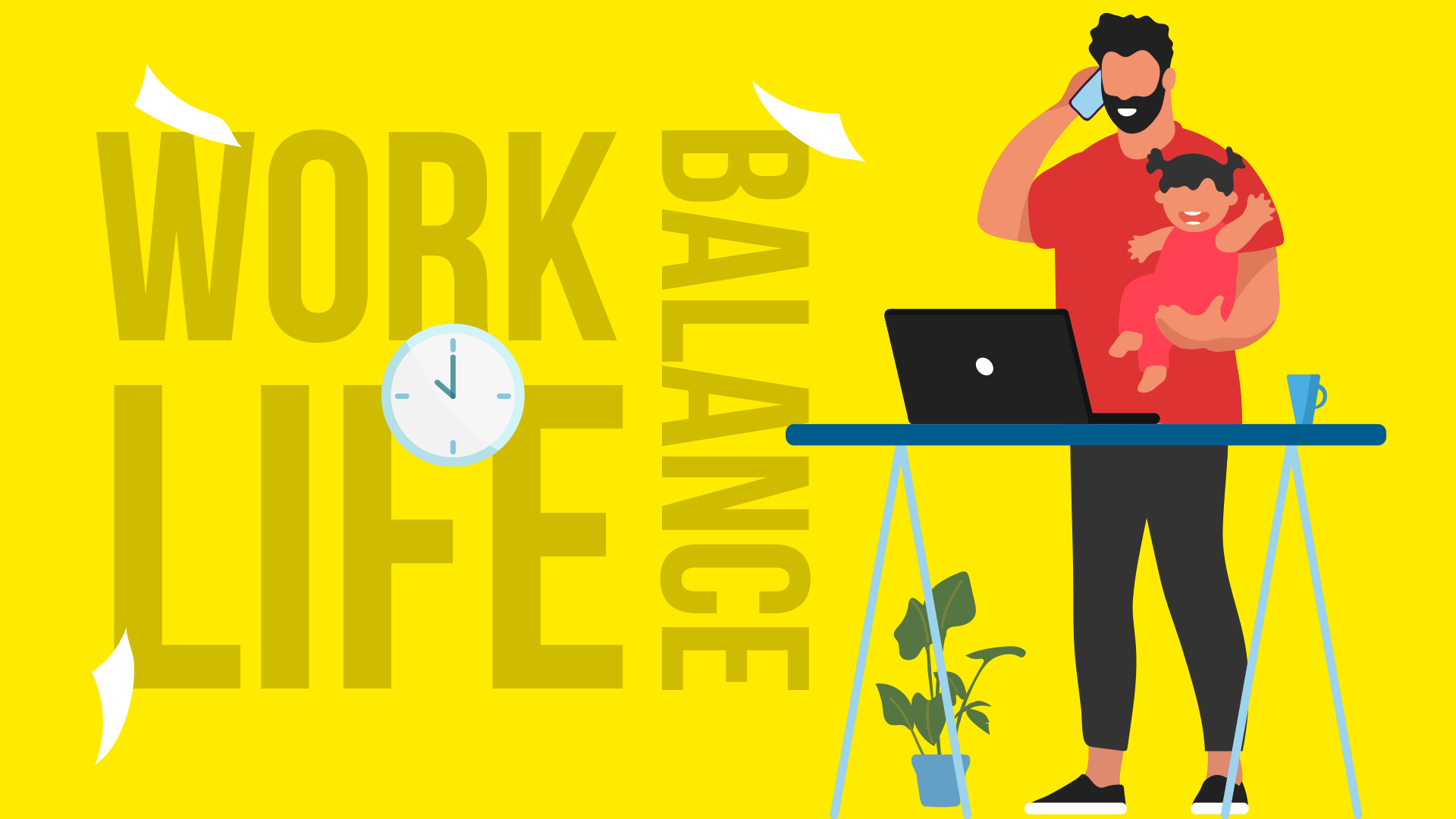
How Can Companies Improve Employee Work–Life Balance?
Employee work–life balance is no longer a “nice to have” benefit—it is a structural determinant of productivity, retention, and organizational resilience. Companies that ignore it tend to experience higher turnover, burnout-related absenteeism, reduced engagement, and declining performance quality. Conversely, organizations that actively design for work–life balance gain measurable advantages in output consistency, talent retention, and employer brand strength.
Improving work–life balance is not achieved through isolated perks (like occasional wellness programs). It requires system-level design changes in workload allocation, organizational culture, leadership behavior, and operational policies.
This guide breaks down how companies can systematically improve employee work–life balance in a sustainable, scalable way.
1. Redesign Workload Distribution to Prevent Chronic Overload
The most fundamental driver of poor work–life balance is not time management—it is structural overwork.
Common organizational failure patterns:
-
Understaffed teams expecting full output capacity
-
Unrealistic deadlines becoming normalized
-
Uneven distribution of responsibilities
-
“Hero culture” where overwork is rewarded
Solutions:
a. Capacity-based planning
Companies should align workload with realistic human capacity rather than aspirational output targets.
This includes:
-
Defining sustainable workload thresholds per role
-
Tracking utilization rates across teams
-
Adjusting deadlines based on capacity, not urgency alone
b. Workload audits
Regular audits help identify chronic overloading in specific teams or individuals.
c. Hiring to demand reality
Instead of expecting existing employees to absorb increased demand indefinitely, organizations must scale staffing proportionally.
Without workload correction, all other work–life balance initiatives are superficial.
2. Normalize Reasonable Working Hours
Long hours are often culturally reinforced rather than operationally required.
Problems with long-hour cultures:
-
Diminishing returns after cognitive fatigue
-
Increased error rates
-
Higher burnout risk
-
Reduced creativity and problem-solving quality
Company-level interventions:
a. Set explicit working hour expectations
Clear policies reduce ambiguity about availability norms.
b. Discourage after-hours communication
Unless role-critical, messaging outside working hours should be minimized.
c. Leadership modeling
Employees mirror leadership behavior. If managers send late-night emails, employees feel implicit pressure to respond.
A healthy culture requires leaders to visibly disconnect.
3. Implement Flexible Work Arrangements
Flexibility is one of the strongest drivers of improved work–life balance.
Types of flexibility:
a. Flexible scheduling
Allow employees to adjust start and end times based on personal needs.
b. Remote or hybrid work
Reducing commute time significantly improves daily recovery capacity.
c. Asynchronous work
Minimizes real-time interruption pressure and allows focused deep work.
Key principle:
Flexibility must come with clarity of expectations, not ambiguity.
4. Redesign Meetings for Efficiency and Necessity
Meetings are one of the largest hidden drains on employee time and energy.
Common issues:
-
Excessive frequency
-
Lack of clear agendas
-
Too many participants
-
Poor decision closure
Improvements:
a. Meeting justification rules
Every meeting should have:
-
A clear purpose
-
A defined outcome
-
A required attendee list
b. Default to async communication
Many updates can be handled via documentation, dashboards, or written updates.
c. Time-boxing meetings
Strict time limits prevent unnecessary expansion.
Reducing meeting load directly increases employee control over their workday.
5. Promote Deep Work and Reduce Fragmentation
Work–life balance is not only about hours—it is about cognitive efficiency.
Fragmented work increases:
-
Mental fatigue
-
Perceived workload
-
Stress levels
Organizational strategies:
a. Protected focus time
Block periods where employees are not expected to respond to messages or attend meetings.
b. Notification policies
Reduce unnecessary internal communication interruptions.
c. Task batching norms
Encourage grouping similar tasks rather than constant switching.
Less fragmentation means more output in less time, improving both productivity and balance.
6. Build a Culture That Does Not Reward Overwork
Culture is the strongest determinant of behavior in organizations.
Toxic patterns:
-
Rewarding employees who consistently work late
-
Equating busyness with productivity
-
Ignoring burnout signals until breakdown occurs
Healthier cultural signals:
a. Reward efficiency, not hours
Recognize outcomes rather than visible effort.
b. Normalize boundary setting
Employees should feel safe declining unreasonable workload.
c. Celebrate sustainable performance
Highlight employees who deliver consistently without overextension.
Culture must make balance socially acceptable.
7. Improve Manager Training and Accountability
Managers are the primary gatekeepers of employee workload and stress.
Key responsibilities:
-
Workload distribution
-
Expectation setting
-
Emotional support
-
Early burnout detection
Company actions:
a. Train managers in workload calibration
Managers should understand capacity limits and prioritization frameworks.
b. Teach psychological safety practices
Employees must feel safe reporting overload without fear of negative consequences.
c. Hold managers accountable for burnout indicators
High turnover or burnout in teams should be treated as leadership performance signals.
8. Provide Clear Role Definitions and Prioritization Structures
Ambiguity increases stress significantly.
When employees are unsure:
-
What matters most
-
What can be deprioritized
-
What “good performance” looks like
They tend to overwork to compensate.
Solutions:
a. Clear role expectations
Define core responsibilities explicitly.
b. Priority frameworks
Use structured prioritization systems (e.g., tiered task importance).
c. Regular recalibration
Roles evolve—so should expectations.
Clarity reduces unnecessary effort and stress.
9. Support Mental Health and Recovery Resources
Work–life balance is strongly linked to psychological resilience.
Company supports:
a. Access to counseling or therapy resources
Employee assistance programs (EAPs) or similar services.
b. Stress management training
Teach employees how to regulate workload stress.
c. Encouraging time off usage
Unused vacation time often correlates with burnout risk.
Importantly, these supports must not replace structural fixes—they are complementary.
10. Normalize Time Off Without Penalty
Many employees avoid taking leave due to implicit pressure.
Organizational fixes:
a. Encourage full use of vacation days
Leadership should actively promote time off.
b. Prevent “vacation guilt”
No expectation of constant availability during leave.
c. Ensure coverage systems
Employees should not fear backlog accumulation upon return.
Time off is a recovery mechanism, not a disruption.
11. Reduce Digital Overload and Always-On Communication Culture
Constant digital connectivity erodes boundaries.
Common issues:
-
Slack/email expectations outside hours
-
Instant response culture
-
Notification overload
Solutions:
a. Communication guidelines
Define what requires immediate response vs delayed response.
b. Asynchronous-first policies
Default to non-real-time communication where possible.
c. Notification hygiene
Reduce unnecessary alerts across tools.
Less digital pressure = better recovery.
12. Design Workflows for Realistic Execution
Many work–life balance problems originate in poorly designed workflows.
Examples:
-
Excess dependencies between teams
-
Bottlenecks requiring constant urgent fixes
-
Poor planning leading to firefighting
Improvements:
a. Process optimization
Streamline workflows to reduce unnecessary friction.
b. Risk planning
Anticipate workload spikes instead of reacting to them.
c. Buffer time inclusion
Avoid schedules that assume perfect execution.
Stable workflows reduce emergency stress cycles.
13. Encourage Autonomy and Decision Control
Autonomy is strongly linked to reduced stress.
When employees have control over:
-
How they complete work
-
When they complete tasks
-
How they structure their day
They experience lower stress even under high workload.
Organizational practices:
-
Avoid micromanagement
-
Focus on outcomes instead of process control
-
Empower employees to make scheduling decisions
Control reduces perceived pressure.
14. Monitor Work–Life Balance as a Measurable Metric
If it is not measured, it is often ignored.
Metrics companies can track:
-
Overtime frequency
-
Vacation usage rates
-
Employee burnout surveys
-
Turnover rates
-
Engagement scores
These indicators help identify systemic imbalance early.
15. Accept That Peak Performance Requires Recovery Cycles
High performance is not sustained through constant intensity—it is sustained through alternating cycles of effort and recovery.
Organizations that ignore this reality tend to:
-
Burn out high performers
-
Lose institutional knowledge
-
Experience performance volatility
Sustainable performance requires structured downtime.
Conclusion
Improving employee work–life balance is not a single initiative—it is a systems engineering problem. It requires aligning workload, culture, leadership behavior, communication norms, and organizational expectations with human cognitive and physiological limits.
The most effective strategies include:
-
Structuring realistic workloads and staffing levels
-
Reducing unnecessary meetings and communication overload
-
Supporting flexibility and autonomy
-
Preventing overwork normalization through leadership behavior
-
Designing workflows that reduce constant urgency cycles
-
Encouraging recovery through time off and mental health support
Ultimately, companies that prioritize work–life balance are not reducing ambition—they are increasing sustainability. Balanced organizations produce more consistent performance, retain talent longer, and build healthier, more adaptive work environments over time.
- Arts
- Business
- Computers
- Jogos
- Health
- Início
- Kids and Teens
- Money
- News
- Personal Development
- Recreation
- Regional
- Reference
- Science
- Shopping
- Society
- Sports
- Бизнес
- Деньги
- Дом
- Досуг
- Здоровье
- Игры
- Искусство
- Источники информации
- Компьютеры
- Личное развитие
- Наука
- Новости и СМИ
- Общество
- Покупки
- Спорт
- Страны и регионы
- World

 English
 Russian
 French
 Spanish
 Deutsch
 Turkish
 Dutch
Dutch
 Italiano
 Arabic
 Romaian
 Portuguese (Brazil)
 Greek
Greek