
What Is the Customer Acquisition Funnel?
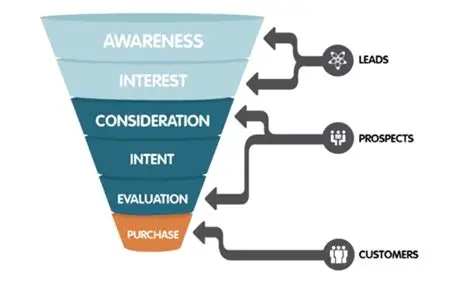
The customer acquisition funnel is one of the most fundamental frameworks in marketing and growth strategy. It explains how potential customers move from first awareness of a brand to becoming paying customers, and it helps businesses understand where prospects drop off, where to optimize, and how to scale acquisition efficiently.
Without a clear acquisition funnel, businesses waste marketing spend, misinterpret performance metrics, and struggle to grow sustainably. This article provides a complete breakdown of the customer acquisition funnel, including its stages, variations, real-world examples, and how to apply it across different business models.
What Is the Customer Acquisition Funnel?
The customer acquisition funnel is a visual and conceptual model that represents the journey a potential customer takes from initial exposure to a brand through conversion into a customer.
It is called a “funnel” because:
-
Many people enter at the top
-
Fewer progress through each stage
-
Only a portion convert at the bottom
The funnel helps businesses understand how attention turns into revenue.
Why the Customer Acquisition Funnel Matters
Understanding the acquisition funnel allows businesses to:
-
Identify where prospects drop off
-
Improve conversion rates at each stage
-
Allocate marketing budget more effectively
-
Reduce customer acquisition cost (CAC)
-
Align marketing, sales, and product teams
-
Create predictable and scalable growth
Without a funnel mindset, acquisition becomes reactive rather than strategic.
The Core Stages of the Customer Acquisition Funnel
While variations exist, most acquisition funnels include five core stages:
-
Awareness
-
Interest
-
Consideration
-
Conversion
-
Activation (sometimes included post-conversion)
Some models simplify or expand these stages, but the logic remains the same.
Stage 1: Awareness
What Is Awareness?
Awareness is the stage where potential customers first discover your brand, product, or service.
At this point:
-
They may not know they have a problem
-
They are not actively looking to buy
-
They are simply becoming aware you exist
This is the top of the funnel (TOFU).
Awareness Channel Examples
-
SEO and blog content
-
Social media posts
-
Paid ads
-
Influencer mentions
-
PR and media coverage
-
Word of mouth
-
Podcasts and videos
The goal is visibility, not immediate conversion.
Metrics to Track at Awareness Stage
-
Impressions
-
Reach
-
Website traffic
-
Brand searches
-
Social engagement
-
Cost per thousand impressions (CPM)
Awareness metrics measure exposure, not revenue.
Example of Awareness in Action
A SaaS company publishes an SEO-optimized blog post titled
“10 Signs Your Team Is Wasting Time on Manual Reporting.”
A reader searching for productivity tips finds the article and becomes aware of the company—without any purchase intent yet.
Stage 2: Interest
What Is Interest?
At the interest stage, prospects recognize a problem or opportunity and begin engaging more deeply.
They may:
-
Read multiple articles
-
Follow your brand on social media
-
Subscribe to a newsletter
-
Watch videos or webinars
Interest means attention has been captured.
Interest Channel Examples
-
Email signups
-
Lead magnets (ebooks, checklists)
-
Educational videos
-
Free tools or calculators
-
Social media follows
The goal is to nurture curiosity and engagement.
Metrics to Track at Interest Stage
-
Time on site
-
Pages per session
-
Email signup rate
-
Content engagement
-
Lead conversion rate
Interest metrics show whether your messaging resonates.
Example of Interest in Action
After reading the blog post, the visitor downloads a free productivity checklist in exchange for their email address. They are now an engaged lead.
Stage 3: Consideration
What Is Consideration?
At the consideration stage, prospects actively evaluate solutions.
They:
-
Compare alternatives
-
Research features and pricing
-
Read reviews or testimonials
-
Evaluate fit and trust
This is where brand differentiation matters most.
Consideration Channel Examples
-
Product pages
-
Comparison guides
-
Case studies
-
Testimonials and reviews
-
Webinars and demos
-
Sales calls (B2B)
The goal is to position your solution as the best choice.
Metrics to Track at Consideration Stage
-
Demo requests
-
Free trial signups
-
Product page conversion rate
-
Sales-qualified leads (SQLs)
-
Cost per lead (CPL)
These metrics reflect purchase intent.
Example of Consideration in Action
The lead receives an email showcasing a case study explaining how a similar company saved 20 hours per week using the product. They start considering a free trial.
Stage 4: Conversion
What Is Conversion?
Conversion is the moment a prospect becomes a customer.
Depending on the business, this could be:
-
Making a purchase
-
Starting a paid subscription
-
Signing a contract
-
Completing checkout
This is the bottom of the funnel (BOFU).
Conversion Channel Examples
-
Checkout pages
-
Pricing pages
-
Sales calls
-
Contract signing
-
Payment processing
The goal is to remove friction and close the deal.
Metrics to Track at Conversion Stage
-
Conversion rate
-
Customer acquisition cost (CAC)
-
Cost per acquisition (CPA)
-
Revenue per conversion
-
Abandoned checkout rate
Small improvements here can dramatically reduce CAC.
Example of Conversion in Action
The lead starts a free trial, experiences value, and upgrades to a paid plan after 10 days.
Stage 5: Activation (Often Overlooked)
What Is Activation?
Activation occurs when a new customer experiences their first real moment of value.
Examples:
-
Completing onboarding
-
Using a key feature
-
Making a first successful action
Activation determines whether acquisition spend was truly successful.
Why Activation Matters for Acquisition
Poor activation:
-
Increases churn
-
Wastes acquisition spend
-
Inflates effective CAC
Strong activation:
-
Improves retention
-
Increases referrals
-
Improves LTV:CAC ratio
Metrics to Track at Activation Stage
-
Time to first value
-
Onboarding completion rate
-
Feature adoption
-
Early churn rate
Activation connects acquisition to retention.
Common Customer Acquisition Funnel Models
AARRR Funnel (Pirate Metrics)
-
Acquisition
-
Activation
-
Retention
-
Revenue
-
Referral
Used heavily in startups and SaaS businesses.
AIDA Funnel
-
Awareness
-
Interest
-
Desire
-
Action
A classic marketing funnel used in advertising and branding.
Simplified 3-Stage Funnel
-
Top of funnel (awareness)
-
Middle of funnel (consideration)
-
Bottom of funnel (conversion)
Often used for reporting and high-level strategy.
Customer Acquisition Funnel Diagrams (How They’re Structured)
While diagrams vary, most funnel visuals:
-
Are widest at the top (awareness)
-
Narrow progressively through stages
-
Show drop-off percentages between stages
-
Highlight conversion rates
Businesses often overlay metrics like:
-
Traffic volume
-
Conversion rates
-
CAC per stage
Funnel diagrams help teams quickly spot bottlenecks.
Funnel Examples by Business Type
B2B Acquisition Funnel Example
-
Awareness: LinkedIn post or SEO article
-
Interest: Webinar signup
-
Consideration: Demo request
-
Conversion: Contract signed
-
Activation: Successful onboarding
Sales involvement is usually heavier in B2B funnels.
B2C Acquisition Funnel Example
-
Awareness: Instagram ad
-
Interest: Product page visit
-
Consideration: Reviews and comparisons
-
Conversion: Online purchase
-
Activation: Product use and satisfaction
B2C funnels are typically faster and higher volume.
Ecommerce Funnel Example
-
Awareness: Paid ad or SEO
-
Interest: Product page view
-
Consideration: Add to cart
-
Conversion: Checkout
-
Activation: Delivery and first use
Cart abandonment is a major funnel optimization focus.
How to Optimize Each Funnel Stage
Awareness Optimization
-
Improve targeting
-
Invest in SEO
-
Expand distribution channels
-
Strengthen brand messaging
Interest Optimization
-
Offer valuable content
-
Improve lead magnets
-
Segment audiences
-
Personalize messaging
Consideration Optimization
-
Improve social proof
-
Clarify differentiation
-
Simplify pricing
-
Provide education and reassurance
Conversion Optimization
-
Reduce friction
-
Simplify checkout
-
Optimize CTAs
-
Offer incentives
-
Address objections clearly
Activation Optimization
-
Streamline onboarding
-
Highlight key value moments
-
Provide guidance and support
-
Use email and in-app nudges
How the Funnel Impacts Customer Acquisition Cost
CAC is influenced by every funnel stage.
-
Poor awareness targeting increases wasted spend
-
Low interest engagement reduces lead quality
-
Weak consideration messaging lowers conversion rates
-
Conversion friction increases cost per customer
-
Poor activation increases churn, inflating effective CAC
Optimizing the funnel is one of the most effective ways to lower CAC.
Common Customer Acquisition Funnel Mistakes
-
Focusing only on top-of-funnel traffic
-
Ignoring middle-of-funnel nurturing
-
Overlooking onboarding and activation
-
Not tracking funnel metrics
-
Treating all prospects the same
A funnel is only effective if every stage is intentionally managed.
Measuring Funnel Performance
Key funnel metrics include:
-
Traffic volume
-
Lead conversion rate
-
Lead-to-customer rate
-
CAC by channel
-
Drop-off rates per stage
-
Time to conversion
Dashboards and analytics tools help visualize funnel health.
Final Thoughts
The customer acquisition funnel is not just a marketing concept—it’s a growth system. It provides structure, clarity, and accountability across every step of the customer journey.
Businesses that understand and optimize their acquisition funnel:
-
Acquire customers more efficiently
-
Reduce CAC
-
Improve conversion rates
-
Scale sustainably
Whether you’re a startup or an established company, mastering the customer acquisition funnel is essential for predictable, profitable growth.
- Arts
- Business
- Computers
- Games
- Health
- Home
- Kids and Teens
- Money
- News
- Personal Development
- Recreation
- Regional
- Reference
- Science
- Shopping
- Society
- Sports
- Бизнес
- Деньги
- Дом
- Досуг
- Здоровье
- Игры
- Искусство
- Источники информации
- Компьютеры
- Личное развитие
- Наука
- Новости и СМИ
- Общество
- Покупки
- Спорт
- Страны и регионы
- World

 Russian
 French
 Spanish
 Portuguese
 Deutsch
 Turkish
 Dutch
Dutch
 Italiano
 Arabic
 Romaian
 Portuguese (Brazil)
 Greek
Greek