
Can procrastination be cured?
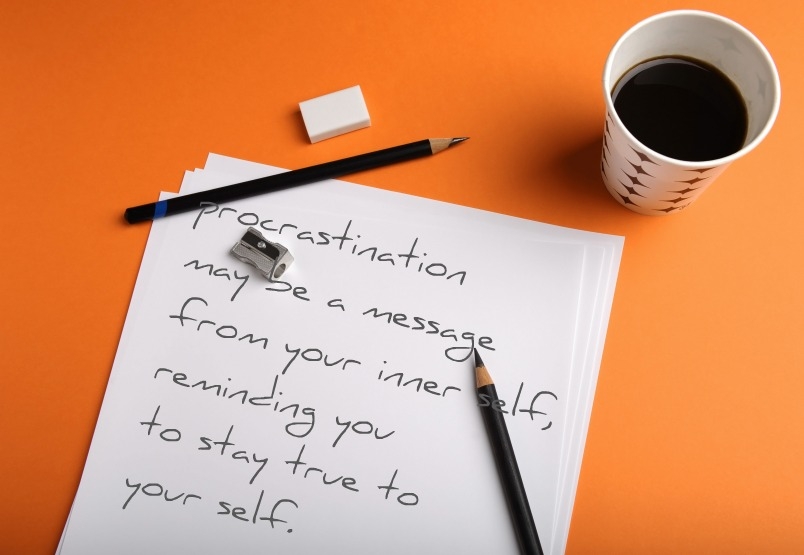
Can Procrastination Be Cured?
Procrastination is one of the most commonly discussed productivity problems, yet also one of the most misunderstood. People often ask whether it can be “cured” in the same way a disease can be eliminated. This framing is understandable, but it is not accurate in a strict psychological sense.
Procrastination is not a medical condition with a single cause or a permanent cure. It is a behavioral pattern driven by emotion, cognition, habit, environment, and reinforcement loops. Because of this, it behaves more like a habit system than an illness.
So the more precise question is not “Can procrastination be cured?” but rather:
Can procrastination be eliminated completely, or permanently controlled?
The answer is nuanced: procrastination can be significantly reduced and managed to the point where it no longer meaningfully disrupts your life—but it is unlikely to be permanently eliminated in all circumstances.
This article explains why.
1. Procrastination Is Not a Single Problem
To understand whether procrastination can be “cured,” you first need to understand what it actually is.
Procrastination is not one behavior—it is a collection of behaviors driven by different underlying mechanisms:
-
Emotional avoidance (stress, anxiety, discomfort)
-
Cognitive overload (too many tasks or complexity)
-
Motivation mismatch (low immediate reward)
-
Perfectionism (fear of imperfection)
-
Impulsivity (preference for immediate gratification)
-
Executive function difficulty (planning and initiation issues)
Because procrastination has multiple causes, there is no single “cure” that applies universally.
2. Why the Idea of a “Cure” Is Misleading
A “cure” implies:
-
A permanent fix
-
A complete elimination of the problem
-
No recurrence
But procrastination does not work that way.
Even highly disciplined people procrastinate under certain conditions:
-
Stress
-
Fatigue
-
Overload
-
Emotional pressure
The difference is not absence of procrastination—it is:
frequency, duration, and recovery speed
3. Procrastination Is a Learned Behavioral Loop
At its core, procrastination is a learned reinforcement cycle:
-
You face an uncomfortable task
-
You avoid it
-
You experience relief
-
Your brain learns avoidance = relief
-
The habit strengthens over time
This loop is powerful because it is immediately rewarding, even though it is harmful long-term.
Since it is learned, it can be unlearned—but not erased instantly.
4. What “Fixing” Procrastination Actually Means
Instead of curing procrastination, the realistic goal is:
-
Reducing how often it happens
-
Reducing how long it lasts
-
Reducing its emotional impact
-
Increasing your ability to recover quickly
In practical terms:
You don’t stop procrastinating—you stop being controlled by it.
5. Why Procrastination Always Reappears Sometimes
Even after improvement, procrastination can reappear due to:
5.1 Emotional triggers
-
Stressful deadlines
-
Fear of failure
-
High expectations
5.2 Cognitive overload
-
Too many tasks
-
Complex problems
-
Lack of clarity
5.3 Energy depletion
-
Fatigue
-
Poor sleep
-
Mental exhaustion
5.4 Environment triggers
-
Distractions
-
Social media
-
Lack of structure
Because these conditions are part of life, procrastination cannot be permanently eliminated.
6. The Brain Is Wired for Short-Term Relief
One of the key reasons procrastination cannot be fully “cured” is biological.
The brain prefers:
-
Immediate rewards
over -
Delayed rewards
This is known as present bias.
So when faced with:
-
Hard work now vs. comfort now
the brain naturally leans toward comfort unless trained otherwise.
This wiring does not disappear—it must be managed.
7. What Actually Works: Behavioral Rewiring
Instead of a cure, what works is:
-
Replacing avoidance habits
-
Building action habits
-
Changing environment
-
Reducing friction for starting tasks
-
Increasing friction for distractions
Over time, this rewires your default behavior.
8. Can You Become “Non-Procrastinating”?
In practical terms:
-
You can become someone who rarely procrastinates
-
You can reduce it to occasional, minor episodes
-
You can recover quickly when it happens
But:
You cannot eliminate the possibility entirely because the underlying psychological mechanisms remain.
Even high performers experience procrastination in specific contexts.
9. Levels of Procrastination Control
People typically move through stages:
Level 1: Chronic procrastination
-
Frequent avoidance
-
Last-minute work
-
High stress
Level 2: Situational control
-
Procrastination in some areas only
-
Better structure in others
Level 3: Managed procrastination
-
Occasional delays
-
Quick recovery
-
Good task execution overall
Level 4: Low-procrastination lifestyle
-
Rare avoidance
-
Strong routines
-
High consistency
10. What Reduces Procrastination Most Effectively
There is no single fix, but several high-impact factors consistently reduce it:
10.1 Task clarity
Unclear tasks cause avoidance. Clear next steps reduce it.
10.2 Task breakdown
Smaller tasks feel easier to start.
10.3 Environment design
Removing distractions reduces temptation.
10.4 Emotional regulation
Managing stress reduces avoidance behavior.
10.5 Habit formation
Consistent routines reduce reliance on motivation.
11. Why “Willpower” Alone Fails
Willpower is:
-
Limited
-
Fluctuating
-
Sensitive to stress
So relying on willpower leads to:
-
Inconsistent results
-
Relapses
-
Burnout
Systems are more reliable than willpower.
12. The Role of Identity in Long-Term Change
One of the strongest predictors of reduced procrastination is identity shift:
Instead of:
-
“I try not to procrastinate”
It becomes:
-
“I am someone who starts tasks immediately”
Identity influences behavior automatically over time.
13. Why Progress Is Non-Linear
Even when improving, procrastination does not decrease smoothly.
You will experience:
-
Good weeks
-
Relapses
-
Plateaus
-
Sudden improvements
This is normal because behavior change is not linear.
14. The Realistic Truth About “Cure”
So can procrastination be cured?
The accurate answer is:
-
❌ Not in a permanent, absolute sense
-
✔ Yes, in a functional, practical sense
You can reach a point where:
-
It rarely affects your life
-
It no longer controls your output
-
You act consistently despite discomfort
But the capacity to procrastinate will always exist because it is part of human cognitive wiring.
Conclusion
Procrastination cannot be fully “cured” because it is not a disease—it is a natural behavioral tendency rooted in emotion regulation, cognitive processing, and reward systems.
However, it can be dramatically reduced and controlled through:
-
Structured habits
-
Environmental design
-
Emotional regulation
-
Task clarity
-
Consistent action systems
The key insight is:
The goal is not to eliminate procrastination, but to reduce its influence until it no longer dictates your behavior.
When you shift from trying to “cure” procrastination to managing it systematically, real and lasting improvement becomes possible.
- Arts
- Business
- Computers
- Jogos
- Health
- Início
- Kids and Teens
- Money
- News
- Personal Development
- Recreation
- Regional
- Reference
- Science
- Shopping
- Society
- Sports
- Бизнес
- Деньги
- Дом
- Досуг
- Здоровье
- Игры
- Искусство
- Источники информации
- Компьютеры
- Личное развитие
- Наука
- Новости и СМИ
- Общество
- Покупки
- Спорт
- Страны и регионы
- World

 English
 Russian
 French
 Spanish
 Deutsch
 Turkish
 Dutch
Dutch
 Italiano
 Arabic
 Romaian
 Portuguese (Brazil)
 Greek
Greek