
How to set fitness or health goals?
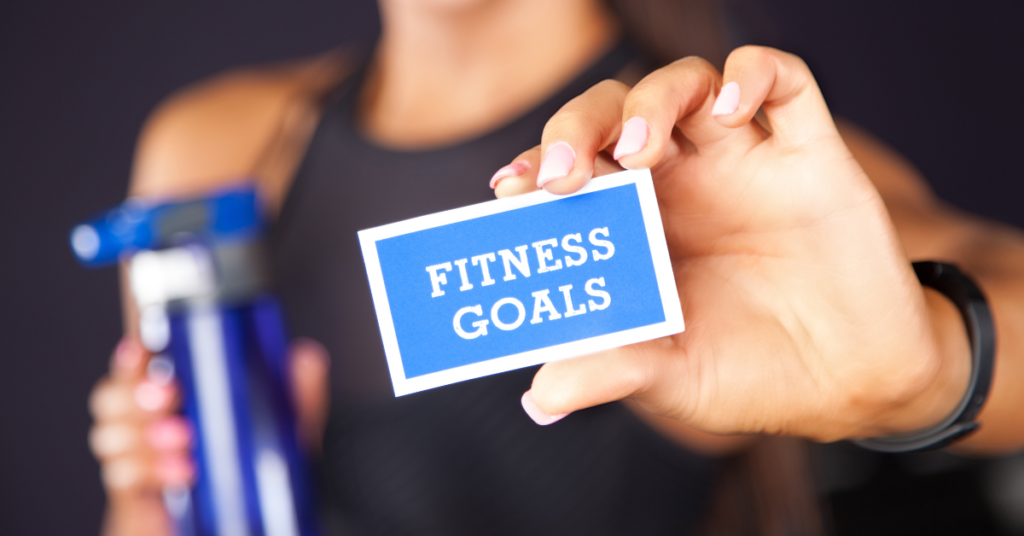
The Biological Contract
We often approach health and fitness as a negotiation with a body we don't quite trust. We treat exercise like a punishment for what we ate and "health" as a destination we’ll reach once we hit a specific number on a scale. But your body is not an adversary; it is the only home you will ever truly own.
To set fitness or health goals is to draft a contract with your future self. It is the process of moving from "vanity metrics"—which are fleeting and often hollow—to "vitality metrics," which sustain a life of capability and presence.
The Trap of the "All-or-Nothing"
The fitness industry thrives on the "transformation" narrative—the idea that you can overhaul your entire biology in six weeks of suffering. This is a recipe for injury and resentment. True health is built in the margins. It is the result of what you do 80% of the time, not the 20% you spend in a state of high-intensity panic.
The Lesson of the "Functional Minimum"
I spent years setting goals like "Run a Marathon" or "Bench Press X Amount." When life got busy, I would abandon them entirely because I couldn't give 100%. I realized that a goal you can't hit on your worst day is a goal that will eventually break you.
I shifted my focus to the Functional Minimum: the baseline of movement and nutrition I commit to even when I’m traveling, tired, or stressed.
-
The Goal: It’s better to walk for fifteen minutes every day than to run for two hours once a week.
-
Consistency is the only "supplement" that actually works.
The Architecture of Vitality: A Balanced Framework
A health goal shouldn't be a singular point; it should be a tripod. If one leg is missing, the structure is unstable.
| Pillar | Focus | The Long-Term Objective |
| Mobility | Range of motion and joint health. | The ability to move without pain into old age. |
| Strength | Resistance training and bone density. | The capability to carry your own weight and navigate the world. |
| Metabolic | Cardiovascular health and nutritional fuel. | Sustainable energy levels and heart health. |
Deconstructing the "Ideal" Body
We are bombarded with images of "peak" fitness that are often the result of extreme dehydration, professional lighting, and genetic anomalies. Setting a goal to "look like" someone else is a form of self-sabotage.
The Identity-Based Metric
Instead of setting an aesthetic goal, set a Capability Goal.
-
Aesthetic Goal: "I want to lose 20 pounds." (Passive/Fragile)
-
Capability Goal: "I want to be able to do 10 consecutive pull-ups" or "I want to hike the local trail without stopping." (Active/Resilient)
When you focus on what your body can do, the way it looks tends to take care of itself. More importantly, you develop a sense of pride in your agency rather than a sense of shame about your appearance.
The Environment of Health
You cannot out-willpower a toxic environment. If your kitchen is filled with friction and your schedule has no "fences" around your sleep, your fitness goals will remain aspirational.
-
The Sleep Fence: Your body does not improve in the gym; it improves in your sleep. Set a goal for a consistent "wind-down" time.
-
The Kitchen Audit: Don't rely on discipline at 8:00 PM. Rely on the choices you made at the grocery store at 10:00 AM.
-
The Social Circle: Health is contagious. If your closest friends' primary hobby is sedentary consumption, it will be exponentially harder for you to remain active. Find a community that views movement as a default, not a chore.
Conclusion: The Long Game
We overstate what we can do in a month and understate what we can do in a decade. Health is the ultimate long-term investment. There is no "finished." There is only the daily practice of tending to the vessel.
Stop looking for the "hack" or the "shortcut." There is no secret. There is only the quiet, unremarkable work of eating real food, moving your body, and getting enough sleep. Set goals that make you feel more alive, not just more exhausted.
Your body is listening. What are you telling it?
- Arts
- Business
- Computers
- Giochi
- Health
- Home
- Kids and Teens
- Money
- News
- Personal Development
- Recreation
- Regional
- Reference
- Science
- Shopping
- Society
- Sports
- Бизнес
- Деньги
- Дом
- Досуг
- Здоровье
- Игры
- Искусство
- Источники информации
- Компьютеры
- Личное развитие
- Наука
- Новости и СМИ
- Общество
- Покупки
- Спорт
- Страны и регионы
- World

 English
 Russian
 French
 Spanish
 Portuguese
 Deutsch
 Turkish
 Dutch
Dutch
 Arabic
 Romaian
 Portuguese (Brazil)
 Greek
Greek