
How to restart after giving up?
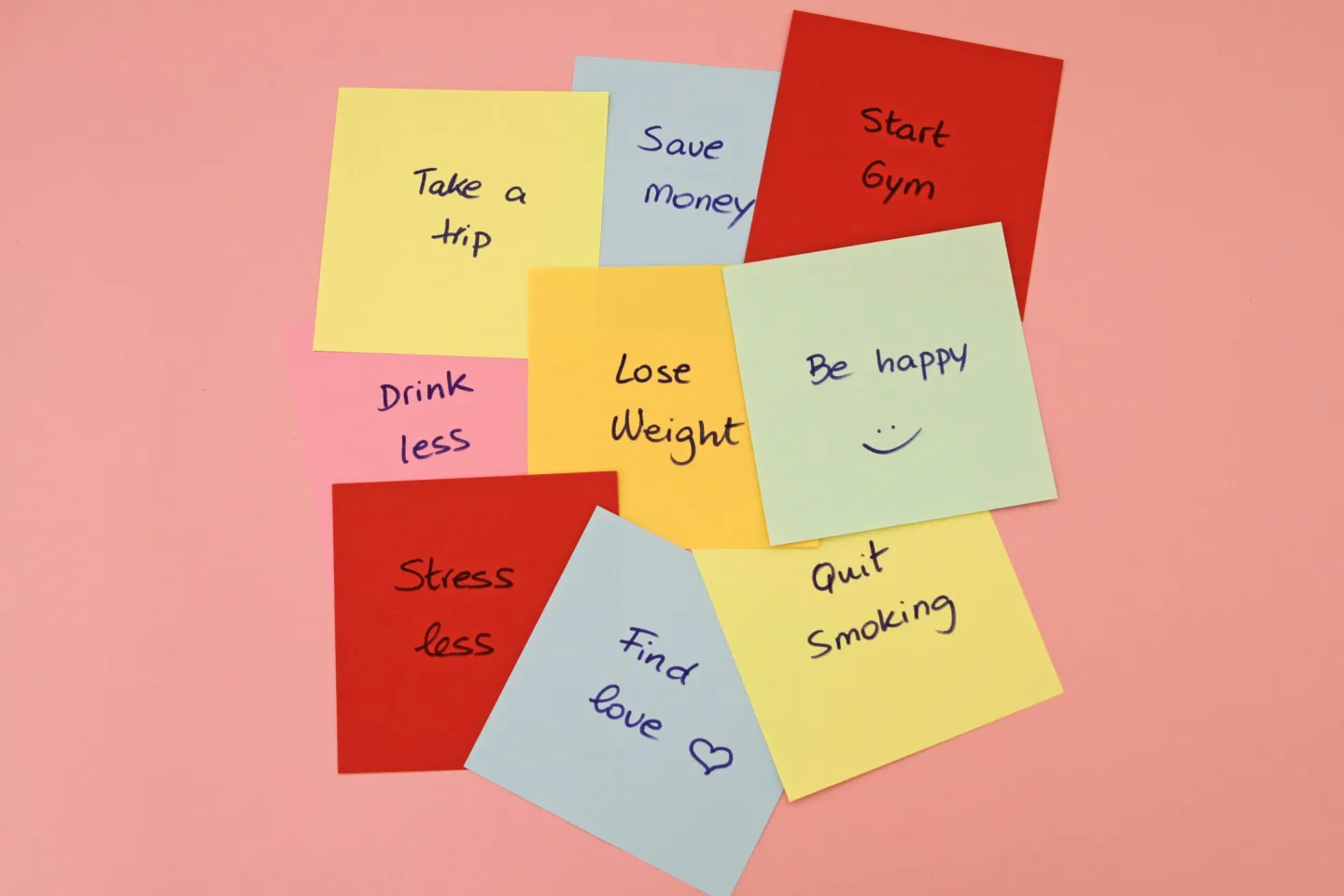
The Art of the Return
Giving up is often framed as a moral failing, a sign of weakness that stains our permanent record. In reality, giving up is usually just a "system crash"—a moment where the demands of the goal exceeded the resources of the individual.
To restart is not to go back to the beginning. You are not starting from scratch; you are starting from experience. The goal of a restart isn't just to try again with more "effort," but to try again with a more sustainable architecture.
The "Zero-Day" Protocol
When you’ve been away from a goal for weeks or months, the sheer distance between where you are and where you want to be can cause a form of paralysis. The "Zero-Day" protocol is designed to break that inertia.
-
The Forgiveness Audit: Shame is a heavy weight. You cannot run a race while carrying the luggage of your past failures. Acknowledge that you stopped, accept the reasons why (without making excuses), and officially close the "old" chapter.
-
The Minimum Viable Action: Your first day back should be so easy it feels almost insulting. If you stopped working out, your "Restart Day 1" is putting on your gym shoes. That's it.
-
The Low-Stakes Streak: Don't look at the mountain. Look at the next 24 hours. Your only job is to prove to your brain that the "automated script" is running again.
Analyzing the "Breakpoint"
Before you rush back into the fray, you must understand why the bridge collapsed the first time. If you don't fix the structural flaw, you will simply break again at the same point.
Identify your "Failure Mode":
-
The Complexity Burnout: Was the goal too complicated? Did it require 15 different steps every morning?
-
The Resource Deficit: Did you run out of time, money, or emotional energy?
-
The Lack of Feedback: Did you stop because you couldn't see any progress?
The Adjustment: If it was complexity, simplify the routine. If it was a resource deficit, scale back the ambition to fit your current reality. If it was a lack of feedback, create "micro-wins" that you can track daily.
The "Bridge" Strategy for Re-Entry
Restarting requires a different energy than starting. When you start, you have the "novice's enthusiasm." When you restart, you have the "cynic's doubt." You need to build a bridge of momentum.
| Phase | Action | Psychological Goal |
| Phase 1: The Ritual | Perform the "setup" of the habit without the work. (e.g., Sit at the desk for 10 mins). | Re-establish the "Time and Place" association in the brain. |
| Phase 2: The Sprint | Perform the habit for a strictly timed 5–10 minutes. | Overcome the "Activation Energy" barrier. |
| Phase 3: The Integration | Gradually increase volume as the "friction" decreases. | Return to full capacity without triggering the "Freeze" response. |
The Identity Reset
The biggest hurdle to restarting is the internal narrative that says, "I'm just going to quit again." This is a defense mechanism. To bypass it, stop identifying with the goal and start identifying with the recovery.
Become the person who is "excellent at getting back on track." This makes the act of restarting a win in itself.
The "Never Miss Twice" Rule
This is the golden rule of the restart. Life will inevitably interrupt you. You will get sick, you will have a crisis, or you will simply have a bad day.
-
Missing once is an anomaly.
-
Missing twice is the start of a new habit of not doing the work.
The moment you miss once, your primary goal in life becomes making sure you don't miss that second day.
Conclusion: The Infinite Game
Success is not a straight line; it is a jagged staircase. The "flat" parts of the staircase—the times you plateaued or gave up—are still part of the structure. They provided the rest needed for the next climb.
The fact that you are looking for a way to restart is proof that the desire is still alive. That spark is enough. Don't wait for a Monday, or a New Year, or a "perfect" moment. The perfect moment was yesterday; the second-best moment is right now.
Pick up the pen. Put on the shoes. Open the file. The journey continues.
- Arts
- Business
- Computers
- Giochi
- Health
- Home
- Kids and Teens
- Money
- News
- Personal Development
- Recreation
- Regional
- Reference
- Science
- Shopping
- Society
- Sports
- Бизнес
- Деньги
- Дом
- Досуг
- Здоровье
- Игры
- Искусство
- Источники информации
- Компьютеры
- Личное развитие
- Наука
- Новости и СМИ
- Общество
- Покупки
- Спорт
- Страны и регионы
- World

 English
 Russian
 French
 Spanish
 Portuguese
 Deutsch
 Turkish
 Dutch
Dutch
 Arabic
 Romaian
 Portuguese (Brazil)
 Greek
Greek