
What Are the Most Commonly Used Supplies in Offices?
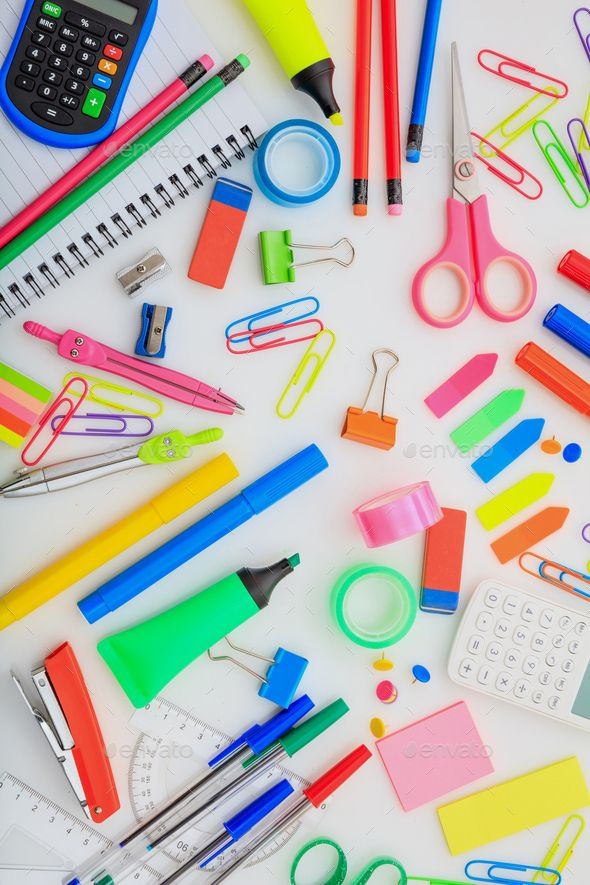
The supply closet told the truth long before the spreadsheets did.
Not the polished conference room. Not the quarterly operations report. The closet.
That cramped fluorescent-lit room with half-open boxes of printer paper stacked beside tangled charging cables and coffee-stained legal pads quietly revealed how people actually worked when nobody was writing corporate strategy documents about “workflow optimization.”
Because despite decades of predictions about paperless environments and fully digitized operations, offices still run on physical objects more than many executives like admitting.
Pens disappear mysteriously.
Sticky notes reproduce aggressively.
Printer toner vanishes at psychologically offensive speeds.
Someone is always looking for a charger.
Always.
And the supplies companies replenish most consistently often expose the hidden mechanics of modern work far more honestly than productivity software dashboards ever could.
The modern office may rely heavily on digital infrastructure, but daily operations still depend on a surprisingly stable ecosystem of physical tools designed to reduce friction, support organization, and stabilize human attention under pressure.
Some supplies survived because workplaces evolved slowly.
Others survived because human cognition did.
The Office Supplies That Never Really Disappeared
Certain office supplies became less essential over time:
fax paper,
CD storage,
filing cabinets large enough to qualify architecturally as interior walls.
But many tools remain stubbornly relevant because they solve recurring operational problems elegantly.
The most commonly used office supplies today typically fall into five categories:
- writing tools,
- printing materials,
- organizational systems,
- technology accessories,
- ergonomic support items.
Not glamorous categories.
Very revealing ones.
The Most Commonly Used Office Supplies
Here’s what offices still consume relentlessly despite increasingly digital workflows:
| Supply Type | Common Examples | Why Offices Still Depend on Them | Consumption Frequency |
|---|---|---|---|
| Writing Supplies | Pens, pencils, markers, highlighters | Quick note-taking and annotation | Extremely High |
| Paper Products | Printer paper, notebooks, sticky notes | Meetings, brainstorming, documentation | High |
| Printer Supplies | Toner, ink cartridges | Operational printing needs | High |
| Organizational Supplies | Folders, binders, labels | Document management | Moderate |
| Technology Accessories | Chargers, adapters, cables | Device-dependent workflows | High |
| Desk Accessories | Staplers, tape, scissors | Administrative tasks | Moderate |
| Ergonomic Supplies | Wrist rests, monitor stands | Employee comfort and productivity | Growing |
| Cleaning Supplies | Wipes, sanitizers, compressed air | Workspace maintenance | High |
| Shipping Materials | Envelopes, labels, packaging tape | Logistics and mailing | Moderate |
Notice something interesting.
The most heavily used items tend to support:
- attention,
- retrieval,
- communication,
- and operational continuity.
Not aesthetics.
Pens Remain the Undisputed Office Champion
Nothing disappears faster in an office than a functioning pen.
This feels almost scientifically consistent across industries.
Despite endless software innovation, pens remain among the most reordered office supplies because handwriting still solves certain problems more efficiently than typing:
- quick annotations,
- spontaneous brainstorming,
- meeting notes,
- visual mapping,
- signature workflows.
I once worked briefly in an office where management attempted aggressively reducing physical supplies during a cost-cutting initiative. Employees adapted politely for about two weeks before personal pen stashes began appearing everywhere like black-market productivity tools.
The experiment ended quickly.
Not because employees rejected technology.
Because immediacy matters.
A pen requires no battery.
No login.
No update notification interrupting thought halfway through a sentence.
Sticky Notes Survived Every Productivity Revolution
Which honestly says something profound about human cognition.
Sticky notes continue thriving because they function as physical attention anchors.
Digital reminders compete against:
- notifications,
- email overload,
- browser tabs,
- messaging platforms.
A bright sticky note attached directly to your monitor behaves differently psychologically. It occupies physical space and creates unavoidable visual presence.
That visibility changes behavior.
One creative director I worked with managed entire campaign phases using handwritten sticky-note walls despite the company investing heavily in elaborate project management software. The wall remained faster for collaborative thinking.
Sometimes physical tools outperform digital systems simply because they reduce interface friction.
Printer Paper Still Dominates Supply Budgets
Even in relatively digital offices.
People dramatically underestimate how much printing still occurs:
- contracts,
- onboarding materials,
- meeting handouts,
- compliance records,
- shipping documentation,
- presentation drafts.
And where paper goes, toner follows aggressively.
Printer-related expenses often become one of the largest recurring office supply costs because printing systems create layered operational dependencies:
paper,
ink,
maintenance,
repairs,
replacement parts,
emergency supply orders.
One operations manager told me printers were “basically emotional support animals with maintenance contracts.” That felt unusually accurate.
Notebooks Continue Existing for a Reason
Typing captures information efficiently.
Writing processes information differently.
That distinction explains why notebooks remain common even inside highly digitized environments.
Many employees retain information better when physically writing:
- action items,
- brainstorming notes,
- meeting summaries,
- planning structures.
I resisted this personally for years because digital organization seemed objectively superior. Then during a long consulting project, I noticed handwritten planning sessions consistently produced clearer strategic thinking than app-based note systems.
The difference wasn’t nostalgia.
It was cognitive engagement.
Chargers and Cables Became Core Office Supplies
Modern offices now run on accessory infrastructure almost as much as software itself.
The average employee depends on:
- laptop chargers,
- HDMI adapters,
- USB hubs,
- docking stations,
- wireless accessories,
- portable batteries.
And these tools fail, disappear, or become obsolete constantly.
One conference room missing the correct adapter can derail meetings faster than most actual strategic disagreements.
That’s why technology accessories quietly became one of the fastest-growing office supply categories over the last decade.
Organizational Supplies Never Fully Went Away
Folders.
Labels.
Binders.
Storage containers.
These survived because digital organization introduced its own form of chaos:
duplicate files,
confusing naming systems,
cloud storage sprawl,
version-control disasters.
Physical organization still provides spatial clarity many employees find cognitively easier to process.
Especially during:
- onboarding,
- compliance reviews,
- legal workflows,
- project planning.
One law office I visited maintained hybrid systems intentionally because attorneys processed complex case materials more effectively when physically reviewing organized binders alongside digital records.
The goal wasn’t resisting technology.
It was preserving comprehension.
Cleaning Supplies Became Operationally Essential
Particularly after workplaces became more health-conscious during recent years.
Modern offices now consume large quantities of:
- disinfecting wipes,
- hand sanitizer,
- keyboard cleaners,
- compressed air,
- desk-cleaning materials.
This shift changed office supply planning significantly because cleanliness became operational infrastructure instead of occasional maintenance.
Employees increasingly expect visibly maintained work environments.
And honestly, reasonable expectation.
Ergonomic Supplies Are Quietly Growing Fastest
This category expanded dramatically as organizations recognized physical discomfort affects:
- focus,
- productivity,
- retention,
- fatigue,
- employee satisfaction.
Common ergonomic supplies now include:
- monitor risers,
- wrist supports,
- ergonomic keyboards,
- lumbar cushions,
- standing desk accessories.
Years ago these purchases often felt optional.
Now many companies treat them as standard operational investments because repetitive strain and workstation discomfort carry measurable costs eventually.
Why Supply Consumption Reveals Workplace Culture
This part fascinates me endlessly.
Supply patterns expose organizational behavior astonishingly clearly.
Heavy printing often signals:
- compliance-heavy workflows,
- leadership habits,
- outdated approval systems.
Excess sticky-note usage may reflect:
- collaborative creative environments,
- fragmented communication systems,
- fast-moving project structures.
High ergonomic spending often reflects:
- retention priorities,
- remote work adaptation,
- employee wellness investment.
Supply closets become behavioral archives if you know how to read them.
A Lesson I Learned From a Missing Stapler
Years ago, during a chaotic client workshop, an entire team lost fifteen minutes searching for a stapler.
Fifteen minutes.
At first the situation seemed absurdly trivial. Then I realized something important:
tiny operational interruptions compound constantly inside offices.
Missing supplies create:
- workflow disruption,
- concentration loss,
- unnecessary frustration,
- repeated retrieval tasks.
That experience permanently changed how I think about office supplies. They aren’t merely objects.
They are friction-management systems.
The best supplies reduce interruptions so effectively people barely notice them until they disappear.
The Most Common Supplies Are Usually the Simplest
Not the expensive ones.
Not the trendy ones.
The truly essential office supplies tend to share three traits:
- immediate usability,
- reliability,
- low cognitive friction.
Pens.
Paper.
Chargers.
Notebooks.
Sticky notes.
Printer materials.
Simple tools supporting complex work.
That’s why predictions about fully digital offices often missed something fundamental:
human work still involves attention, memory, collaboration, and physical interaction.
Technology transformed offices dramatically.
But it didn’t eliminate the need for tactile systems supporting how people actually think under pressure.
Offices Don’t Run on Supplies Alone — But They Quietly Depend on Them
This feels obvious until a missing cable delays a presentation, an empty printer stalls onboarding paperwork, or a broken chair slowly drains concentration across entire afternoons.
Office supplies shape workflow invisibly.
Not through dramatic innovation.
Through consistency.
The supply closet full of sticky notes, chargers, toner cartridges, and half-used notebooks may not look strategically important from the outside.
But hidden inside those ordinary objects is the operational reality of modern work:
humans still need tools that reduce friction faster than complexity can create it.
And despite all the software platforms promising frictionless productivity, a functioning pen remains surprisingly difficult to replace.
- Arts
- Business
- Computers
- Jeux
- Health
- Domicile
- Kids and Teens
- Argent
- News
- Personal Development
- Recreation
- Regional
- Reference
- Science
- Shopping
- Society
- Sports
- Бизнес
- Деньги
- Дом
- Досуг
- Здоровье
- Игры
- Искусство
- Источники информации
- Компьютеры
- Личное развитие
- Наука
- Новости и СМИ
- Общество
- Покупки
- Спорт
- Страны и регионы
- World

 English
 Russian
 Spanish
 Portuguese
 Deutsch
 Turkish
 Dutch
Dutch
 Italiano
 Arabic
 Romaian
 Portuguese (Brazil)
 Greek
Greek