
How Do Startups Grow Fast?
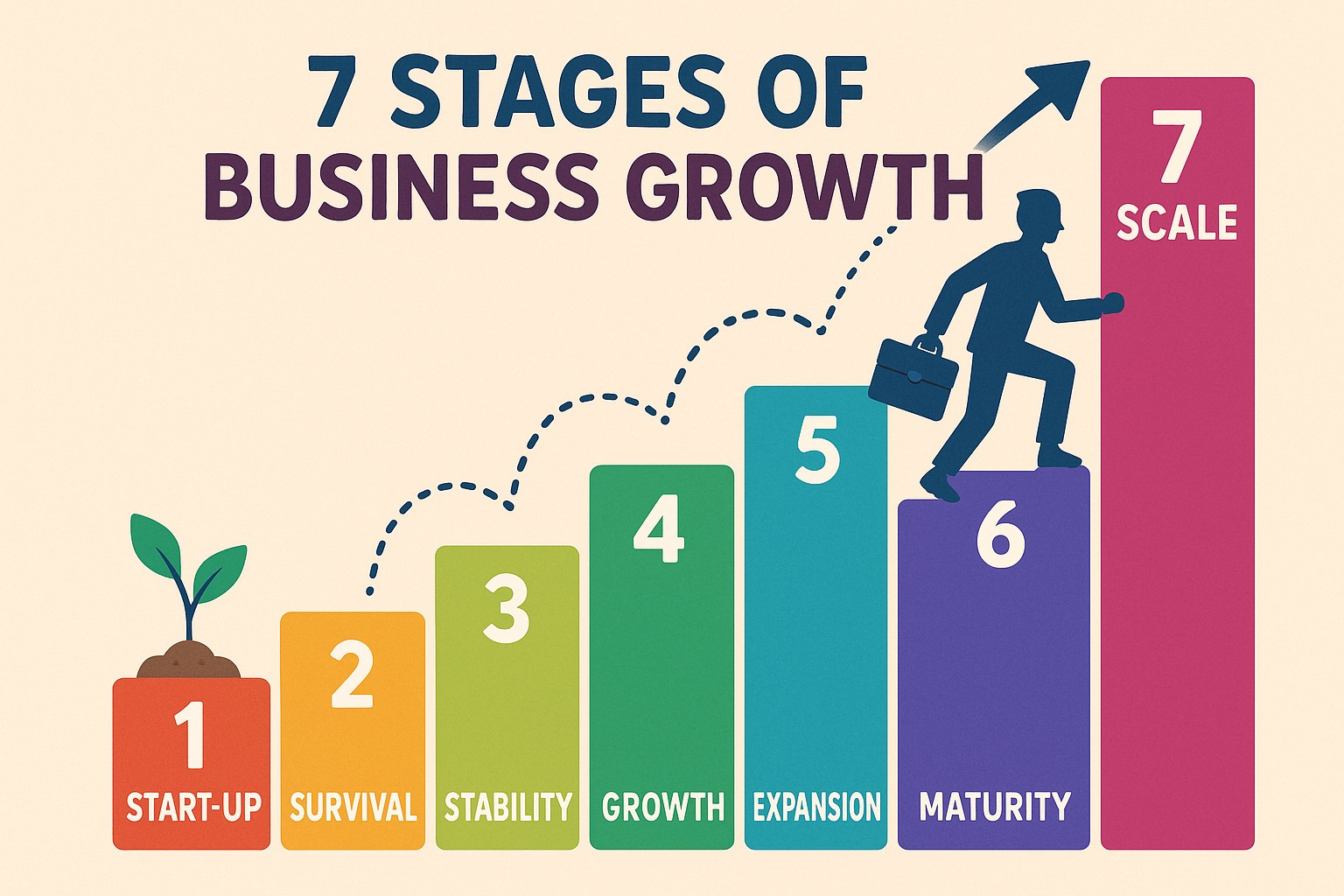
Most startups do not die from lack of ambition.
They die from premature acceleration.
That sounds backward in a culture obsessed with blitzscaling, valuation spikes, and founders posting triumphant revenue screenshots before payroll has stabilized. Yet the anatomy of rapid startup growth is rarely as cinematic as the headlines suggest. Fast-growing companies are often methodical underneath the noise. Quietly obsessive. Almost uncomfortably disciplined.
What looks sudden from the outside is usually compression — years of experimentation condensed into a few visible quarters.
I learned this the hard way while advising a consumer-tech startup whose founders became intoxicated by momentum. Investors circled early. Press mentions multiplied. Hiring exploded from seven employees to forty-three in less than eight months. Everyone inside the company interpreted growth as proof of inevitability.
Then customer churn arrived like weather.
The product had acquired users faster than it had earned loyalty. Acquisition costs climbed. Internal communication fractured. Entire departments operated on contradictory assumptions. Revenue still rose, but underneath the graph, the business had become structurally fragile.
One founder confessed to me over coffee, half-laughing, half-exhausted: “We scaled confusion.”
That phrase stayed with me because it captures what people misunderstand about startup growth. Startups do not grow fast merely because demand appears. They grow fast because systems, timing, distribution, capital, and execution converge at unusual velocity.
Speed is rarely accidental.
The Myth of the Overnight Startup
The mythology surrounding startups has distorted public expectations.
We celebrate unicorns as though they materialized fully formed after one inspired idea and a sleepless weekend. Investors amplify the narrative because mythology attracts capital. Media outlets reinforce it because dramatic stories outperform nuanced ones.
But fast-growing startups are usually built on accumulated advantages.
Sometimes that advantage is timing. Sometimes proprietary technology. Sometimes a founder with unusually deep industry insight. Occasionally, it is distribution — the single most underestimated force in startup growth.
Rarely is it luck alone.
Fast Growth Usually Starts Before Launch
The strongest startups often begin building long before the product exists publicly.
Founders cultivate communities. They gather audience data. They test messaging. They identify unmet demand with unsettling precision. By launch day, they are not introducing a product into silence. They are stepping into a conversation already in motion.
That distinction matters.
Too many founders believe growth begins after release. In reality, momentum often begins months earlier through positioning, relationships, and market intelligence.
Product-Market Fit: The Obsession Beneath Every Hypergrowth Story
No startup grows sustainably without product-market fit.
The phrase has become overused to the point of dilution, but its importance remains absolute. Product-market fit occurs when a product satisfies a genuine market demand strongly enough that customers pull the business forward organically.
Not politely.
Aggressively.
Users return without prompting. Referrals emerge spontaneously. Churn decreases. Retention strengthens. Customer acquisition becomes cheaper because enthusiasm starts carrying part of the marketing burden.
Marc Andreessen once described product-market fit as “being in a good market with a product that can satisfy that market.” Simple sentence. Brutally difficult achievement.
Signals of Product-Market Fit
Fast-growing startups usually exhibit several overlapping signals:
- High customer retention
- Organic referrals
- Strong engagement metrics
- Increasing demand despite limited marketing spend
- Clear customer pain points being solved
- Emotional customer reactions rather than indifferent usage
Indifference is fatal to startups.
People do not evangelize products they merely tolerate.
Distribution Beats Brilliance
Founders love discussing innovation. Markets care about visibility.
A technically superior product can disappear entirely if distribution fails. Meanwhile, an imperfect product with exceptional distribution can dominate an industry before competitors organize themselves.
This frustrates engineers endlessly.
The Most Powerful Startup Growth Channels
Content Ecosystems
Some startups grow by becoming information hubs before becoming dominant products. Educational content builds trust gradually, then converts attention into customers.
This strategy works especially well in SaaS, finance, health technology, and B2B services.
Referral Loops
Dropbox famously accelerated growth through referral incentives that rewarded users with additional storage space. The mechanism was elegantly simple because it aligned user motivation with company expansion.
Effective referral systems do not feel like marketing. They feel useful.
Platform Leverage
Many startups piggyback on larger ecosystems in their early years.
App developers leverage Apple’s App Store. Shopify extensions leverage Shopify merchants. Creators leverage YouTube, TikTok, or LinkedIn algorithms.
The startup borrows infrastructure before building its own audience moat.
Partnerships
Strategic partnerships can compress years of customer acquisition into months. Distribution alliances often matter more than advertising budgets, particularly in enterprise sectors.
The strongest partnerships create mutual dependency rather than superficial promotion.
Why Some Startups Accelerate While Others Stall
Execution quality creates divergence.
Two startups may enter the same market with similar funding and comparable products. One compounds rapidly while the other plateaus. The explanation usually lies in operational responsiveness.
Fast-growing startups adapt faster than competitors.
They revise onboarding flows weekly. They monitor customer behavior obsessively. They identify friction points before those problems metastasize into systemic decline.
The startup environment punishes rigidity.
A Comparison of Startup Growth Models
| Growth Model | Speed Potential | Capital Requirement | Scalability | Primary Risk |
|---|---|---|---|---|
| Venture-Funded SaaS | Extremely High | High | Very High | Burn rate |
| Bootstrapped E-commerce | Moderate-High | Moderate | High | Supply chain strain |
| Marketplace Platform | High | High | Very High | Liquidity imbalance |
| Consumer Mobile App | Explosive but volatile | Moderate-High | Extremely High | User churn |
| Agency-to-Product Startup | Moderate | Low-Moderate | Medium | Service dependency |
| Subscription Media Startup | Moderate-High | Moderate | High | Audience fatigue |
| Deep Tech Startup | Slow initially, then steep | Very High | High | Long R&D cycles |
| Creator-Led Brand | Fast with audience leverage | Low-Moderate | Medium-High | Founder dependency |
Notice something uncomfortable here: fast growth often correlates with elevated fragility.
The companies expanding most aggressively are frequently balancing on unstable economics. Revenue growth attracts attention, but sustainability determines survival.
Capital Changes the Clock
Funding accelerates time.
That is the real function of venture capital. Investors are not merely providing money. They are compressing timelines. Hiring expands sooner. Marketing intensifies faster. Product development accelerates. Geographic expansion becomes feasible earlier.
But capital also alters psychology.
Once investors expect hypergrowth, patience evaporates.
I once sat in on a board meeting where executives discussed user growth with language that sounded eerily medical. Every slowdown triggered panic. Every plateau felt existential. Rational analysis disappeared beneath velocity expectations.
The startup had become addicted to acceleration itself.
That addiction destroys companies more often than founders admit publicly.
Hiring: The Most Dangerous Growth Lever
Hiring appears to solve problems. Sometimes it multiplies them.
Early-stage startups often assume growth requires immediate headcount expansion. Yet poorly timed hiring creates communication layers, cultural fragmentation, and operational drag before systems are mature enough to support complexity.
The fastest-growing startups tend to hire cautiously relative to revenue growth.
They automate aggressively. They prioritize multifunctional talent. They delay bureaucracy for as long as possible.
One Lesson I Learned Too Late
During one consulting engagement, I recommended that a founder postpone hiring an entire middle-management layer despite mounting investor pressure. He resisted initially because expansion felt synonymous with visible organizational growth.
Six months later, he thanked me.
The startup had discovered that unclear processes — not insufficient personnel — were slowing execution. Adding managers would have institutionalized confusion rather than resolving it.
That experience permanently altered my perspective on startup scaling.
More people do not automatically create more capacity.
Sometimes they create more meetings.
Data Is the Nervous System
Fast-growing startups become unusually sensitive to behavioral data.
They track onboarding completion rates, retention curves, customer acquisition costs, activation metrics, churn segments, lifetime value, and conversion friction with relentless intensity.
Not because dashboards are fashionable.
Because speed magnifies mistakes.
A weak onboarding sequence that loses 5% of users monthly becomes catastrophic at scale. Tiny inefficiencies compound violently inside hypergrowth environments.
The strongest startups detect weakness early enough to adapt before damage becomes structural.
Timing Is More Powerful Than Talent
This is the part founders dislike hearing.
Exceptional execution inside a premature market often fails anyway.
Conversely, startups entering markets at exactly the right inflection point can appear almost unnaturally brilliant. Consumer readiness matters. Infrastructure maturity matters. Economic climate matters.
Uber benefited from smartphone penetration, GPS reliability, shifting labor economics, and urban behavioral changes converging simultaneously. Timing amplified execution.
Many failed startups were simply too early.
Markets rarely reward correctness before they reward readiness.
The Hidden Role of Founder Psychology
Startup growth places founders under peculiar psychological pressure.
As companies accelerate, the founder’s role changes repeatedly. Builder becomes manager. Manager becomes executive. Executive becomes public symbol. Each transition demands different instincts.
Some founders adapt.
Others sabotage growth unintentionally because the skills that launched the company no longer match the skills required to sustain expansion.
Control becomes especially difficult to relinquish.
Founders accustomed to making every decision personally often become bottlenecks once organizations scale beyond a certain threshold. The company slows not because the market weakens, but because leadership architecture never evolved.
Conclusion: Fast Growth Is Usually Controlled Chaos
People romanticize startup growth because they mistake velocity for certainty.
But inside most high-growth startups, certainty is remarkably scarce.
There are spreadsheets held together by optimism. Product decisions made under impossible timelines. Investors demanding acceleration while teams quietly rebuild infrastructure behind the scenes. Entire strategies rewritten after one disastrous customer retention report.
Fast growth is rarely elegant up close.
The startups that survive understand something their competitors often miss: growth is not merely expansion. It is pressure. Pressure on systems. Pressure on leadership. Pressure on culture. Pressure on economics.
That pressure exposes weaknesses with merciless speed.
Which is why the best founders do not chase growth blindly. They engineer organizations capable of surviving it.
Because eventually, every startup encounters the same uncomfortable question:
Can the company handle the momentum it worked so desperately to create?
- Arts
- Business
- Computers
- Games
- Health
- Home
- Kids and Teens
- Money
- News
- Personal Development
- Recreation
- Regional
- Reference
- Science
- Shopping
- Society
- Sports
- Бизнес
- Деньги
- Дом
- Досуг
- Здоровье
- Игры
- Искусство
- Источники информации
- Компьютеры
- Личное развитие
- Наука
- Новости и СМИ
- Общество
- Покупки
- Спорт
- Страны и регионы
- World

 Russian
 French
 Spanish
 Portuguese
 Deutsch
 Turkish
 Dutch
Dutch
 Italiano
 Arabic
 Romaian
 Portuguese (Brazil)
 Greek
Greek
