
What Are Scalable Business Models?
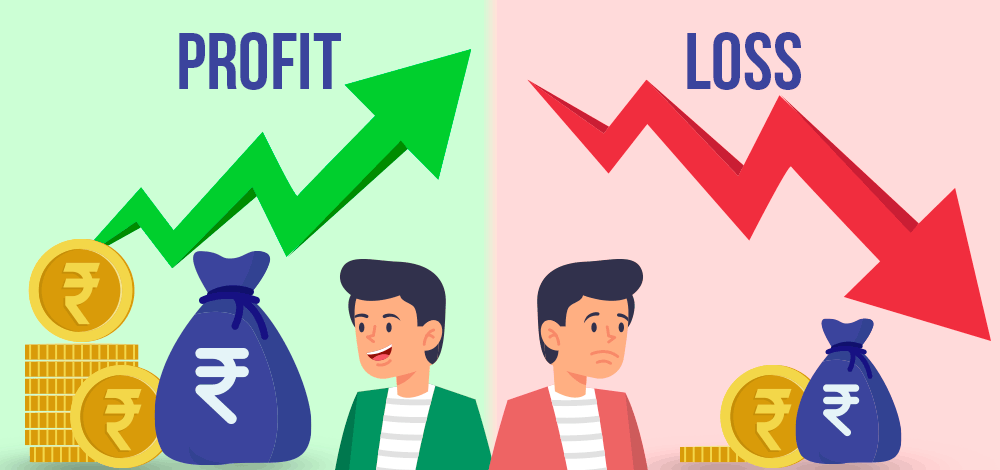
Most businesses can grow.
Far fewer can scale.
That distinction sounds semantic until you watch a company double its revenue while simultaneously doubling its stress, payroll burden, operational fragility, and customer complaints. Growth alone is not particularly impressive. Restaurants grow. Agencies grow. Freelancers grow. Entire businesses expand themselves directly into exhaustion every year.
Scalability is something different.
A scalable business model increases revenue significantly without requiring equivalent increases in cost, labor, or operational complexity. The relationship between effort and output changes. Revenue compounds faster than friction.
That is the holy grail.
And it explains why investors obsess over certain industries while quietly avoiding others, regardless of how glamorous they appear publicly.
I learned this lesson while advising two founders around the same period several years ago. One operated a respected creative agency. The other ran a software startup with fewer employees and lower initial revenue.
The agency founder looked more successful at first glance. Larger office. Bigger team. More visible clients. Yet internally, every new contract created more operational pressure — more meetings, more revisions, more hiring, more managerial strain.
The software founder experienced a completely different reality. Once the platform infrastructure stabilized, new customers increased revenue far faster than costs.
One business was growing.
The other was scaling.
That difference eventually became impossible to ignore.
Scalability Is Really About Operational Leverage
Most scalable business models revolve around one principle:
Operational leverage.
This means the business can generate additional revenue without proportionally increasing expenses or human effort.
Traditional labor-heavy businesses usually scale poorly because revenue remains tied directly to hours worked. Scalable businesses break that dependency.
The Key Question Behind Scalability
A surprisingly useful question reveals scalability quickly:
“What happens operationally when customers double?”
If costs, staffing, and complexity rise almost equally with revenue, scalability remains limited.
If revenue rises dramatically while infrastructure absorbs much of the increase efficiently, the model becomes far more scalable.
That operational elasticity changes everything.
The Characteristics of Scalable Business Models
Highly scalable businesses usually share several structural traits.
Low Marginal Costs
Marginal cost refers to the expense of serving one additional customer.
Software businesses, digital products, and licensing models often have extremely low marginal costs because duplication is inexpensive after initial development.
Selling one extra software subscription may cost almost nothing operationally.
That creates extraordinary leverage.
Automation
Scalable businesses reduce dependency on manual intervention.
Processes become systemized:
- Automated billing
- Customer onboarding
- Inventory tracking
- Communication workflows
- Data reporting
- Delivery systems
Automation preserves operational efficiency as demand rises.
Recurring Revenue
Subscription-based businesses often scale better because customer relationships continue generating predictable revenue over time.
Recurring revenue stabilizes cash flow and reduces constant acquisition pressure.
Broad Market Reach
Scalable models frequently operate without strong geographic limitations.
Digital products, SaaS platforms, marketplaces, and online education businesses can serve global audiences simultaneously.
Physical constraints shrink dramatically.
The Most Common Scalable Business Models
Software-as-a-Service (SaaS)
SaaS remains one of the clearest examples of scalability.
A software platform can serve thousands — sometimes millions — of customers through the same underlying infrastructure. Revenue grows while costs increase relatively slowly compared to customer volume.
This explains why SaaS companies often attract aggressive investment capital.
The economics are unusually attractive once product-market fit stabilizes.
Marketplace Platforms
Marketplace businesses connect participants:
- Buyers and sellers
- Drivers and riders
- Hosts and travelers
- Freelancers and clients
The platform facilitates transactions while collecting commissions or fees.
Strong marketplaces benefit from network effects, where increased participation improves the ecosystem itself.
Once momentum builds, scalability can become extraordinary.
Digital Products
Digital products scale elegantly because duplication costs remain minimal.
Examples include:
- Online courses
- E-books
- Templates
- Software tools
- Membership content
- Design assets
One product can be sold repeatedly without inventory management or shipping infrastructure.
Margins become highly attractive when audience acquisition is efficient.
A Comparison of Scalable vs. Less Scalable Business Models
| Business Model | Scalability Potential | Marginal Costs | Labor Dependency | Recurring Revenue Potential |
|---|---|---|---|---|
| SaaS | Extremely High | Very Low | Low | Very High |
| Marketplace Platform | Extremely High | Low | Moderate | High |
| Digital Products | Very High | Very Low | Low | Moderate |
| Subscription Business | High | Moderate | Moderate | Extremely High |
| E-Commerce Brand | Moderate-High | Moderate | Moderate | Moderate |
| Franchise System | Moderate-High | Moderate | High | Moderate |
| Agency | Moderate | High | High | Moderate |
| Consulting Firm | Low-Moderate | High | Extremely High | Low |
| Freelancing | Low | High | Extremely High | Low |
The table reveals a consistent pattern.
The more revenue depends directly on human labor, the harder scalability becomes.
Businesses tied heavily to time-for-money exchanges eventually encounter operational ceilings.
Why Investors Love Scalable Models
Scalable businesses create asymmetric upside.
That phrase matters because it explains modern startup economics better than most motivational business books ever do.
Investors are not merely chasing growth.
They are chasing leverage.
A scalable company can theoretically:
- Expand globally
- Serve more customers
- Increase margins
- Reduce operational friction
- Compound recurring revenue
—all without proportionally increasing infrastructure costs.
This is why software and platform companies often achieve valuations dramatically larger than labor-intensive industries with similar revenue numbers.
The market rewards scalability potential aggressively.
Scalability Is Not the Same as Profitability
This confusion causes enormous strategic mistakes.
A scalable business model can still lose money.
In fact, many high-growth companies operate unprofitably for years while pursuing market share expansion. Scalability simply means the model has the structural capacity to grow efficiently eventually.
Profitability depends on execution.
I once worked with a startup generating rapid user growth through a scalable platform model. Investors celebrated aggressively. Yet customer acquisition costs quietly exceeded lifetime customer value.
The business scaled activity beautifully.
It scaled losses too.
That distinction matters enormously.
The Hidden Costs of Scalability
People often romanticize scalable business models because they appear elegantly efficient from the outside.
Internally, however, scaling introduces its own pressures.
Infrastructure Strain
As user volume increases, businesses may face:
- Server costs
- Cybersecurity demands
- Customer support expansion
- Data management complexity
- Operational bottlenecks
Scalability requires infrastructure capable of surviving success itself.
Competition Intensifies
Highly scalable industries attract enormous competition because barriers to expansion appear attractive.
Software, digital education, online media, and e-commerce markets become crowded quickly.
Ease of scaling often means ease of entry.
Retention Becomes Critical
Acquiring customers matters.
Keeping them matters more.
Scalable businesses with weak retention eventually discover that constant acquisition costs destroy long-term economics. The strongest models combine scalability with customer loyalty.
Without retention, scale becomes unstable.
Franchises: A Different Kind of Scalability
Not all scalable businesses are digital.
Franchise systems scale by replicating operational systems across locations while distributing execution responsibilities among franchise owners.
Fast-food chains perfected this model decades ago.
The scalability comes from standardization:
- Repeatable systems
- Operational consistency
- Brand recognition
- Shared infrastructure
Franchising scales differently than software but still relies heavily on process replication.
Why Some Businesses Never Scale Well
Certain business categories resist scalability structurally.
Freelancing
Revenue depends directly on personal labor capacity.
There are only so many hours available.
Consulting
Consulting firms often require increasing headcount alongside client growth.
Complexity rises with scale.
Custom Creative Services
Highly personalized work becomes difficult to standardize without reducing quality.
This does not mean these businesses are bad.
Many generate excellent income.
But scalability ceilings appear earlier.
My Most Important Lesson About Scalability
Several years ago, I watched a founder nearly destroy a promising company because he became obsessed with rapid expansion before operational systems matured.
The business grew aggressively:
- New hires
- More customers
- Larger contracts
- Increased visibility
Externally, it looked successful.
Internally, systems were collapsing quietly:
- Communication failures
- Customer dissatisfaction
- Burnout
- Financial inefficiency
- Workflow chaos
The founder eventually admitted something painfully honest during a strategy session:
“We scaled faster than we understood ourselves.”
I have never forgotten that sentence.
Because scalability without operational clarity becomes fragility disguised as growth.
The Future of Scalable Business Models
Artificial intelligence, automation, cloud infrastructure, and global digital distribution will continue reshaping scalability aggressively.
Businesses increasingly seek models capable of:
- Automation
- Subscription revenue
- Global reach
- Low marginal costs
- Data-driven optimization
At the same time, customers are becoming more sensitive to trust, quality, and personalization. Pure scale without reliability may become increasingly unstable.
Ironically, as businesses automate more aggressively, human trust may become even more valuable.
Conclusion: Scalable Business Models Are Really About Efficiency Under Pressure
People often discuss scalability as though it were simply rapid growth.
It is not.
Scalability is the ability to absorb growth without operational collapse.
That capability depends on systems, leverage, infrastructure, retention, automation, and strategic clarity. The strongest scalable businesses create environments where additional customers strengthen economics rather than destabilize them.
And that is far rarer than entrepreneurship culture likes to admit.
Because many companies can generate excitement.
Many can generate revenue temporarily.
Far fewer can continue expanding while preserving efficiency, customer satisfaction, operational stability, and healthy margins simultaneously.
That is the real test of scalability.
Not speed.
Endurance under increasing pressure.
- Arts
- Business
- Computers
- Игры
- Health
- Главная
- Kids and Teens
- Деньги
- News
- Personal Development
- Recreation
- Regional
- Reference
- Science
- Shopping
- Society
- Sports
- Бизнес
- Деньги
- Дом
- Досуг
- Здоровье
- Игры
- Искусство
- Источники информации
- Компьютеры
- Личное развитие
- Наука
- Новости и СМИ
- Общество
- Покупки
- Спорт
- Страны и регионы
- World

 English
 French
 Spanish
 Portuguese
 Deutsch
 Turkish
 Dutch
Dutch
 Italiano
 Arabic
 Romaian
 Portuguese (Brazil)
 Greek
Greek