
What Is a Disruptive Business Model?
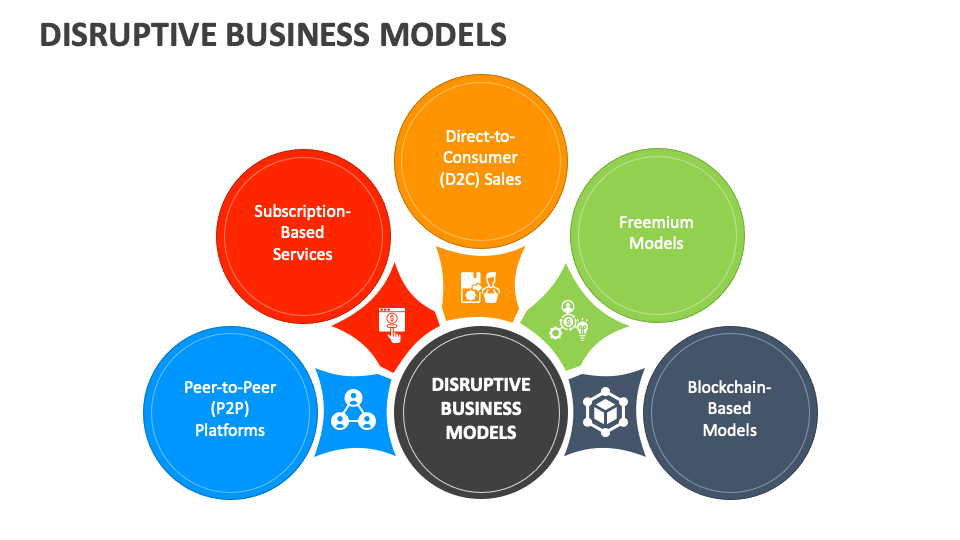
Most industries do not collapse dramatically.
They erode gradually.
At first, the dominant companies barely notice the threat. The newcomer looks too small, too cheap, too simplistic, too unserious to matter. Executives dismiss it as low-end competition. Analysts question the quality. Customers hesitate cautiously.
Then something subtle happens.
The cheaper, simpler, faster alternative improves quietly while incumbents continue optimizing systems built for older assumptions. Margins begin tightening. Consumer behavior shifts incrementally. Expectations change. Entire categories reorganize themselves before many legacy businesses fully understand what happened.
That is disruption.
Not chaos.
Not noise.
Reorganization.
I realized how psychologically difficult disruption can be while consulting years ago for a traditional publishing company watching subscription-based digital platforms slowly destabilize its economics. Executives initially treated the platforms as temporary annoyances. The new competitors lacked prestige, editorial history, and established distribution relationships.
Yet consumers increasingly preferred accessibility over institutional legacy.
One senior executive said something during a strategy session I still remember clearly:
“We kept protecting the old business while the market quietly changed the definition of value.”
That sentence explains disruptive business models better than most academic frameworks ever could.
Because disruption rarely begins by defeating incumbents directly.
It begins by changing what customers prioritize.
What Is a Disruptive Business Model?
A disruptive business model introduces a fundamentally different way of delivering products or services that eventually reshapes an existing market.
The disruption typically occurs because the new model offers advantages traditional competitors struggle to match structurally:
- Lower costs
- Greater convenience
- Simpler access
- Faster delivery
- Broader accessibility
- Better user experience
- New pricing structures
Importantly, disruptive businesses often begin by serving customers incumbents overlook or underestimate.
That early dismissal creates opportunity.
Disruption Is Usually Structural, Not Just Technological
This distinction matters enormously.
People often confuse technological innovation with business model disruption. But many disruptive companies succeed not because the technology itself is revolutionary, but because the commercial structure changes customer behavior.
Netflix did not invent film.
Uber did not invent transportation.
Airbnb did not invent hospitality.
The disruption came from changing access, pricing, convenience, and distribution systems.
Technology Enables. Business Models Reorganize.
A disruptive business model changes how value flows through an industry.
Sometimes the technology underneath is relatively ordinary.
The structural economics are what destabilize incumbents.
The Classic Pattern of Disruption
Disruptive businesses often follow a surprisingly recognizable progression.
Step 1: Enter Through Neglected Segments
Many incumbents focus heavily on premium customers because margins are stronger there.
Disruptors frequently target:
- Underserved customers
- Price-sensitive consumers
- Smaller businesses
- Inconvenient market gaps
Initially, established competitors may ignore them entirely.
Step 2: Improve Gradually
The disruptive company refines operations, technology, logistics, and customer experience steadily.
Over time, the offering becomes good enough for broader markets.
Step 3: Consumer Expectations Shift
This is the critical phase.
Customers begin reevaluating what matters most:
- Convenience over prestige
- Speed over tradition
- Accessibility over exclusivity
- Flexibility over ownership
Once expectations shift broadly, incumbents face structural pressure.
Step 4: The Industry Reorganizes
Legacy companies either adapt, consolidate, decline, or disappear.
Some survive by evolving.
Others become case studies.
A Comparison of Traditional vs. Disruptive Business Models
| Industry | Traditional Model | Disruptive Model | Core Disruption |
|---|---|---|---|
| Retail | Physical storefronts | E-commerce platforms | Convenience and accessibility |
| Entertainment | Cable television | Streaming subscriptions | On-demand access |
| Transportation | Taxi licensing systems | Ride-sharing apps | Flexible digital coordination |
| Hospitality | Hotel ownership | Home-sharing platforms | Asset-light inventory |
| Software | One-time licensing | SaaS subscriptions | Recurring cloud access |
| Media | Print advertising | Digital content ecosystems | Audience fragmentation |
| Banking | Physical branches | Fintech platforms | Mobile-first financial services |
| Education | Campus-based learning | Online learning platforms | Remote accessibility |
The pattern becomes clear quickly.
Disruptive models usually reduce friction customers previously tolerated because no alternative existed.
Why Incumbents Often Fail to Respond Properly
This part fascinates me most.
Large companies are rarely blind to disruption entirely. They often recognize emerging competitors early. Yet they struggle to respond effectively because successful organizations become structurally attached to existing revenue systems.
Their strengths become constraints.
Legacy Success Creates Rigidity
Established businesses often possess:
- Complex operational systems
- Existing customer expectations
- Investor pressure
- Institutional culture
- High-margin business dependencies
Changing direction threatens current profitability.
So incumbents optimize the old system while the market migrates gradually elsewhere.
That delay becomes dangerous.
The Psychology Behind Disruption
Consumers rarely wake up collectively deciding to abandon an industry standard overnight.
Behavior changes incrementally.
A streaming platform feels more convenient once. Then twice. Then routinely. Eventually, older systems begin feeling unnecessarily inconvenient by comparison.
Disruptive business models often succeed because they alter habit formation.
Convenience Is More Powerful Than Loyalty
People frequently overestimate brand loyalty and underestimate behavioral convenience.
Customers may claim emotional attachment to traditional brands while quietly migrating toward simpler systems operationally.
I watched this happen repeatedly during the rise of cloud software. Businesses defended legacy infrastructure publicly while employees increasingly adopted easier collaborative tools unofficially inside organizations.
The market shifted from underneath management.
Platform Businesses Became Major Disruptors
Platform models transformed numerous industries because they coordinate interactions rather than owning all underlying assets directly.
Examples include:
- Ride-sharing platforms
- Marketplace ecosystems
- Freelance marketplaces
- Creator platforms
- Accommodation marketplaces
These systems scale rapidly because they leverage network participation itself.
Asset-Light Models Changed Economics
Traditional businesses often relied heavily on physical ownership:
- Hotels owned properties
- Retailers owned inventory
- Taxi companies managed fleets
Platforms discovered that coordinating access could become more scalable than owning assets directly.
That realization changed modern business strategy permanently.
Subscription Models Disrupted Ownership
Another major disruption emerged through subscriptions.
Consumers increasingly shifted from ownership toward access:
- Streaming instead of DVD ownership
- SaaS instead of software licensing
- Subscription commerce instead of one-time purchases
This altered revenue structures dramatically.
Recurring revenue became economically attractive for businesses while reducing upfront costs for consumers.
Convenience reshaped purchasing psychology.
The Hidden Cost of Disruption
Disruption creates efficiency.
It also creates instability.
This part receives less celebration publicly because disruption narratives usually focus on innovation rather than displacement.
Entire Industries Can Become Vulnerable
Disruptive models often reshape:
- Employment structures
- Pricing power
- Market concentration
- Labor protections
- Consumer expectations
I once interviewed employees from a retail sector heavily disrupted by e-commerce expansion. Many acknowledged the convenience consumers gained while simultaneously describing the operational pressures created underneath:
- Faster fulfillment demands
- Leaner staffing
- Warehouse intensification
- Algorithmic scheduling
Disruption rarely redistributes benefits evenly.
Why Venture Capital Loves Disruptive Models
Because disruption creates asymmetric upside.
Investors seek companies capable of:
- Capturing market share rapidly
- Restructuring industries
- Scaling aggressively
- Expanding globally
- Increasing margins through technology or coordination systems
Disruptive businesses can grow extraordinarily fast once customer behavior begins shifting.
That possibility attracts capital aggressively.
But Most “Disruptors” Fail
This is important.
Startup culture often romanticizes disruption as though declaring yourself disruptive guarantees success.
It does not.
Many companies fail because:
- The market is not ready
- Economics remain weak
- Customer habits resist change
- Regulations intervene
- Operational systems collapse under growth
True disruption requires more than novelty.
It requires sustainable behavioral change.
Artificial Intelligence May Trigger the Next Massive Disruption Cycle
AI is already reshaping:
- Customer service
- Content creation
- Software development
- logistics
- Education
- Healthcare workflows
- Search behavior
But the largest disruptions may come not from the technology itself, but from new business models built around it.
The winners may not necessarily invent the best AI systems.
They may simply structure accessibility and convenience more effectively than incumbents.
History suggests this happens repeatedly.
My Most Important Lesson About Disruption
Years ago, I believed disruptive companies primarily succeeded because they were technologically superior.
Experience changed that view completely.
The strongest disruptors usually understand friction better than incumbents do.
They identify processes customers tolerate reluctantly:
- Slow onboarding
- High prices
- Complicated interfaces
- Ownership burdens
- Limited access
- Geographic constraints
Then they reduce enough friction that behavior changes naturally.
That sounds deceptively simple.
Operationally, it is extraordinarily difficult.
Conclusion: Disruptive Business Models Redefine What Customers Expect
People often describe disruption as destruction.
More accurately, it is expectation replacement.
The disruptive business does not merely compete against existing companies. It changes the standards customers use to evaluate value itself. Once expectations shift — toward convenience, accessibility, speed, flexibility, or affordability — older systems begin feeling unnecessarily burdensome.
That is why disruption feels so destabilizing to established industries.
Not because incumbents suddenly become incompetent.
Because the market quietly changes the rules underneath them.
And perhaps that explains why disruption keeps recurring across sectors repeatedly. Consumers rarely move backward willingly after discovering systems that reduce friction meaningfully. Expectations evolve. Habits harden. Entire industries reorganize around the new baseline.
The companies that survive longest are usually not the ones defending tradition most aggressively.
They are the ones willing to question whether the old definition of value still matters.
- Arts
- Business
- Computers
- الألعاب
- Health
- الرئيسية
- Kids and Teens
- مال
- News
- Personal Development
- Recreation
- Regional
- Reference
- Science
- Shopping
- Society
- Sports
- Бизнес
- Деньги
- Дом
- Досуг
- Здоровье
- Игры
- Искусство
- Источники информации
- Компьютеры
- Личное развитие
- Наука
- Новости и СМИ
- Общество
- Покупки
- Спорт
- Страны и регионы
- World

 English
 Russian
 French
 Spanish
 Portuguese
 Deutsch
 Turkish
 Dutch
Dutch
 Italiano
 Romaian
 Portuguese (Brazil)
 Greek
Greek