
Why Do Business Models Fail?
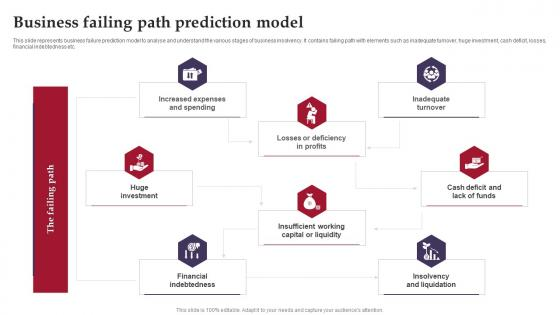
Businesses rarely collapse all at once.
The public sees the dramatic moment — layoffs, bankruptcy filings, shutdown announcements, founders posting reflective threads about “hard lessons learned.” But failure usually begins much earlier, quietly, inside spreadsheets no one outside the company will ever see.
Margins narrow.
Customer acquisition costs creep upward.
Retention weakens.
Operations become heavier than expected.
Growth continues publicly while structural weakness compounds privately.
And then, one day, the model stops working.
Not the product.
Not necessarily the people.
The model.
I remember sitting in a conference room years ago with the leadership team of a fast-growing company that, on paper, looked unstoppable. Revenue was increasing aggressively. Hiring accelerated monthly. Investors were enthusiastic. Externally, the company appeared healthy.
Internally, however, one metric kept deteriorating: the cost of acquiring customers.
Every quarter, the business spent more to generate the same revenue.
At one point, the CFO said something that changed how I thought about business failure entirely:
“We’re scaling demand faster than we’re scaling efficiency.”
That sentence captured the real issue.
Because most business models do not fail suddenly.
They fail mathematically.
A Business Model Is Not the Product
This distinction matters more than people realize.
A product solves a problem.
A business model determines how solving that problem becomes financially sustainable.
Many businesses confuse product popularity with model viability.
The two are not identical.
A Business Can Have:
- Strong demand
- Loyal users
- Market attention
- Revenue growth
…and still possess a failing business model.
Why?
Because revenue alone does not guarantee sustainable economics.
What a Business Model Actually Does
At its core, a business model answers several critical questions:
- How does the company make money?
- What does it cost to deliver value?
- How are customers acquired?
- How does the business scale?
- Where do margins improve or deteriorate?
When these systems become misaligned, failure begins.
Quietly at first.
Then all at once.
The Most Common Reason Business Models Fail
The simplest explanation is also the most brutal:
Costs eventually grow faster than value creation.
Everything else is detail layered around that reality.
Failure Often Happens Through Structural Imbalance
Examples include:
- Acquisition costs exceeding customer value
- Margins collapsing under operational complexity
- Retention weakening over time
- Scaling costs increasing unexpectedly
- Market demand shifting faster than adaptation
The business continues operating while the underlying economics decay.
Why Growth Can Hide Failure
One of the most dangerous periods in a company’s life is rapid expansion.
Growth creates psychological cover.
Revenue increases can temporarily conceal:
- Weak margins
- Inefficient operations
- High churn
- Poor retention
- Unsustainable acquisition spending
Scale Magnifies Existing Weaknesses
A flawed model does not become healthier at scale.
It becomes more exposed.
I once watched a startup celebrate record revenue growth while simultaneously losing money on nearly every new customer acquired. Internally, the logic was simple:
“We’ll fix efficiency later.”
Later arrived faster than expected.
A Comparison of Why Business Models Fail
| Failure Cause | What Happens | Long-Term Consequence |
|---|---|---|
| High Customer Acquisition Costs | Spending rises faster than revenue | Profitability collapses |
| Weak Retention | Customers leave too quickly | Growth becomes unsustainable |
| Poor Margins | Costs absorb revenue | Cash flow pressure intensifies |
| Operational Complexity | Systems become inefficient | Scaling slows dramatically |
| Market Shifts | Customer behavior changes | Demand weakens |
| Overdependence on Platforms | External ecosystems change rules | Revenue instability |
| Misaligned Pricing | Value and pricing disconnect | Customer resistance grows |
| Lack of Differentiation | Competition increases | Margins compress |
Every failed business model usually contains several of these simultaneously.
Rarely just one.
Customer Acquisition Becomes a Silent Killer
This issue destroys more businesses than most founders initially expect.
Early acquisition often feels deceptively easy:
- Cheap advertising
- Organic reach
- Novelty attention
- Referral momentum
Then competition increases.
Advertising prices rise.
Attention fragments.
The Economics Shift Quietly
Businesses suddenly discover:
- CAC rising
- Conversion rates declining
- Margins tightening
- Growth slowing
And because acquisition systems fueled expansion originally, the entire model destabilizes.
Retention Matters More Than Excitement
Many businesses optimize aggressively for acquisition while underestimating retention.
This creates dangerous asymmetry.
Acquiring Customers Is Expensive
Losing them repeatedly becomes catastrophic.
Businesses with poor retention effectively restart revenue generation constantly.
Subscription companies feel this especially hard.
A business leaking customers faster than expected eventually turns marketing into damage control instead of growth infrastructure.
Operational Complexity Destroys Efficiency
This part receives far less attention publicly because operational problems are not glamorous.
But complexity quietly suffocates many scaling businesses.
Growth Introduces:
- More employees
- More systems
- More communication layers
- More logistics
- More coordination friction
At small scale, inefficiencies feel manageable.
At larger scale, they become expensive.
I once worked briefly with an e-commerce company generating impressive sales volume. Externally, the brand looked successful.
Internally:
- Inventory forecasting was unstable
- Returns were increasing
- Shipping costs surged
- Operational coordination deteriorated
Revenue kept growing.
Profitability did not.
That distinction matters enormously.
Some Business Models Fail Because Timing Changes
Markets evolve faster than many models can adapt.
A profitable structure in one era may weaken dramatically later.
Timing Changes:
- Customer expectations
- Distribution costs
- Technology standards
- Competitive density
- Pricing tolerance
This explains why once-dominant models eventually struggle.
Not because they were irrational initially.
Because environments shifted.
The Platform Dependency Problem
Many modern businesses rely heavily on external ecosystems:
- Search engines
- Social media algorithms
- Marketplaces
- App stores
- Advertising platforms
This creates structural vulnerability.
Dependency Reduces Strategic Control
A single algorithm update or policy change can alter:
- Visibility
- Traffic
- Conversion rates
- Revenue flow
Businesses built entirely inside external systems often mistake borrowed distribution for durable advantage.
Why Pricing Misalignment Breaks Models
Pricing is not merely about charging more.
It is about aligning perceived value with economic sustainability.
Underpricing Creates Hidden Fragility
Businesses sometimes:
- Grow quickly
- Attract users easily
- Generate strong demand
…but fail financially because pricing cannot support operational reality.
This problem becomes especially common in highly competitive markets.
My Most Important Lesson About Business Model Failure
Years ago, I believed businesses failed primarily because of bad ideas.
Experience dismantled that assumption completely.
Many businesses fail despite solving real problems.
The issue is usually structural rather than conceptual.
I remember a founder explaining his company’s collapse with painful honesty. The product worked. Customers liked it. Demand existed.
But operational costs scaled faster than expected while customer acquisition became increasingly expensive.
At one point, he said:
“We confused growth with durability.”
That sentence stayed with me because it explained so much about modern startup culture.
Growth attracts attention.
Durability creates survival.
The two are not interchangeable.
Why Investors Sometimes Accelerate Failure
This part remains uncomfortable to discuss openly.
External funding can temporarily delay business model correction.
Capital Can Mask Weak Economics
Companies may continue operating despite:
- Negative margins
- Weak retention
- Unsustainable acquisition spending
Investment capital creates time.
But time does not automatically fix structural flaws.
Sometimes it amplifies them through accelerated scaling.
The Most Dangerous Assumption in Business
Perhaps the most dangerous belief founders hold is this:
“We’ll figure out profitability later.”
Sometimes that works.
Often it does not.
Because inefficiencies harden operationally over time:
- Teams expand around flawed systems
- Customer expectations stabilize
- Pricing structures become difficult to change
- Complexity compounds
Fixing broken economics later becomes exponentially harder.
Why Simplicity Often Wins
Simple business models survive surprisingly often because simplicity reduces operational drag.
Simple models usually feature:
- Clear pricing
- Straightforward delivery
- Predictable costs
- Focused customer segments
Complexity creates hidden failure points.
Simplicity creates resilience.
Conclusion: Business Models Fail When the Economics Stop Supporting the Story
Most failing businesses continue telling growth narratives long after the underlying economics weaken.
That is what makes business model failure so deceptive.
The collapse is rarely sudden internally.
It accumulates gradually through:
- Rising costs
- Weakening retention
- Operational friction
- Margin compression
- Dependency exposure
And eventually, the numbers stop cooperating with the narrative.
Perhaps that is the most important insight of all.
Business models do not fail because ambition exists.
They fail because systems lose alignment with reality.
The strongest companies are not merely the ones growing fastest.
They are the ones whose economics remain durable even after excitement fades.
Because attention can build a company temporarily.
But only sustainable structure keeps it alive.
- Arts
- Business
- Computers
- الألعاب
- Health
- الرئيسية
- Kids and Teens
- مال
- News
- Personal Development
- Recreation
- Regional
- Reference
- Science
- Shopping
- Society
- Sports
- Бизнес
- Деньги
- Дом
- Досуг
- Здоровье
- Игры
- Искусство
- Источники информации
- Компьютеры
- Личное развитие
- Наука
- Новости и СМИ
- Общество
- Покупки
- Спорт
- Страны и регионы
- World

 English
 Russian
 French
 Spanish
 Portuguese
 Deutsch
 Turkish
 Dutch
Dutch
 Italiano
 Romaian
 Portuguese (Brazil)
 Greek
Greek
