
What are the best ways to form habits?
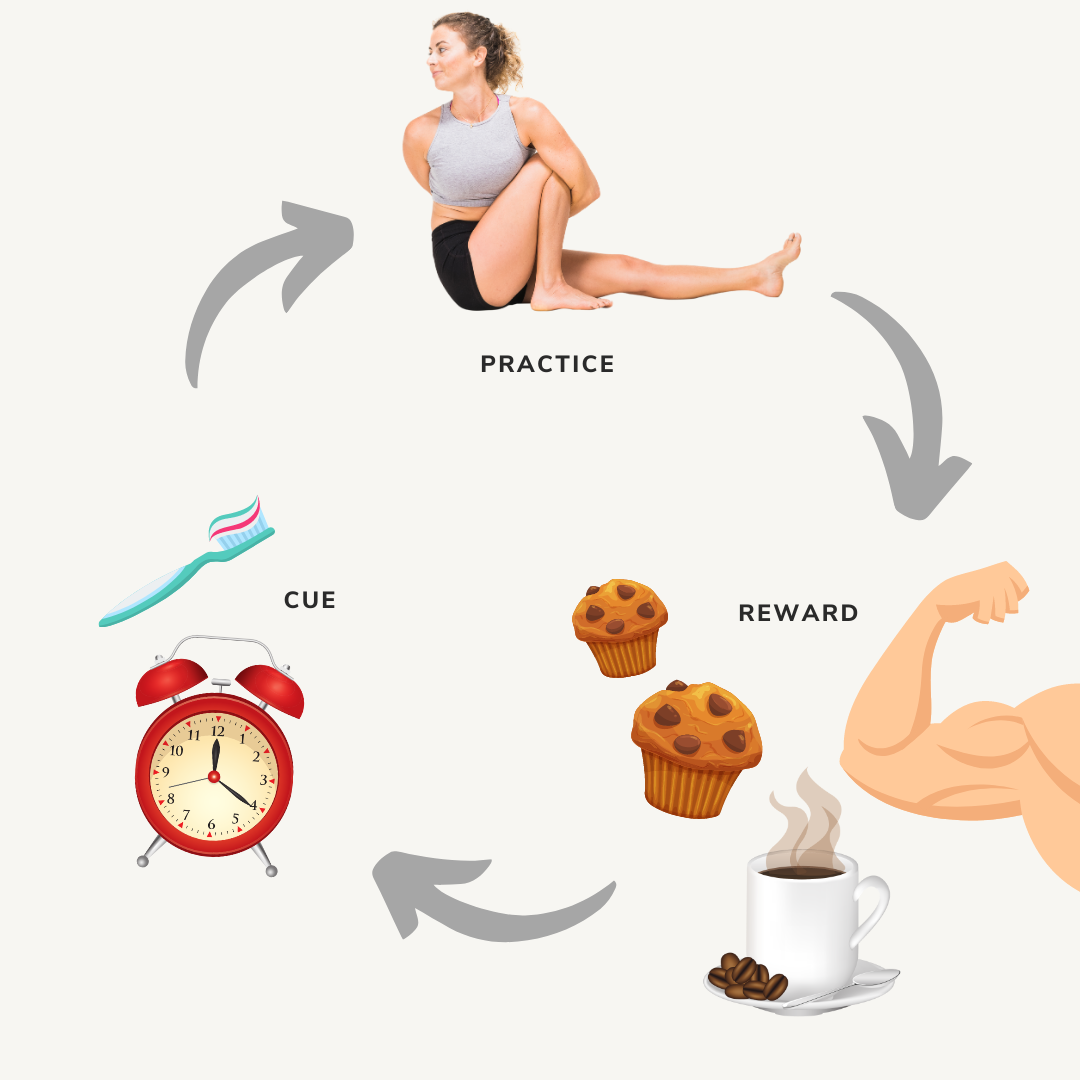
What Are the Best Ways to Form Habits?
Most people try to form habits by increasing effort.
More discipline. More rules. More intensity.
That works briefly—long enough to create the illusion of progress—then collapses under normal life conditions.
The better approach is almost the opposite.
The best ways to form habits are not about pushing harder. They are about designing conditions where the behavior becomes the easiest available option to repeat.
Habits are not built through force. They are built through repeatable systems.
And once you understand that, “best ways” stops being a motivational question and becomes a structural one.
Start With Behavior, Not Identity or Outcome
A common mistake is beginning with identity or outcome:
-
“I want to be fit.”
-
“I want to be productive.”
-
“I want to be consistent.”
These are direction-setting statements, not behavioral instructions.
The brain does not build habits from goals. It builds them from repeated actions in stable contexts.
So the better starting point is:
What is the smallest behavior I can repeat consistently?
Not what you want to become.
Not what you hope to achieve.
But what you can actually do repeatedly without negotiation.
Habits begin at the level of action, not aspiration.
Make the Habit Obvious (Cue Design)
Every habit begins with a cue.
Without a cue, behavior depends on memory. And memory is unreliable under stress, fatigue, or distraction.
Strong habit design makes cues unavoidable:
-
visible
-
stable
-
context-linked
-
tied to existing routines
Examples:
-
book placed on pillow → reading
-
running shoes by door → exercise
-
notes open on desk → studying
The principle is simple:
If you cannot see the cue, you will not reliably start the habit.
\text{Cue} \rightarrow \text{Behavior}
The habit begins at the cue, not the intention.
Reduce Friction Until Starting Requires Almost No Decision
Friction is the silent force that kills habits.
Not lack of ability. Not lack of knowledge. Friction.
Friction includes:
-
setup steps
-
unclear starting points
-
decision complexity
-
environmental obstacles
-
mental resistance
The more friction, the more motivation required.
And motivation is unstable.
So the best habit systems aggressively remove friction before it becomes relevant:
-
prepare tools in advance
-
simplify the first step
-
eliminate unnecessary choices
-
reduce physical and cognitive distance
If starting requires thinking, it is too complex for early formation.
The goal is not ease of completion.
The goal is ease of initiation.
Make the Habit So Small It Survives Low-Energy Days
Most habits fail because they are designed for ideal conditions.
But habits are not tested in ideal conditions. They are tested in ordinary ones:
-
fatigue
-
stress
-
distraction
-
emotional load
So the best habit strategies shrink the behavior until it can survive those states.
Examples:
-
1 page instead of 30 minutes of reading
-
1 push-up instead of a workout
-
2 minutes instead of a full session
-
opening a document instead of writing an essay
Small habits are not weak habits.
They are resilient habits.
\text{Small Action} \rightarrow \text{High Consistency} \rightarrow \text{Habit Formation}
Without consistency, scale is irrelevant.
Attach New Habits to Existing Ones (Habit Stacking)
The brain prefers sequences over isolated actions.
This is why the most effective habit formation strategy is linking new behavior to something that already happens reliably.
Structure:
After [existing habit], I will [new habit]
Examples:
-
after brushing teeth → meditate
-
after coffee → plan the day
-
after sitting at desk → start writing
This works because you are not creating a new trigger—you are borrowing an existing one.
Existing habits already have:
-
cues
-
stability
-
repetition history
New habits inherit that structure.
Design Immediate Feedback Into the System
One of the most underestimated factors in habit formation is reward timing.
The brain reinforces what it can clearly perceive.
If rewards are:
-
delayed
-
abstract
-
unclear
then the behavior does not “stick” as effectively.
So the best habit systems include immediate feedback loops:
-
checkmarks
-
visible progress tracking
-
small completion rituals
-
simple “done” signals
The reward does not need to be large.
It just needs to be immediate enough for the brain to register causality between action and outcome.
Focus on Repetition Before Optimization
Early habits fail when people try to optimize too soon:
-
perfect timing
-
ideal duration
-
maximum efficiency
-
advanced structure
But habits are not refined at the beginning. They are stabilized.
The only metric that matters early on is:
Did it happen?
Not:
-
how well it was done
-
how long it lasted
-
how efficient it felt
Repetition builds the pathway. Optimization comes later.
Expect Resistance as Part of the Process
When forming a new habit, resistance is not a signal of failure.
It is expected system behavior.
The brain evaluates new routines by asking:
-
Is this reliable?
-
Is this worth automating?
-
Should this be integrated into default behavior?
During this phase, inconsistency, hesitation, and low motivation are normal.
Most habits fail here not because the behavior is wrong, but because people misinterpret early resistance as evidence to stop.
In reality, resistance is often the system still deciding.
Make Environment Do More Work Than Willpower
Environment is one of the strongest predictors of behavior.
More reliable than motivation. More consistent than intention.
Good habit design shifts effort from willpower to environment:
-
make good habits visible
-
make bad habits harder to access
-
reduce decision points in advance
Because behavior follows context more reliably than desire.
If your environment requires effort to support the habit, the habit will eventually fail under pressure.
A First-Person Lesson on What Actually Works
There was a point where I treated habit formation as a discipline problem.
If something didn’t stick, I assumed the issue was consistency or commitment. So I would increase effort:
-
stricter rules
-
more detailed schedules
-
stronger expectations
It worked temporarily.
But only under ideal conditions.
Eventually, I noticed a pattern: the habits that survived weren’t the ones I tried hardest to enforce. They were the ones that required the least negotiation to begin.
The difference was not effort.
It was friction.
Once I reduced initiation to something almost automatic—something that didn’t require a decision—the entire dynamic changed. Repetition stopped being something I had to generate and started being something that simply occurred.
That shift is the core of effective habit formation.
The Best Ways to Form Habits (Integrated View)
At a systems level, the most effective habit formation strategies combine:
-
clear cue
-
minimal friction
-
small repeatable action
-
immediate reward
-
stable environment
-
repeated execution
\text{Cue + Low Friction + Small Action + Immediate Reward + Repetition} \rightarrow \text{Stable Habit}
When these elements align, the brain begins to automate behavior naturally.
No forcing required.
No motivation spikes required.
Just consistent repetition under conditions that favor continuation.
Conclusion: The Best Habits Are Designed, Not Forced
The best ways to form habits are not dramatic.
They are structural.
They rely on reducing friction, clarifying cues, shrinking actions, and reinforcing repetition until behavior becomes self-sustaining.
Because the real goal is not to perform the habit once.
It is to make it easier to repeat than to avoid.
And once that threshold is crossed, the habit stops being something you build.
It becomes something that builds itself through repetition.
- Arts
- Business
- Computers
- Spiele
- Health
- Startseite
- Kids and Teens
- Geld
- News
- Personal Development
- Recreation
- Regional
- Reference
- Science
- Shopping
- Society
- Sports
- Бизнес
- Деньги
- Дом
- Досуг
- Здоровье
- Игры
- Искусство
- Источники информации
- Компьютеры
- Личное развитие
- Наука
- Новости и СМИ
- Общество
- Покупки
- Спорт
- Страны и регионы
- World

 English
 Russian
 French
 Spanish
 Portuguese
 Turkish
 Dutch
Dutch
 Italiano
 Arabic
 Romaian
 Portuguese (Brazil)
 Greek
Greek
