
Why is skill development important?
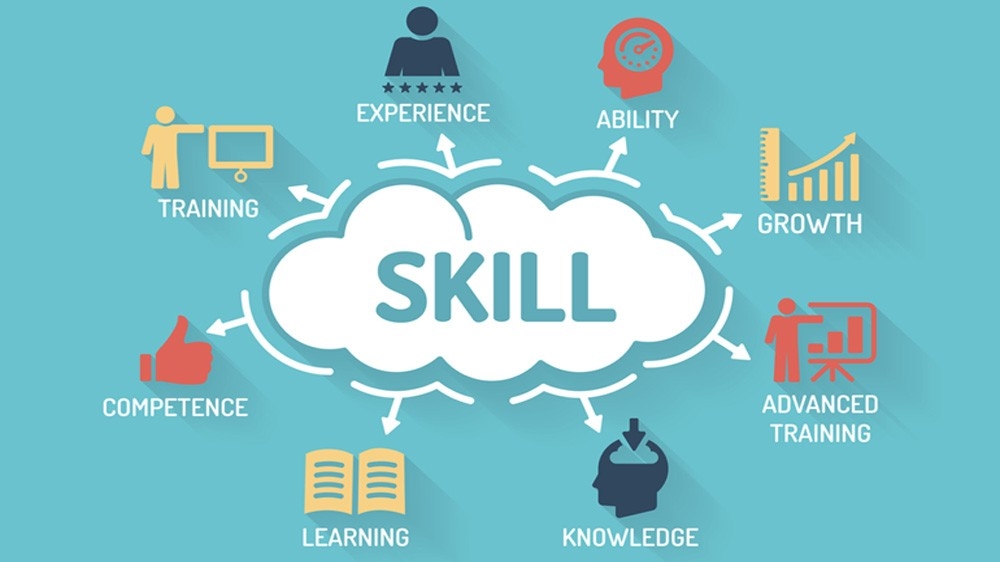
Why Is Skill Development Important?
There’s a moment I keep coming back to.
A few years ago, I was working with a senior leader—smart, experienced, respected. The kind of person who could walk into a room and immediately command attention without trying. We were midway through a strategy session when she stopped talking, leaned back in her chair, and said:
“I think I’ve become too good at what made me successful ten years ago.”
That sentence stayed with me because it exposed something uncomfortable.
Success can fossilize you.
The very capabilities that once accelerated your growth can quietly become the reason you stop growing altogether. Not because those skills are useless. Quite the opposite. They worked brilliantly—until the environment changed faster than the person operating inside it.
That is why skill development matters.
Not as a corporate slogan.
Not as résumé decoration.
Not as a productivity obsession.
But as a survival mechanism for relevance, adaptability, confidence, and autonomy.
Skill development is how people avoid becoming increasingly competent at things that no longer matter.
And that sounds dramatic until you notice how often it happens.
The Real Problem Isn’t Lack of Talent
Most people overestimate talent and underestimate adaptation.
They look at highly skilled individuals and assume:
-
natural intelligence
-
rare ability
-
exceptional discipline
-
unusual confidence
Sometimes that’s partially true.
But more often, skill compounds quietly through repetition, adjustment, experimentation, and deliberate discomfort.
\text{Repeated Adaptation} = \text{Compounded Capability}
The critical distinction is this:
Talent gives you a starting advantage.
Skill development determines whether you remain useful over time.
Those are not the same thing.
Skill Development Protects You From Stagnation
People rarely notice stagnation while it’s happening.
That’s because stagnation often feels efficient.
You become faster at familiar tasks.
More confident in known environments.
More certain in predictable situations.
And certainty feels good.
But certainty has a hidden cost:
it narrows curiosity.
The moment people stop developing skills, they begin operating from maintenance mode instead of growth mode.
That shift changes behavior subtly:
-
fewer experiments
-
less questioning
-
increased defensiveness
-
preference for familiar systems
-
avoidance of beginner status
Over time, adaptability weakens.
And adaptability—not raw intelligence—is what keeps people relevant in changing environments.
The Economy Rewards Skill Flexibility
A generation ago, specialization alone could sustain an entire career.
Today, capability half-lives are shrinking.
Tools evolve.
Industries restructure.
Software automates routine tasks.
Communication norms change.
Entire job categories mutate within a few years.
The people who thrive are not necessarily the people with the deepest static expertise.
They are the people capable of acquiring new competencies repeatedly.
A Comparison That Matters
| Approach | Short-Term Benefit | Long-Term Risk | Long-Term Advantage |
|---|---|---|---|
| Relying on Existing Skills | Immediate efficiency | Obsolescence | Limited adaptability |
| Continuous Skill Development | Temporary discomfort | Requires sustained effort | Long-term relevance |
| Hyper-Specialization Without Adaptation | Strong niche authority | Fragility during industry shifts | High short-term leverage |
| Cross-Functional Skill Growth | Slower early progress | Cognitive overload risk | Higher resilience and versatility |
| Passive Knowledge Consumption | Feels productive | Weak execution ability | Minimal real-world transformation |
| Deliberate Skill Practice | Slower gratification | Requires feedback and repetition | Compounding capability |
The uncomfortable truth is this:
The market increasingly rewards people who can learn faster than conditions change.
And conditions change relentlessly.
Confidence Is Usually Built Through Competence
People often chase confidence directly.
That rarely works.
Real confidence tends to emerge from evidence:
-
repeated execution
-
problem-solving ability
-
accumulated experience
-
skill reinforcement
\text{Repeated Competence} = \text{Earned Confidence}
This matters because many people interpret insecurity as a personality flaw when it is actually a capability gap.
The solution is not necessarily affirmations.
Sometimes the solution is simply becoming more capable.
There’s something stabilizing about knowing:
“I can handle difficult situations because I’ve trained for them.”
That kind of confidence behaves differently from optimism.
It has weight behind it.
Skill Development Expands Personal Agency
Here’s a question worth sitting with:
How much control do you actually have over your future if your capabilities remain static while your environment changes?
That question cuts deeper than career strategy.
Skill development increases agency because it expands your range of possible responses.
Without skills:
-
options shrink
-
dependence increases
-
adaptability weakens
With stronger capabilities:
-
choices expand
-
flexibility increases
-
uncertainty becomes more manageable
This is one reason learning new skills feels energizing.
It changes your perceived relationship with possibility.
Most People Confuse Information With Transformation
This is one of the quiet epidemics of modern learning.
People consume:
-
podcasts
-
books
-
newsletters
-
tutorials
-
productivity content
And afterward they feel informed.
But information alone rarely changes behavior.
Skill development begins only when knowledge enters repeated application.
\text{Information Without Application} = \text{Minimal Behavioral Change}
That distinction explains why people can understand communication principles yet still struggle with difficult conversations.
Or understand leadership concepts yet fail under pressure.
Or study productivity while remaining chronically inconsistent.
Knowledge explains.
Skills operationalize.
The Beginner Phase Is Emotionally Expensive
One reason people avoid skill development is not laziness.
It’s identity discomfort.
Being new at something feels destabilizing.
You lose:
-
efficiency
-
certainty
-
status
-
familiarity
Suddenly you are slower.
Less competent.
More self-conscious.
Many people unconsciously avoid this phase because they’ve attached self-worth to existing competence.
But the willingness to tolerate beginner status is often what separates adaptable people from stagnant ones.
Skill Development Changes How You Think
Skills do more than improve performance.
They restructure perception.
A designer sees differently than a non-designer.
A musician hears differently than a non-musician.
A skilled negotiator interprets conversations differently than everyone else in the room.
Why?
Because skill changes pattern recognition.
\text{Skill Acquisition} = \text{Enhanced Pattern Recognition}
Once enough repetitions accumulate, the brain begins filtering reality differently.
That’s why experts often notice opportunities, risks, or inefficiencies invisible to others.
Skill development literally changes cognitive interpretation.
Learning New Skills Creates Cognitive Flexibility
There’s another overlooked benefit:
mental flexibility.
Repeated learning teaches the brain:
-
uncertainty is survivable
-
confusion is temporary
-
adaptation is possible
This matters psychologically.
People who stop learning often become increasingly rigid because unfamiliarity starts feeling threatening instead of stimulating.
Meanwhile, consistent learners build tolerance for ambiguity.
And ambiguity tolerance becomes incredibly valuable in volatile environments.
The Skills That Matter Most Are Often Human Skills
Technical expertise matters.
But increasingly, durable differentiation comes from human capability:
-
communication
-
emotional regulation
-
coaching
-
leadership
-
listening
-
strategic thinking
-
collaboration
These skills compound because they improve every environment they enter.
A technically brilliant person who cannot communicate clearly eventually encounters limitations.
Meanwhile, someone with moderate technical ability and exceptional interpersonal skill often creates disproportionate influence.
That imbalance surprises people until they realize organizations are human systems before they are operational systems.
My Own Lesson About Skill Development
For years, I believed writing was primarily talent-driven.
Some people were simply “good writers.”
Others weren’t.
That belief was convenient because it protected me from confronting the uncomfortable truth:
writing improves through sustained repetition, revision, and feedback.
The first serious pieces I wrote felt painfully slow.
I overthought every sentence.
Edited constantly.
Second-guessed structure.
Compared myself to people far ahead of me.
But gradually, repetition changed things.
Not dramatically.
Not overnight.
Just incrementally:
-
clearer thinking
-
sharper transitions
-
stronger structure
-
more confidence with complexity
And eventually I realized something important:
Skill development often feels invisible while it’s happening.
You rarely notice growth in real time.
You notice it later when tasks that once exhausted you begin feeling manageable.
Skill Development Prevents Fragile Success
Some success is surprisingly fragile.
A person may thrive in one environment because conditions happen to align with their existing strengths.
But if the environment changes slightly, performance collapses.
Why?
Because the success depended more on circumstance than adaptability.
Skill development creates resilience because it broadens capability beyond one narrow context.
\text{Broader Capability} = \text{Greater Adaptability}
This matters enormously in uncertain environments.
The wider your skill base, the more situations you can navigate effectively.
Deliberate Practice Matters More Than Repetition Alone
Repetition without adjustment can reinforce mediocrity.
True development requires:
-
feedback
-
reflection
-
experimentation
-
correction
Otherwise people simply become more efficient at repeating mistakes.
This is why deliberate practice matters.
Not mindless repetition.
Not endless activity.
Intentional refinement.
That refinement process is uncomfortable because it requires confronting weaknesses directly.
But avoiding weakness rarely eliminates it.
Skill Development Increases Opportunity Surface Area
A fascinating thing happens when capabilities expand.
Opportunities begin appearing that previously felt inaccessible.
Not because the world changed.
Because your ability to engage with the world changed.
New skills create:
-
new networks
-
new conversations
-
new collaborations
-
new confidence thresholds
-
new career pathways
\text{Expanded Skills} = \text{Expanded Opportunity Range}
Capability alters possibility.
That relationship becomes more obvious over time.
Most People Quit Before Compounding Begins
Early learning feels inefficient.
Effort is high.
Results are inconsistent.
Progress appears slow.
This is precisely where most people stop.
Unfortunately, skill development compounds nonlinearly.
The most meaningful improvements often arrive after extended repetition—not during the early visible struggle.
\text{Sustained Practice Over Time} = \text{Compounding Improvement}
This creates a strange paradox:
The phase that feels least rewarding is often the phase most necessary for eventual transformation.
The Future Belongs to Adaptive Learners
Here’s the uncomfortable conclusion:
The world increasingly rewards learning agility over static expertise.
That does not mean expertise is irrelevant.
It means expertise without continued development becomes vulnerable.
The people most likely to remain valuable are not those who know everything already.
They are the people capable of repeatedly becoming beginners without collapsing psychologically.
That ability is rare.
And increasingly important.
Conclusion: Skill Development Is Really About Remaining Alive to Change
Skill development is not merely professional maintenance.
It is personal evolution.
Without it, people slowly become trapped inside outdated versions of themselves:
-
relying on old strengths
-
defending familiar systems
-
resisting discomfort
-
avoiding reinvention
But continued learning changes something deeper than capability.
It preserves adaptability.
Curiosity.
Agency.
Resilience.
Possibility.
The people who continue developing skills are not necessarily smarter than everyone else.
Often they are simply more willing to tolerate temporary incompetence in exchange for long-term growth.
And that willingness changes the trajectory of an entire life.
Because eventually, the question stops being:
“What do you know?”
And becomes:
“How quickly can you evolve when what you know stops being enough?”
- Arts
- Business
- Computers
- Games
- Health
- Home
- Kids and Teens
- Money
- News
- Personal Development
- Recreation
- Regional
- Reference
- Science
- Shopping
- Society
- Sports
- Бизнес
- Деньги
- Дом
- Досуг
- Здоровье
- Игры
- Искусство
- Источники информации
- Компьютеры
- Личное развитие
- Наука
- Новости и СМИ
- Общество
- Покупки
- Спорт
- Страны и регионы
- World

 Russian
 French
 Spanish
 Portuguese
 Deutsch
 Turkish
 Dutch
Dutch
 Italiano
 Arabic
 Romaian
 Portuguese (Brazil)
 Greek
Greek
