
How Do B2C Sales Work?
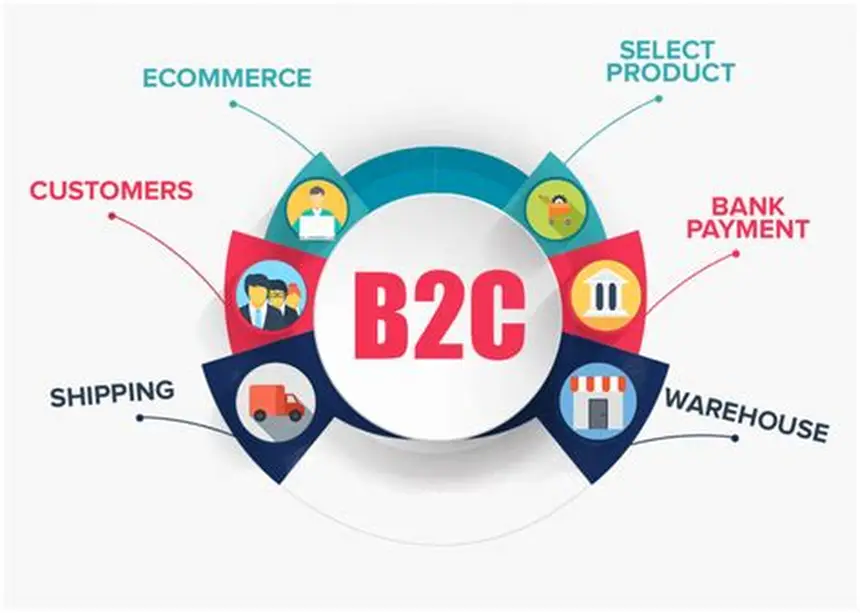
A woman walks into a skincare store looking for moisturizer. She leaves forty-three minutes later with a serum she didn’t plan to buy, a loyalty account she barely remembers signing up for, and a quiet sense that the brand somehow “gets” her.
That is B2C sales in its purest form.
Not manipulation. Not wizardry. Not even persuasion, exactly.
It’s orchestration.
The best B2C companies understand something many founders miss while obsessing over funnels and conversion rates: consumers rarely buy products. They buy relief, status, momentum, reassurance, convenience, identity, or occasionally, the fantasy of becoming someone slightly different by next Tuesday.
Business-to-consumer sales sit at the intersection of psychology, timing, economics, and performance marketing. And unlike B2B sales — where committees deliberate over procurement spreadsheets until everyone forgets why the software mattered in the first place — B2C happens fast. Emotional first. Rational second. Sometimes rational never arrives at all.
That speed changes everything.
What B2C Sales Actually Mean
B2C stands for business-to-consumer. A company sells directly to an individual buyer rather than another business.
Simple enough on paper.
But the mechanics underneath are wildly sophisticated.
When you buy sneakers from Nike, order dinner through DoorDash, or subscribe to Netflix, you’re participating in B2C commerce.
The transaction may last seconds. The infrastructure supporting it often involves:
- Behavioral targeting
- Brand positioning
- Pricing psychology
- CRM systems
- Customer segmentation
- Retention marketing
- Social proof loops
- Predictive analytics
- Customer support ecosystems
And increasingly, machine learning models quietly estimating whether you’re likely to click “Buy Now” after seeing a product three times versus five.
Consumers see the checkout page.
Companies see probability.
The Core Mechanics of B2C Sales
At its most basic level, B2C sales follow a familiar sequence:
| Stage | What Happens | Primary Goal | Typical Channels |
|---|---|---|---|
| Awareness | Consumer discovers product | Capture attention | TikTok, Instagram, Google, TV |
| Interest | Buyer researches or engages | Build curiosity | Reviews, product pages, influencers |
| Consideration | Consumer compares options | Reduce friction | Testimonials, pricing, demos |
| Purchase | Transaction occurs | Convert quickly | Ecommerce checkout, POS systems |
| Retention | Brand nurtures customer | Increase lifetime value | Email, SMS, loyalty programs |
| Advocacy | Customer recommends brand | Generate referrals | UGC, referrals, reviews |
Looks tidy in a table.
Reality isn’t tidy.
Consumers bounce backward constantly. Someone discovers a product on TikTok, forgets about it for three weeks, sees a Reddit thread criticizing competitors, watches two YouTube reviews at midnight, then purchases during a lunch break because an email subject line triggers mild panic about “limited stock.”
Modern B2C sales are nonlinear because attention itself is nonlinear.
Why Emotion Drives B2C More Than Logic
Here’s the uncomfortable truth many analytical marketers resist:
People do not buy rationally nearly as often as they claim.
A parent buying organic snacks isn’t simply evaluating nutritional density. They may be purchasing reassurance. Someone choosing luxury luggage might be buying competence. Fitness apps often sell optimism disguised as subscriptions.
The emotional layer matters because consumer decisions happen under cognitive shortcuts.
Fast decisions. Limited information. Competing distractions.
That’s why successful B2C brands obsess over:
Speed
Consumers abandon purchases astonishingly fast.
According to Baymard Institute research, average cart abandonment rates consistently hover around 70% across industries. Small frictions matter. Slow load times matter. Too many form fields matter.
Convenience is not a bonus feature in B2C.
It is the product.
Identity
People gravitate toward brands that mirror who they believe they are — or who they want others to think they are.
Apple mastered this years ago. Their products rarely compete solely on specifications. They compete on aesthetics, simplicity, and social signaling.
Consumers often defend brand choices with technical arguments after making emotional decisions.
Trust
Consumers are naturally skeptical. Especially online.
That skepticism is why reviews, testimonials, creator partnerships, return policies, and visible customer support matter so much.
Trust shortens decision-making time.
And in B2C, shortening decision-making time is practically a revenue strategy by itself.
The Difference Between B2C and B2B Sales
People lump B2B and B2C together because both involve selling.
But structurally, they behave almost like different species.
| Factor | B2C Sales | B2B Sales |
|---|---|---|
| Buyer Type | Individual consumer | Organization or team |
| Decision Speed | Fast | Slow |
| Emotional Influence | High | Moderate |
| Average Transaction Value | Lower | Higher |
| Sales Cycle | Short | Long |
| Marketing Channels | Social, ecommerce, ads | Outreach, demos, LinkedIn |
| Relationship Depth | Broad but lighter | Fewer but deeper |
| Purchasing Drivers | Desire, convenience, identity | ROI, efficiency, compliance |
I learned this distinction the hard way during a consulting project several years ago.
A retail startup hired our team to improve conversions for a premium home goods brand. The founders came from enterprise software. Their instinct was to overload product pages with technical details, manufacturing breakdowns, feature hierarchies, and exhaustive comparison charts.
Consumers hated it.
Heatmap data showed users skipping entire sections.
What finally moved sales wasn’t additional information. It was atmosphere. Cleaner photography. Better customer reviews. Faster checkout. A softer return policy.
The founders had assumed buyers wanted certainty.
Most buyers wanted confidence.
There’s a difference.
The Psychology Behind Successful B2C Sales
The strongest B2C companies understand behavioral psychology better than many therapists.
Not because they’re sinister. Because attention is expensive.
A few recurring principles appear again and again.
Scarcity
“Only 2 left.”
“Sale ends tonight.”
“Limited release.”
Scarcity works because humans overvalue opportunities that appear temporary.
Sometimes the scarcity is legitimate.
Sometimes it’s aggressively theatrical.
Consumers usually know this. It still works.
Social Proof
People trust other people more than brands.
A product with 12,000 reviews feels safer than one with 14.
This explains the explosion of influencer marketing. Consumers perceive creators as proxies for trusted recommendations — even when sponsorship disclosures sit directly beneath the video.
Friction Reduction
Every additional click lowers conversion probability.
This is why one-click checkout systems became so influential. Amazon understood early that removing tiny inconveniences compounds into enormous revenue gains.
The easier purchasing feels, the less time consumers have to reconsider.
Personalization
Consumers increasingly expect tailored experiences.
Spotify playlists. Product recommendations. Dynamic email campaigns. Customized homepages.
Done well, personalization creates relevance.
Done poorly, it feels invasive in a way that makes people suddenly want to throw their phones into nearby rivers.
Digital Channels Changed the Entire Sales Equation
Traditional B2C once relied heavily on physical retail, television advertising, and broad demographic targeting.
Now? Consumer journeys fracture across dozens of platforms.
A teenager discovers a fashion brand on TikTok. A parent researches reviews on Google. Someone else purchases after seeing a creator mention the product inside a “morning routine” video that barely resembles advertising at all.
The modern B2C ecosystem is fragmented, fast-moving, and algorithmically mediated.
Here’s where most companies focus their sales efforts now:
Ecommerce Websites
Direct-to-consumer brands increasingly prioritize owned platforms because margins improve without retail intermediaries.
Think Warby Parker or Glossier.
Owning customer data matters enormously.
Social Commerce
Platforms no longer simply generate awareness. They process purchases directly.
Consumers move from discovery to checkout without leaving apps.
Impulse buying thrives in these environments because interruption disappears.
Email and SMS Marketing
Still wildly effective despite years of predictions declaring email “dead.”
Retention often determines profitability more than acquisition.
A repeat customer is cheaper than a new one almost every time.
Influencer Partnerships
Consumers trust creators who feel familiar.
Not necessarily celebrities. Often micro-influencers outperform massive accounts because smaller audiences perceive recommendations as more authentic.
That intimacy translates into conversions.
Why Retention Matters More Than Most Companies Realize
Many brands obsess over acquiring new customers while quietly neglecting existing ones.
Financially, that’s often backwards.
Research from Bain & Company has long suggested increasing customer retention rates by even 5% can significantly increase profits in many industries.
Retention matters because acquisition costs keep rising.
Advertising auctions are crowded. Consumer attention is fragmented. Platforms change algorithms constantly. Paid reach becomes more expensive every year.
Which means sustainable B2C businesses eventually shift focus toward:
- Repeat purchases
- Subscription models
- Loyalty programs
- Community building
- Personalized offers
- Customer experience improvements
The smartest brands stop thinking transactionally.
They think relationally.
Common B2C Sales Mistakes
Some errors appear so consistently they practically deserve their own museum exhibit.
Overcomplicating the Purchase Process
Consumers abandon confusion quickly.
If checkout feels exhausting, people leave.
Not eventually. Immediately.
Prioritizing Features Over Outcomes
Consumers care less about specifications than marketers assume.
A mattress company isn’t really selling foam density.
It’s selling better sleep.
Ignoring Mobile Experience
Mobile commerce now dominates huge portions of consumer activity.
Yet many brands still design experiences that feel suspiciously hostile to thumbs.
Treating Customers Like Data Points
Analytics matter. Deeply.
But consumers notice when communication feels robotic or relentlessly transactional.
The strongest brands preserve emotional texture.
The Future of B2C Sales
Artificial intelligence will reshape consumer sales dramatically over the next decade. It already is.
Personalization will become sharper. Predictive recommendations more accurate. Customer service increasingly automated.
But there’s an interesting tension emerging at the same time.
As automation expands, authenticity becomes more valuable.
Consumers are getting better at detecting manufactured intimacy. They know when urgency feels fake. They recognize over-optimized copy. They can smell synthetic branding language from miles away.
Which means future B2C winners may not be the loudest companies.
They may simply be the clearest.
The most human.
The easiest to trust.
Final Thought: B2C Sales Are Really About Human Behavior
People like to imagine purchasing decisions as logical conclusions reached after careful evaluation.
Usually they are emotional impulses retroactively defended with logic.
That doesn’t make consumers irrational. It makes them human.
B2C sales work because businesses learn how humans actually behave — distracted, emotional, impatient, aspirational, contradictory — and build systems around those realities instead of pretending consumers operate like spreadsheets.
The companies that thrive understand a subtle but critical truth:
Attention gets the click.
Trust gets the sale.
Recognition gets the repeat customer.
And loyalty? Loyalty is what happens when a consumer feels understood before they feel marketed to.
- Arts
- Business
- Computers
- الألعاب
- Health
- الرئيسية
- Kids and Teens
- مال
- News
- Personal Development
- Recreation
- Regional
- Reference
- Science
- Shopping
- Society
- Sports
- Бизнес
- Деньги
- Дом
- Досуг
- Здоровье
- Игры
- Искусство
- Источники информации
- Компьютеры
- Личное развитие
- Наука
- Новости и СМИ
- Общество
- Покупки
- Спорт
- Страны и регионы
- World

 English
 Russian
 French
 Spanish
 Portuguese
 Deutsch
 Turkish
 Dutch
Dutch
 Italiano
 Romaian
 Portuguese (Brazil)
 Greek
Greek
