
Is IaaS Cost-Effective?
The cloud has a remarkable talent for making expensive things appear inexpensive.
A few clicks. A virtual server. Instant scalability. No racks of hardware. No data center leases. No forklifts unloading equipment into temperature-controlled rooms.
The proposition feels irresistible.
Instead of spending hundreds of thousands of dollars on infrastructure, businesses can rent computing resources as needed and pay only for what they use.
At least, that's the theory.
The reality is more complicated.
For every company celebrating lower infrastructure costs through Infrastructure as a Service (IaaS), another is discovering an unpleasant truth buried deep inside its cloud invoice. Storage charges accumulate. Data transfer fees multiply. Idle resources linger unnoticed. Costs drift upward until someone eventually asks a question that should have been asked from the beginning:
Is IaaS actually cost-effective?
The answer is neither a simple yes nor a simple no.
Like most technology decisions, cost-effectiveness depends less on the technology itself and more on how intelligently it is deployed.
The organizations that save money with IaaS tend to understand this.
The organizations that overspend often learn it the hard way.
What Is IaaS?
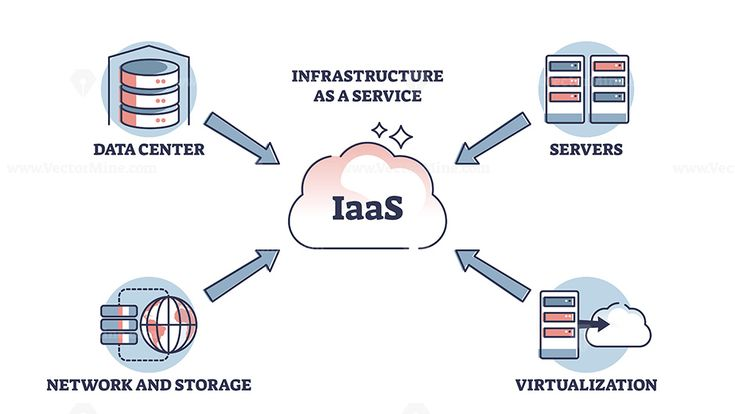
Infrastructure as a Service, commonly abbreviated as IaaS, is a cloud computing model that provides virtualized infrastructure resources over the internet.
Instead of purchasing and maintaining physical hardware, businesses rent resources such as:
- Virtual servers
- Storage systems
- Networking infrastructure
- Load balancers
- Backup environments
- Security services
Major cloud providers offer these services on demand, allowing organizations to scale resources up or down according to operational needs.
The appeal is obvious.
Businesses gain infrastructure without owning infrastructure.
And that distinction changes the economics of technology investments.
Why IaaS Appears Cost-Effective
At first glance, the financial argument is compelling.
Traditional infrastructure requires substantial upfront investment.
Servers must be purchased.
Networking equipment installed.
Storage systems configured.
Facilities maintained.
Staff hired.
IaaS removes many of those expenses.
The Shift From Capital Expense to Operating Expense
Historically, infrastructure investments required significant capital expenditure.
Organizations bought hardware before they needed its full capacity.
Future growth had to be anticipated.
Sometimes years in advance.
IaaS changes the equation.
Resources become operational expenses.
Businesses pay for usage rather than ownership.
That shift improves flexibility and often reduces financial risk.
Particularly for growing organizations.
The Financial Advantages of IaaS
Several factors contribute to the cost-effectiveness argument.
Reduced Upfront Costs
One of the most obvious benefits involves avoiding large initial investments.
A startup can deploy enterprise-grade infrastructure without spending six figures on hardware.
For many businesses, that accessibility is transformative.
Elastic Scaling
Traditional infrastructure often sits underutilized.
Servers purchased for peak demand frequently operate far below capacity during normal periods.
IaaS allows organizations to scale resources dynamically.
When demand rises, capacity expands.
When demand falls, costs can decline.
Theoretically.
Execution matters.
Lower Maintenance Costs
Physical infrastructure requires maintenance.
Hardware fails.
Components become obsolete.
Systems require updates.
Cloud providers absorb much of this responsibility.
Customers benefit from reduced operational burdens.
Faster Deployment
Infrastructure that once required weeks or months can often be provisioned in minutes.
Time has value.
Businesses frequently underestimate it.
Comparing Traditional Infrastructure and IaaS
| Cost Category | Traditional Infrastructure | IaaS Model |
|---|---|---|
| Hardware Purchases | High upfront expense | Included in service pricing |
| Maintenance | Internal responsibility | Provider responsibility |
| Scalability | Requires additional hardware | On-demand scaling |
| Data Center Costs | Significant | Typically eliminated |
| Staffing Requirements | Higher | Often reduced |
| Deployment Speed | Weeks or months | Minutes or hours |
| Financial Flexibility | Limited | High |
| Long-Term Predictability | High | Variable |
This comparison explains why so many organizations initially embrace cloud infrastructure.
The economics appear attractive.
Sometimes they are.
Sometimes they aren't.
The Hidden Costs Nobody Mentions in the Sales Presentation
This is where the conversation becomes interesting.
Cloud providers are not in the business of losing money.
Their pricing structures are sophisticated.
Very sophisticated.
And that sophistication occasionally creates surprises.
Data Transfer Charges
Many organizations focus heavily on compute costs while overlooking network-related expenses.
Moving large volumes of data can become expensive.
Especially at scale.
Storage Growth
Storage appears inexpensive initially.
Over time, accumulated data changes the equation.
Backup systems.
Archives.
Application logs.
Redundant copies.
Small charges multiplied across years can become meaningful expenses.
Idle Resources
Unused cloud resources have a habit of lingering.
Development environments.
Forgotten test systems.
Oversized virtual machines.
They continue generating costs long after their usefulness disappears.
Complexity Costs
Managing cloud environments requires expertise.
Organizations frequently underestimate the operational knowledge required to optimize spending effectively.
The result?
Waste.
Often substantial waste.
A Lesson I Learned Reviewing Cloud Migration Projects
Several years ago, I spoke with technology leaders involved in large-scale cloud migrations.
The expectation was remarkably consistent.
Move infrastructure to the cloud.
Reduce costs.
Increase flexibility.
Mission accomplished.
Reality proved more nuanced.
One organization achieved significant savings because it redesigned applications specifically for cloud efficiency.
Another simply transferred existing workloads without modification.
The first company reduced spending.
The second saw costs increase.
The lesson was revealing.
Cloud infrastructure does not automatically create efficiency.
It merely creates the possibility of efficiency.
The difference matters.
A great deal.
When IaaS Is Most Cost-Effective
Certain scenarios consistently favor the IaaS model.
Rapidly Growing Businesses
Growth introduces uncertainty.
Predicting future infrastructure needs becomes difficult.
IaaS accommodates changing demand without requiring large capital commitments.
Seasonal Workloads
Some businesses experience predictable spikes in activity.
Retail operations during holiday periods provide a classic example.
Owning infrastructure for peak demand often proves inefficient.
Renting capacity temporarily can be far more economical.
Development and Testing Environments
Temporary environments benefit significantly from cloud flexibility.
Resources can be created when needed and removed when projects conclude.
Startup Organizations
Young companies frequently prioritize cash preservation.
IaaS allows infrastructure deployment without major upfront investment.
That flexibility can be strategically valuable.
When IaaS May Be Less Cost-Effective
The cloud is not universally cheaper.
Despite persistent assumptions, certain workloads may perform better financially in traditional environments.
Stable, Predictable Workloads
Organizations with highly predictable resource requirements sometimes discover that owning infrastructure becomes more economical over long periods.
Large-Scale Data Processing
Extensive data transfer and storage demands can create significant cloud expenses.
The economics deserve careful evaluation.
Long-Term Resource Consumption
Pay-as-you-go pricing works well for variable demand.
Constant demand can produce different results.
Eventually, recurring rental costs accumulate.
The Role of Cloud Cost Management
One of the biggest misconceptions surrounding IaaS is that cost optimization happens automatically.
It doesn't.
Successful organizations actively manage cloud spending.
Effective Cost-Control Strategies
High-performing teams frequently:
- Monitor resource utilization
- Eliminate idle infrastructure
- Use reserved capacity where appropriate
- Automate scaling policies
- Review invoices regularly
- Optimize storage configurations
Cloud efficiency is rarely accidental.
It is usually operational.
Beyond Cost: The Hidden Value of IaaS
Focusing exclusively on expenses can obscure broader business benefits.
Sometimes cost-effectiveness emerges indirectly.
Agility
Faster deployment enables quicker experimentation.
Faster experimentation can accelerate innovation.
Innovation occasionally creates value that exceeds infrastructure savings.
Reliability
Major cloud providers invest heavily in redundancy and availability.
Replicating those capabilities independently can be expensive.
Global Reach
Organizations serving international customers often benefit from geographically distributed infrastructure.
Building that capability internally requires substantial investment.
These advantages complicate purely financial comparisons.
The Most Important Question Isn't About Cost
Many organizations ask:
"Is IaaS cheaper?"
A better question might be:
"Does IaaS create greater overall value?"
Cost represents one variable.
Flexibility.
Speed.
Scalability.
Risk reduction.
Operational simplicity.
These factors influence outcomes as well.
Sometimes a slightly more expensive solution produces significantly greater business value.
Sophisticated decision-makers understand this distinction.
Common Mistakes That Increase IaaS Costs
Patterns emerge repeatedly.
Lifting and Shifting Without Optimization
Moving workloads to the cloud without redesigning them often limits potential savings.
Ignoring Resource Monitoring
Unmonitored environments frequently accumulate waste.
Overprovisioning
Organizations often allocate more capacity than necessary.
Poor Governance
Lack of oversight encourages unnecessary spending.
Failing to Forecast Usage
Cloud flexibility should complement planning, not replace it.
These mistakes can dramatically influence cost-effectiveness.
So, Is IaaS Cost-Effective?
Usually.
But not automatically.
That distinction sits at the heart of the conversation.
IaaS can reduce upfront costs, improve scalability, accelerate deployment, and provide operational flexibility that traditional infrastructure struggles to match.
Yet those benefits do not guarantee lower spending.
Organizations that actively manage cloud environments often achieve impressive results.
Organizations that assume efficiency will emerge naturally frequently encounter disappointing invoices.
Technology rarely eliminates responsibility.
Cloud computing is no exception.
Conclusion: The Cloud Doesn't Change Economics—It Changes Timing
Perhaps the most misunderstood aspect of IaaS is the belief that it somehow rewrites the laws of business economics.
It doesn't.
Resources still cost money.
Infrastructure still requires management.
Capacity still requires planning.
What IaaS changes is timing.
Instead of purchasing resources upfront, organizations acquire them incrementally.
Instead of betting heavily on future demand, they adapt as demand evolves.
That flexibility can be extraordinarily valuable.
But flexibility and affordability are not identical concepts.
The companies extracting the greatest value from IaaS understand this. They treat cloud infrastructure not as a shortcut to lower costs but as a tool requiring discipline, oversight, and strategic intent.
For them, IaaS becomes cost-effective because they make it cost-effective.
And that distinction may be the most important one of all.
- Arts
- Business
- Computers
- Jogos
- Health
- Início
- Kids and Teens
- Money
- News
- Personal Development
- Recreation
- Regional
- Reference
- Science
- Shopping
- Society
- Sports
- Бизнес
- Деньги
- Дом
- Досуг
- Здоровье
- Игры
- Искусство
- Источники информации
- Компьютеры
- Личное развитие
- Наука
- Новости и СМИ
- Общество
- Покупки
- Спорт
- Страны и регионы
- World

 English
 Russian
 French
 Spanish
 Portuguese
 Deutsch
 Turkish
 Dutch
Dutch
 Italiano
 Arabic
 Romaian
 Greek
Greek
