
Why do people make irrational decisions?
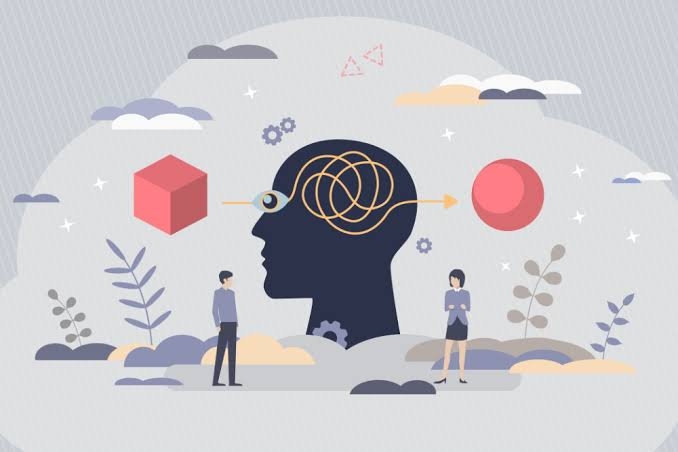
Why Do People Make Irrational Decisions?
The Puzzle Hidden in Ordinary Choices
A man drives across town to save $20 on a household appliance worth $100.
The next day, he declines to drive the same distance to save $20 on a refrigerator worth $2,000.
The amount saved is identical.
The effort required is identical.
Yet the decision changes.
Most people immediately understand why.
And that is precisely the puzzle.
From a strictly rational perspective, the choices should be the same. Twenty dollars is twenty dollars. Distance is distance. Time is time.
But human judgment rarely operates with such precision.
We tell ourselves that our decisions emerge from careful reasoning. We imagine ourselves weighing evidence, comparing alternatives, and selecting the best course of action.
Sometimes we do.
Often we do not.
Instead, our judgments are shaped by emotion, context, memory, social influence, mental shortcuts, and cognitive limitations that operate largely outside awareness.
The question is not whether people make irrational decisions.
The evidence is overwhelming that they do.
The more interesting question is why.
Why do intelligent individuals overspend, remain in failing relationships, cling to losing investments, ignore probabilities, and repeat mistakes they recognize in others?
The answer is surprisingly uncomfortable.
The human mind was not designed to be perfectly rational.
It was designed to survive.
And survival demands speed far more often than it demands accuracy.
The Myth of the Rational Human
For much of modern history, economists and philosophers often imagined people as rational decision-makers.
This hypothetical person gathered information objectively.
He compared alternatives logically.
He selected the option that maximized benefit.
Reality, however, proved more complicated.
People routinely:
-
Buy things they do not need.
-
Procrastinate despite knowing the consequences.
-
Stay loyal to harmful habits.
-
Ignore statistical evidence.
-
Overestimate their abilities.
-
Panic during uncertainty.
-
Follow crowds into obvious mistakes.
These behaviors are not rare exceptions.
They are common features of human life.
The challenge is explaining why.
Behavioral science suggests that irrational decisions are not random failures of intelligence.
They are predictable consequences of how the mind processes information.
The Brain Prefers Speed Over Accuracy
Imagine your ancestors encountering movement in tall grass.
One possibility was the wind.
Another possibility was a predator.
Careful analysis might produce a more accurate answer.
Unfortunately, analysis takes time.
Natural selection often rewards speed.
A false alarm is inconvenient.
A missed threat can be fatal.
As a result, human cognition evolved to make rapid judgments.
The brain developed shortcuts.
Psychologists call these shortcuts heuristics.
Most of the time, they work remarkably well.
They allow us to navigate daily life without becoming paralyzed by endless calculations.
Yet shortcuts come with tradeoffs.
The same mental mechanisms that increase efficiency can also produce errors.
Irrational decisions often emerge from systems that generally help us function.
The Two Minds That Shape Every Decision
One of the most useful ways to understand irrational behavior is through the distinction between fast and slow thinking.
Fast Thinking
Fast thinking operates automatically.
It is intuitive.
It recognizes patterns instantly.
It generates impressions without effort.
You do not consciously calculate that a face looks angry.
You simply know.
Fast thinking is essential.
Without it, ordinary life would become exhausting.
Yet it frequently relies on assumptions rather than evidence.
Slow Thinking
Slow thinking is deliberate.
It evaluates information carefully.
It questions assumptions.
It performs calculations.
It considers probabilities.
The problem is that slow thinking requires effort.
And effort is expensive.
Whenever possible, the brain delegates decisions to fast thinking.
Many irrational decisions occur because intuition answers questions that logic never examines.
Cognitive Biases: The Invisible Forces Behind Irrationality
One of the most important discoveries in psychology is that irrational decisions often follow predictable patterns.
These patterns are called cognitive biases.
They affect virtually everyone.
Including people who know they exist.
Confirmation Bias
Human beings naturally seek evidence that supports what they already believe.
Information that confirms existing views feels convincing.
Information that challenges those views often receives less attention.
Imagine someone convinced that a particular investment will succeed.
They may spend hours reading optimistic reports.
Negative evidence feels flawed.
Positive evidence feels persuasive.
The result is not objective analysis.
It is selective analysis.
People rarely intend to deceive themselves.
Confirmation bias does the work quietly.
Loss Aversion
Most people dislike losing $100 more than they enjoy gaining $100.
The emotional impact is unequal.
Losses feel larger than gains.
This tendency helps explain numerous irrational behaviors.
Investors refuse to sell declining stocks.
Businesses continue funding failed projects.
Individuals remain attached to possessions they rarely use.
Walking away feels like accepting defeat.
The desire to avoid loss can become stronger than the desire to achieve gain.
Anchoring
The first number people encounter often influences later judgments.
Suppose a watch is displayed with an original price of $1,000 and a discounted price of $500.
The discount feels substantial.
Now imagine the same watch simply priced at $500.
The perceived value changes.
Nothing about the product has changed.
The anchor changed.
The mind uses reference points even when those reference points are arbitrary.
Availability Bias
People judge likelihood according to how easily examples come to mind.
A widely publicized airplane crash can make flying seem dangerous.
A friend winning money in the stock market can make investing appear easier than it actually is.
Memorable events dominate perception.
Statistics often lose.
As a result, perceived risk and actual risk frequently diverge.
Emotions Often Decide Before Logic Arrives
Many people assume emotion and reasoning operate separately.
The evidence suggests otherwise.
Emotion frequently influences decisions before conscious reasoning begins.
Consider anger.
An angry person may send an email they later regret.
The message feels justified in the moment.
Hours later, the same individual often struggles to understand why it seemed like a good idea.
Fear works similarly.
During periods of uncertainty, investors sometimes sell valuable assets at precisely the wrong moment.
The emotional desire for safety overwhelms rational analysis.
Excitement can be equally dangerous.
Consumers make impulse purchases.
Entrepreneurs overestimate opportunities.
Gamblers increase risks.
The common thread is simple.
Emotion narrows attention.
And narrowed attention often produces poor decisions.
The Power of Social Influence
Human beings are social creatures.
This reality shapes decisions in profound ways.
People frequently look to others for guidance, especially during uncertainty.
If everyone appears confident about an investment, a product, or an idea, skepticism becomes difficult.
Crowds create psychological comfort.
Agreement feels reassuring.
History offers countless examples.
Financial bubbles.
Market manias.
Fashion trends.
Political movements.
The pattern repeats because social proof influences judgment.
When many people believe something, the belief itself becomes evidence.
Not necessarily reliable evidence.
But evidence nonetheless.
Why Intelligence Does Not Prevent Irrational Decisions
One of the most surprising findings in behavioral science is that intelligence provides limited protection against bias.
Smart people make irrational decisions.
Experts make irrational decisions.
Highly educated individuals make irrational decisions.
The reason is straightforward.
Biases originate from mental architecture rather than lack of knowledge.
A brilliant investor can become overconfident.
A skilled physician can exhibit confirmation bias.
A successful entrepreneur can underestimate risk.
Knowledge helps.
It does not create immunity.
In some cases, intelligence even strengthens irrationality.
Highly intelligent individuals often become exceptionally skilled at defending conclusions they reached emotionally.
The reasoning improves.
The judgment does not.
The Cost of Overconfidence
Among all cognitive biases, overconfidence may be the most dangerous.
Most people believe they are above average in numerous areas.
Driving.
Judgment.
Leadership.
Decision-making.
Statistically, this is impossible.
Yet the illusion persists.
Overconfidence encourages excessive risk-taking.
It reduces preparation.
It weakens skepticism.
It creates certainty where uncertainty would be more appropriate.
Entire financial crises have been fueled by collective overconfidence.
Individuals are not immune simply because they recognize the danger.
Confidence feels good.
Humility requires effort.
A Lesson I Learned the Hard Way
Several years ago, I became convinced that I had identified a perfect opportunity.
The evidence appeared overwhelming.
Every article seemed supportive.
Every conversation reinforced my conclusion.
I felt informed.
Prepared.
Certain.
The outcome was disappointing.
Looking back, the problem was not insufficient information.
The problem was selective information.
I had unconsciously gathered evidence that supported my view while overlooking evidence that challenged it.
At the time, the process felt objective.
Only in retrospect did the bias become visible.
The experience taught me something important.
The most dangerous irrational decisions often feel completely rational while we are making them.
That is what makes them difficult to detect.
Can People Become More Rational?
The answer is yes.
But not perfectly.
Human cognition will always contain limitations.
The goal is improvement, not perfection.
Several habits consistently improve decision quality:
Seek Disconfirming Evidence
Instead of asking, "Why am I right?"
Ask, "What would prove me wrong?"
The question changes everything.
Slow Down Important Decisions
Many poor choices emerge from haste.
Time creates distance from emotion.
Distance improves judgment.
Consider Base Rates
Before focusing on a specific situation, examine broader statistics.
What usually happens in similar cases?
The answer is often more informative than intuition.
Welcome Constructive Disagreement
People who challenge assumptions provide information that supporters rarely offer.
Discomfort can be valuable.
Separate Emotion From Timing
Strong emotions rarely improve major decisions.
If possible, delay important choices until emotional intensity decreases.
The situation may remain the same.
Your judgment may not.
Why Irrational Decisions Are Surprisingly Useful
At first glance, irrationality appears entirely negative.
Yet this conclusion would be incomplete.
The same mental shortcuts that generate errors also make human life possible.
Imagine analyzing every decision with perfect rigor.
Every meal.
Every purchase.
Every conversation.
Every route to work.
Life would become unbearable.
Heuristics allow efficiency.
Intuition allows speed.
Emotion enables motivation.
Social influence encourages cooperation.
The systems that create irrationality also create adaptability.
The challenge is not eliminating these mechanisms.
The challenge is understanding when they help and when they mislead.
Conclusion: Irrationality Is a Feature, Not a Bug
The phrase "irrational decision" often suggests carelessness or incompetence.
Behavioral science paints a more nuanced picture.
People make irrational decisions because the human mind was never engineered for perfect logic.
It evolved to operate quickly, conserve mental effort, respond emotionally, and function within social groups.
Those strengths occasionally become weaknesses.
Cognitive biases distort judgment.
Emotions influence reasoning.
Context alters perception.
Social pressure shapes choices.
The result is a decision-making system that is extraordinarily capable yet imperfect.
Perhaps the most important lesson is that irrationality is not something that happens to other people.
It happens to everyone.
The investor who chases a bubble.
The shopper who makes an impulse purchase.
The executive who ignores warning signs.
The voter who trusts a compelling narrative over statistical evidence.
And, inevitably, us.
Understanding why irrational decisions occur does not eliminate them.
But it provides something almost as valuable.
It allows us to recognize the hidden forces shaping our choices—and, occasionally, to think twice before acting on them.
- Arts
- Business
- Computers
- Παιχνίδια
- Health
- Κεντρική Σελίδα
- Kids and Teens
- Money
- News
- Personal Development
- Recreation
- Regional
- Reference
- Science
- Shopping
- Society
- Sports
- Бизнес
- Деньги
- Дом
- Досуг
- Здоровье
- Игры
- Искусство
- Источники информации
- Компьютеры
- Личное развитие
- Наука
- Новости и СМИ
- Общество
- Покупки
- Спорт
- Страны и регионы
- World

 English
 Russian
 French
 Spanish
 Portuguese
 Deutsch
 Turkish
 Dutch
Dutch
 Italiano
 Arabic
 Romaian
 Portuguese (Brazil)