
What did behavioral economists discover?
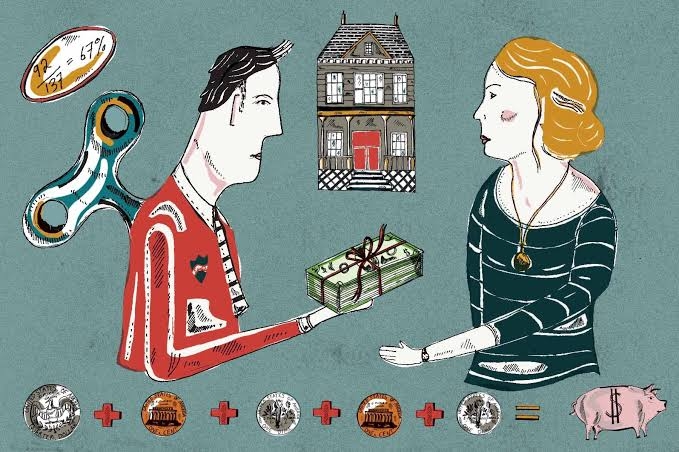
What Did Behavioral Economists Discover?
The Quiet Collapse of a Perfect Model
For much of the twentieth century, economics was built on an elegant assumption: humans behave like rational agents. They gather information, process it consistently, and choose the option that maximizes utility.
The model was not meant to describe people perfectly. It was meant to simplify reality.
And for a time, it worked well enough.
But beneath the surface of that simplicity, something was misaligned.
Not randomly.
Systematically.
Behavioral economists began by asking a disarmingly simple question: what happens when you actually test these assumptions against real human behavior?
What they found did not destroy economic theory.
It displaced its center of gravity.
Discovery 1: Humans Do Not Evaluate Outcomes Absolutely
One of the earliest and most important discoveries was that people do not evaluate outcomes in absolute terms.
They evaluate changes relative to a reference point.
A raise feels meaningful not because of its absolute size, but because of what it changes relative to expectations.
A loss feels severe not because of its magnitude alone, but because of where it shifts one’s baseline.
This insight, formalized later in prospect theory by Daniel Kahneman and Amos Tversky, overturned a central assumption of classical utility theory.
Preferences were not fixed over final states.
They were constructed around reference points.
Discovery 2: Losses Matter More Than Gains
Behavioral economists consistently observed an asymmetry in human response to gains and losses.
Losing $100 feels more intense than gaining $100 feels pleasurable.
This is loss aversion.
It appears in financial markets, consumer behavior, labor negotiations, and everyday decision-making.
People:
-
Hold losing investments too long
-
Avoid selling assets at a loss
-
Demand more to give up something than they would pay to acquire it
This discovery challenged the idea that humans evaluate outcomes symmetrically.
Instead, emotional weight is unevenly distributed.
Losses dominate.
Discovery 3: People Use Mental Shortcuts Instead of Optimization
Another major discovery was that humans rarely compute optimal solutions.
Instead, they rely on heuristics—fast, efficient rules of thumb.
These include:
-
Availability: judging likelihood by how easily examples come to mind
-
Anchoring: relying heavily on initial reference values
-
Representativeness: judging probability by similarity rather than statistics
These shortcuts are not irrational in themselves.
They are adaptive.
But they produce systematic errors in environments requiring statistical reasoning.
Behavioral economists discovered that these errors are not random noise.
They are predictable patterns.
Discovery 4: Context Shapes Preference
Classical economics assumes that preferences are stable and independent of context.
Behavioral economists found the opposite.
The way options are presented—framing, ordering, labeling—changes decisions.
For example:
-
People prefer “90% survival” over “10% mortality”
-
Consumers choose differently depending on default options
-
Risk preferences shift depending on whether outcomes are framed as gains or losses
This discovery showed that preferences are constructed at the moment of choice.
Not merely revealed.
Discovery 5: People Misjudge Probability Systematically
Behavioral research revealed that humans do not interpret probability linearly.
Instead:
-
Small probabilities are overweighted
-
Large probabilities are underweighted
This explains why people:
-
Buy lottery tickets despite extremely low odds
-
Over-insure against rare disasters
-
Underreact to high-probability risks when they feel abstract
Probability is not processed as statistical information alone.
It is processed as emotional intensity.
Discovery 6: Immediate Rewards Dominate Future Ones
Behavioral economists found a consistent bias toward immediacy.
Future rewards are discounted not just mathematically, but psychologically.
This is present bias.
It leads to:
-
Procrastination
-
Under-saving for retirement
-
Overconsumption of credit
-
Difficulty sustaining long-term plans
Even when people understand long-term consequences, immediate costs often dominate decision-making.
This discovery explained a wide range of self-control failures that classical models could not easily account for.
Discovery 7: People Are Influenced by Defaults and Inertia
One of the most practically important discoveries is the power of default options.
When a choice is pre-selected, people tend to stick with it.
Not because they evaluate it carefully.
But because changing it requires effort.
This leads to large behavioral effects in:
-
Retirement savings enrollment
-
Organ donation rates
-
Subscription services
-
Healthcare choices
Small design choices in systems can produce large changes in outcomes without altering incentives.
This shifted attention from preferences to architecture.
Discovery 8: Social Influence Shapes Individual Decisions
Behavioral economists also discovered that decisions are not made in isolation.
People look to others for cues.
This produces:
-
Herd behavior in financial markets
-
Viral consumer trends
-
Adoption cascades in technology
-
Collective mispricing in bubbles
Social proof becomes a substitute for uncertainty.
When people do not know what is correct, they infer from what others do.
Behavior is therefore interdependent, not purely individual.
Discovery 9: People Are Overconfident About Their Own Judgment
Another consistent finding is overconfidence.
People systematically overestimate:
-
Their knowledge
-
Their predictive ability
-
Their control over outcomes
This leads to:
-
Excessive trading in financial markets
-
Underestimation of risk
-
Overly optimistic planning
Overconfidence is not random.
It is structurally embedded in how people interpret feedback and success.
Discovery 10: Preferences Are Not Always Stable
Perhaps the most unsettling discovery is that preferences are not fixed.
They shift depending on:
-
Context
-
Emotion
-
Framing
-
Memory
-
Social comparison
This contradicts a foundational assumption in classical economics.
It means that what people “want” is often constructed in the moment rather than retrieved from a stable internal ranking.
A Personal Reflection on Predictability in Error
At one point, I assumed that decision errors were scattered—unique to individuals and situations.
But as I observed patterns across different contexts, something different emerged.
The same biases appeared repeatedly.
Loss aversion in financial decisions.
Present bias in planning.
Anchoring in numerical judgments.
Framing effects in choices that seemed purely logical.
The surprise was not that people made mistakes.
It was how structured those mistakes were.
They were not random deviations.
They were recurring patterns of human cognition under constraint.
What These Discoveries Add Up To
Taken individually, each discovery seems narrow:
-
A bias here
-
A heuristic there
-
A framing effect in one domain
But together, they form a larger picture.
Human decision-making is not optimized for calculation.
It is optimized for speed, efficiency, and survivability under limited information.
This leads to:
-
Systematic deviations from rational models
-
Predictable cognitive shortcuts
-
Context-dependent preferences
-
Emotionally weighted judgments
Behavioral economics does not reject rationality.
It reframes it.
Rationality becomes bounded, contextual, and psychologically grounded.
Conclusion: A Science of Predictable Imperfection
What behavioral economists discovered is not that humans are irrational in a chaotic sense.
It is that human behavior follows regular patterns that differ from classical economic predictions.
People rely on heuristics.
They respond to framing.
They overweight losses.
They discount the future inconsistently.
They are influenced by defaults and social cues.
These are not anomalies.
They are the architecture of human decision-making.
Behavioral economics, in this sense, is not a critique of human judgment.
It is a description of how judgment actually works when abstract models meet real minds.
- Arts
- Business
- Computers
- Spiele
- Health
- Startseite
- Kids and Teens
- Geld
- News
- Personal Development
- Recreation
- Regional
- Reference
- Science
- Shopping
- Society
- Sports
- Бизнес
- Деньги
- Дом
- Досуг
- Здоровье
- Игры
- Искусство
- Источники информации
- Компьютеры
- Личное развитие
- Наука
- Новости и СМИ
- Общество
- Покупки
- Спорт
- Страны и регионы
- World

 English
 Russian
 French
 Spanish
 Portuguese
 Turkish
 Dutch
Dutch
 Italiano
 Arabic
 Romaian
 Portuguese (Brazil)
 Greek
Greek