
What are cognitive biases?
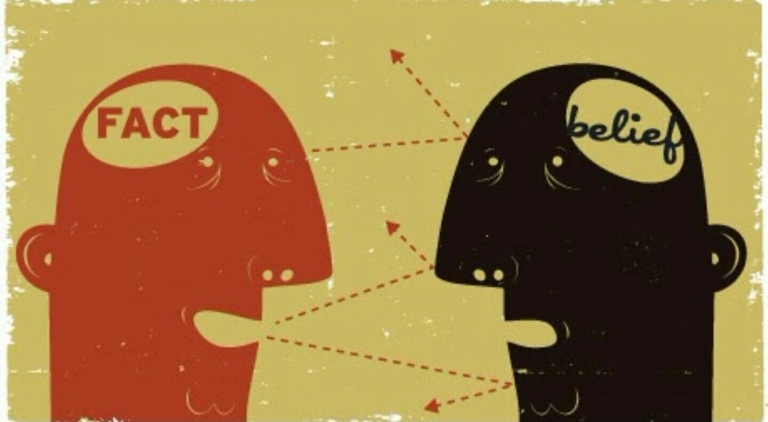
What Are Cognitive Biases?
The Quiet Distortions Inside Clear Thinking
A person is asked a simple question:
“Which is more likely: a dramatic event, or a dramatic event explained in detail?”
Most people choose the second option.
It feels more plausible. More complete. More “real.”
But logically, this cannot be correct. Adding detail cannot increase probability.
And yet the preference persists.
This is not a rare mistake.
It is a pattern.
Cognitive biases are the study of such patterns—systematic deviations from what normative models of reasoning would predict.
They are not random errors.
They are structured distortions in judgment.
And they are everywhere.
The First Misunderstanding: Bias Is Not Noise
In everyday language, “bias” often implies flaw, corruption, or incompetence.
In cognitive science, it means something more precise.
A cognitive bias is a consistent tendency to think in a certain way that deviates from a normative standard of rationality.
The key word is consistent.
If errors were random, they would cancel out.
But cognitive biases do not cancel.
They accumulate.
They repeat.
They scale.
This is why they matter.
They are not exceptions to rational thinking.
They are part of how thinking works under constraint.
The Architecture of Limited Minds
Human cognition is not designed for exhaustive calculation.
It is designed for speed, efficiency, and survival under uncertainty.
Attention is limited.
Memory is reconstructive.
Information is incomplete.
Time is constrained.
Under these conditions, the brain relies on shortcuts.
These shortcuts are not optional.
They are necessary.
But necessity comes with cost.
That cost is bias.
Heuristics: The Source of Bias
Many cognitive biases originate from heuristics—simple rules of thumb used to make complex decisions manageable.
For example:
-
If something is easy to recall, assume it is common
-
If something resembles a category, assume it belongs to it
-
If an initial number is presented, use it as a reference
These heuristics reduce cognitive load.
But they also introduce predictable distortions.
The same mechanism that enables quick thinking also generates systematic error.
This dual nature is central to behavioral psychology.
Availability: When Memory Becomes Evidence
One of the most studied biases is availability.
People estimate likelihood based on how easily examples come to mind.
A dramatic news event feels common because it is memorable.
A quiet statistical reality feels rare because it is not emotionally vivid.
This leads to distorted risk perception:
-
Plane crashes feel more common than they are
-
Violent events feel more likely than statistics suggest
-
Rare but memorable outcomes dominate judgment
Memory is not a neutral archive.
It is a filter shaped by emotion and attention.
Anchoring: The Invisible Starting Point
When people make estimates, the first number they encounter shapes their judgment.
This is anchoring.
If asked whether the population of a city is more or less than 5 million, subsequent estimates cluster around that number—even if it is irrelevant.
The mind does not begin from zero.
It begins from what is given.
Even arbitrary anchors influence decisions:
-
Prices
-
Suggestions
-
Initial offers
-
Exposure values
Judgment is not absolute.
It is relative to an initial reference point.
Representativeness: When Similarity Replaces Probability
People often judge likelihood based on resemblance rather than statistics.
If someone fits a stereotype of a profession, they are assumed more likely to belong to it.
If an outcome “looks random,” it is judged more probable as a random process.
This leads to errors such as:
-
Ignoring base rates
-
Misjudging sample sizes
-
Overinterpreting patterns in noise
The brain prefers coherence over calculation.
Similarity becomes a substitute for probability.
Confirmation Bias: The Pull of Existing Belief
Once a belief is formed, the mind tends to favor information that supports it.
This is confirmation bias.
It operates in subtle ways:
-
Selective attention
-
Selective interpretation
-
Selective memory
Contradictory evidence is not always ignored.
It is often reinterpreted.
Beliefs become self-reinforcing systems.
Not because people refuse to learn.
But because learning is filtered through prior expectations.
Loss Aversion: When Asymmetry Shapes Choice
One of the most powerful biases is loss aversion.
Losses feel more intense than equivalent gains.
This leads to asymmetric decision-making:
-
Avoiding risks that could prevent loss
-
Holding onto losing investments
-
Overvaluing what is already owned
The emotional weight of loss exceeds the emotional value of gain.
This asymmetry distorts rational trade-offs.
Overconfidence: The Illusion of Precision
People tend to overestimate their knowledge, accuracy, and predictive ability.
This is overconfidence bias.
It appears in:
-
Financial forecasting
-
Personal judgments
-
Expert predictions
Even when evidence is uncertain, confidence remains high.
The mind prefers coherence over calibration.
A clear story feels more trustworthy than a complex uncertainty.
Framing: When Language Shapes Thought
The way information is presented changes how it is interpreted.
For example:
-
“90% survival rate” feels safer than “10% mortality rate”
-
“Save $50” feels more positive than “lose $50 discount”
The content is identical.
The framing is not.
Cognitive biases are highly sensitive to linguistic structure.
Meaning is not fixed.
It is shaped by presentation.
Why These Biases Exist
It is tempting to view cognitive biases as flaws.
But this misses their origin.
They arise because the brain must operate under constraints:
-
Limited time
-
Limited attention
-
Limited computation capacity
In such environments, heuristics are efficient.
Biases are the predictable side effects of efficiency.
They are not bugs in the system.
They are trade-offs.
A Personal Observation on Predictable Error
At one point, while observing decision patterns in everyday situations, I noticed something subtle.
People did not make mistakes randomly.
They made similar mistakes repeatedly.
A vivid story outweighed statistical data.
A first number anchored later judgment.
A loss felt heavier than an equivalent gain.
These patterns were not isolated.
They were structured.
The more I observed, the more it became clear: cognitive biases are not occasional distortions.
They are recurring features of normal thinking.
The Work of Making Bias Visible
Much of modern behavioral science is not about discovering irrationality.
It is about making invisible processes visible.
Researchers such as Daniel Kahneman and Amos Tversky demonstrated that these biases are:
-
Measurable
-
Predictable
-
Systematic
This changed the study of judgment from philosophy to empirical science.
Errors could now be mapped.
Not just described.
Why Biases Persist Even When We Know Them
A striking feature of cognitive biases is that awareness does not eliminate them.
People can understand anchoring and still be anchored.
They can understand loss aversion and still overreact to loss.
Why?
Because biases operate at a level below conscious correction.
They are fast processes.
Conscious reasoning is slower.
By the time correction arrives, the judgment is often already formed.
Cognitive Biases in Systems, Not Just Minds
Biases are not only individual phenomena.
They scale into institutions:
-
Markets
-
Courts
-
Organizations
-
Media systems
When many individuals share similar biases, collective outcomes can amplify distortions:
-
Market bubbles
-
Policy misjudgments
-
Systematic miscommunication
Bias becomes structural.
Not just psychological.
Conclusion: Thinking Under Constraint
Cognitive biases are not deviations from thinking.
They are expressions of thinking under constraint.
They reveal that:
-
Judgment is relative, not absolute
-
Memory is selective, not complete
-
Probability is intuitive, not computed
-
Emotion and cognition are intertwined
They do not mean that humans are irrational in a simplistic sense.
They mean that rationality itself operates within limits.
And within those limits, the mind relies on shortcuts that are efficient, adaptive, and systematically imperfect.
To understand cognitive biases is not to condemn human thinking.
It is to understand its architecture.
- Arts
- Business
- Computers
- Jeux
- Health
- Domicile
- Kids and Teens
- Argent
- News
- Personal Development
- Recreation
- Regional
- Reference
- Science
- Shopping
- Society
- Sports
- Бизнес
- Деньги
- Дом
- Досуг
- Здоровье
- Игры
- Искусство
- Источники информации
- Компьютеры
- Личное развитие
- Наука
- Новости и СМИ
- Общество
- Покупки
- Спорт
- Страны и регионы
- World

 English
 Russian
 Spanish
 Portuguese
 Deutsch
 Turkish
 Dutch
Dutch
 Italiano
 Arabic
 Romaian
 Portuguese (Brazil)
 Greek
Greek