
Can behavioral economics improve public policy?
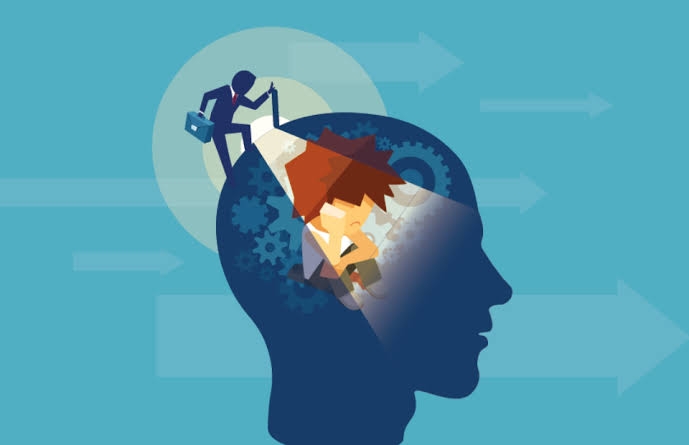
Can Behavioral Economics Improve Public Policy?
The Letter That Collected Millions
A government agency wanted citizens to pay their taxes on time.
The traditional solution was familiar. Increase enforcement. Expand audits. Strengthen penalties. Communicate the legal consequences of noncompliance.
Instead, researchers tested something remarkably simple.
They changed a sentence in a letter.
The revised message informed recipients that most people in their community had already paid their taxes.
Nothing else changed.
The law remained the same.
The penalties remained the same.
The tax rates remained the same.
Yet compliance increased.
A few words altered behavior.
The story sounds almost implausible. Surely a challenge as serious as tax collection cannot be influenced by something so small.
And yet it can.
Behavioral economics is filled with examples that share this peculiar characteristic. A default setting increases retirement savings. A reminder message improves vaccination rates. A redesigned form boosts program participation. A social norm statement changes energy consumption.
These interventions appear minor.
Their consequences often are not.
This observation has fueled one of the most important debates in modern policymaking: Can behavioral economics improve public policy?
The answer is neither a simple yes nor a simple no.
Behavioral economics has transformed how governments think about human behavior. It has revealed blind spots in traditional policy design. It has produced measurable improvements across numerous domains.
At the same time, it has limitations.
Some problems yield to behavioral interventions.
Others resist them.
Understanding where behavioral economics succeeds—and where it falls short—requires understanding a deeper truth about human decision-making.
People are not the rational actors policymakers once imagined.
But neither are they irrational.
They are predictably human.
The Traditional View of Public Policy
For much of the twentieth century, public policy relied heavily on a straightforward assumption.
People respond to information and incentives.
If citizens understand the facts and face the proper rewards or penalties, they will make decisions that maximize their welfare.
The logic seemed compelling.
Want fewer smokers?
Raise cigarette taxes.
Want more education?
Subsidize tuition.
Want safer roads?
Increase penalties for dangerous driving.
These approaches often worked.
Many still do.
Yet policymakers repeatedly encountered puzzling failures.
Citizens neglected beneficial programs.
Patients skipped medical appointments.
Workers delayed retirement savings.
Students ignored educational opportunities.
Consumers made costly financial mistakes.
These outcomes persisted even when information was available and incentives appeared strong.
Something was missing.
Behavioral economics emerged partly to explain why.
The Behavioral Revolution
The intellectual foundation of behavioral economics owes much to the work of Daniel Kahneman and Amos Tversky.
Their research challenged a central assumption of traditional economics.
Human judgment is not consistently rational.
Instead, people rely on mental shortcuts.
These shortcuts—often called heuristics—allow efficient decision-making.
They also produce systematic errors.
Individuals exhibit:
-
Loss aversion
-
Present bias
-
Overconfidence
-
Anchoring effects
-
Availability bias
-
Status quo bias
These tendencies are not random.
They appear repeatedly across cultures and contexts.
For policymakers, this insight carried enormous implications.
If human behavior follows predictable patterns, public policy can be designed around those patterns.
The goal shifts.
Instead of assuming ideal decision-making, policymakers begin accounting for actual decision-making.
That distinction changes everything.
Why Public Policy Often Fails
Behavioral economics begins with a deceptively simple observation.
Many policies fail not because objectives are wrong.
They fail because assumptions about human behavior are wrong.
Consider retirement savings.
Most workers agree that saving for retirement is important.
Many intend to contribute.
Yet participation rates historically lagged expectations.
The traditional explanation focused on knowledge.
Perhaps workers did not understand the benefits.
Behavioral economists proposed a different explanation.
Perhaps workers simply postponed enrollment.
The difference matters.
If ignorance causes the problem, education is the solution.
If procrastination causes the problem, education alone may accomplish little.
The diagnosis determines the remedy.
Behavioral economics improved policy partly because it improved diagnosis.
The Rise of Behavioral Public Policy
Governments increasingly recognized the practical value of behavioral insights.
Dedicated behavioral units emerged across numerous countries.
Their mission was not ideological.
It was empirical.
Test interventions.
Measure outcomes.
Scale successful approaches.
The results often surprised policymakers.
Minor adjustments occasionally produced outsized effects.
Not always.
But often enough to attract serious attention.
This development marked a significant shift.
Policy increasingly became an exercise in behavioral design.
Nudges and Choice Architecture
One of the most visible applications involves nudges.
A nudge changes behavior by altering the way choices are presented while preserving freedom of choice.
The concept became widely known through the work of Richard Thaler and Cass Sunstein.
Their central insight was straightforward.
Every decision occurs within a context.
Someone designs that context.
Someone determines:
-
Which option appears first.
-
Which information receives emphasis.
-
Which defaults are selected.
-
How alternatives are framed.
These design choices influence behavior.
Whether policymakers acknowledge them or not.
Behavioral economics simply makes those influences visible.
Automatic Enrollment: A Policy Success Story
Perhaps the most celebrated example involves retirement savings.
Traditional enrollment systems required employees to opt in.
Participation rates remained lower than expected.
Behavioral economists identified inertia as a key obstacle.
The solution was elegantly simple.
Automatic enrollment.
Employees became participants by default but retained the right to opt out.
Enrollment rates increased dramatically.
No mandates.
No penalties.
No additional financial incentives.
Only a change in choice architecture.
The example became influential because it illustrated a broader principle.
Small behavioral adjustments can generate large policy outcomes.
Behavioral Economics in Public Health
Healthcare presents numerous behavioral challenges.
Patients forget appointments.
Delay preventive screenings.
Fail to take medications consistently.
Avoid vaccinations.
Traditional policy responses often focused on education.
Behavioral economics introduced additional tools.
Reminder Systems
Text messages and appointment reminders improve attendance rates.
The intervention is inexpensive.
The results can be substantial.
Simplified Enrollment
Reducing paperwork often increases participation in healthcare programs.
Complexity discourages action.
Simplicity encourages it.
Framing Health Risks
The presentation of information influences perception.
People respond differently to:
-
"90% survival rate"
-
"10% mortality rate"
The statistics are identical.
The reactions are not.
Behavioral economics recognizes this reality and incorporates it into communication strategies.
Social Norms: The Hidden Lever
Human beings are social creatures.
We observe others.
We compare ourselves to others.
We care what others think.
Public policy increasingly leverages this tendency.
Messages such as:
"Nine out of ten citizens pay their taxes on time."
Or:
"Most households in your area conserve energy."
These statements influence behavior because they establish social expectations.
People often align actions with perceived norms.
The intervention contains no threat.
No financial reward.
Yet behavior changes.
This finding remains one of the most fascinating contributions of behavioral science.
Comparing Traditional and Behavioral Policy Approaches
| Policy Challenge | Traditional Approach | Behavioral Approach | Psychological Principle |
|---|---|---|---|
| Retirement Savings | Financial incentives | Automatic enrollment | Status quo bias |
| Tax Compliance | Penalties and audits | Social norm messaging | Conformity |
| Healthcare Appointments | Information campaigns | Reminder systems | Limited attention |
| Energy Conservation | Higher prices | Peer comparison reports | Social influence |
| Organ Donation | Registration campaigns | Opt-out defaults | Inertia |
| Benefit Enrollment | Outreach programs | Simplified applications | Friction reduction |
| Public Health Communication | Data presentation | Behavioral framing | Framing effects |
The table illustrates an important point.
Behavioral economics does not necessarily replace traditional tools.
It often complements them.
The most effective policies frequently combine both approaches.
The Lesson I Learned About Friction
Several years ago, I attempted to renew a government-issued document.
The process involved multiple forms, unclear instructions, and several separate steps.
I postponed it repeatedly.
Not because I objected to the requirement.
Not because I lacked motivation.
The process simply felt cumbersome.
Months later, the procedure was redesigned.
Instructions became clearer.
Several steps disappeared.
Completion required significantly less effort.
I finished the task immediately.
The experience reinforced a lesson behavioral economists emphasize repeatedly.
People often fail to act not because they disagree.
They fail because friction exists.
A small obstacle can discourage action.
A small reduction in effort can encourage it.
Public policy frequently overlooks this reality.
Behavioral economics does not.
Environmental Policy and Human Behavior
Environmental challenges provide another compelling test case.
Many environmental policies require citizens to make sacrifices today for benefits that may emerge years later.
Human psychology struggles with this structure.
Present bias encourages immediate gratification.
Future rewards appear abstract.
Behavioral interventions attempt to bridge this gap.
Examples include:
-
Energy usage comparisons
-
Real-time consumption feedback
-
Visible environmental labels
-
Default green energy options
These approaches do not solve environmental problems independently.
They can, however, improve participation and compliance.
Behavioral economics contributes by making sustainable behavior easier and more visible.
Where Behavioral Economics Falls Short
The enthusiasm surrounding behavioral policy occasionally creates unrealistic expectations.
Behavioral economics is powerful.
It is not universally applicable.
Structural Problems Require Structural Solutions
A reminder message cannot eliminate poverty.
A default option cannot solve housing shortages.
A social norm campaign cannot replace economic development.
Behavioral interventions often work best when underlying resources already exist.
Effects May Be Modest
Some nudges produce meaningful results.
Others generate small improvements.
The effectiveness varies considerably.
Policymakers sometimes overestimate the impact of behavioral interventions.
Context Matters
A successful intervention in one country may fail elsewhere.
Cultural norms, institutions, and social expectations influence outcomes.
Behavioral insights are not universally transferable.
The Ethical Debate
Behavioral economics introduces an uncomfortable question.
Should governments intentionally shape behavior?
Critics argue that behavioral interventions may become manipulative.
Citizens may be influenced without fully recognizing the influence.
Supporters counter that choice architecture is unavoidable.
Someone must design forms.
Someone must establish defaults.
Someone must determine how information is presented.
The relevant question, they argue, is not whether influence exists.
Influence always exists.
The question is whether influence is transparent and aligned with public welfare.
The debate remains unresolved.
Perhaps it should remain unresolved.
Democratic societies benefit from continuous scrutiny of power.
Including behavioral power.
Why Behavioral Economics Matters
The significance of behavioral economics extends beyond individual policies.
It changes how governments think.
Traditional policymaking often begins with rules.
Behavioral policymaking begins with behavior.
The distinction is subtle.
The consequences are substantial.
Instead of asking:
"What should citizens do?"
Behavioral economists ask:
"Why aren't citizens already doing it?"
That shift frequently reveals overlooked obstacles.
Confusion.
Inertia.
Forgetfulness.
Complexity.
Social influence.
Psychological barriers.
Understanding these factors often leads to more effective interventions.
The Future of Behavioral Public Policy
Behavioral economics continues to evolve.
Governments increasingly experiment with randomized trials.
Policies are tested before large-scale implementation.
Behavioral data informs design decisions.
Communication strategies become more sophisticated.
The trend reflects a broader transformation.
Public policy is becoming more empirical.
More experimental.
More attentive to actual human behavior.
This development may prove one of behavioral economics' most enduring contributions.
Not any single intervention.
A different way of thinking.
Conclusion: Improving Policy by Understanding People
Can behavioral economics improve public policy?
The evidence suggests that it can.
And often does.
Yet the most valuable contribution of behavioral economics may not be any specific nudge, default, or intervention.
Its greatest contribution is humility.
Traditional policymaking sometimes assumed that citizens behaved like idealized decision-makers.
Behavioral economics reminds us that they do not.
People procrastinate.
Forget.
Become distracted.
Fear losses.
Follow social norms.
Accept defaults.
Respond to framing.
These tendencies are not defects.
They are features of human cognition.
Public policy becomes more effective when it recognizes them.
The lesson is both practical and philosophical.
Good policy is not merely about designing rules.
It is about understanding people.
The tax letter that changes compliance.
The reminder that increases vaccinations.
The default option that boosts retirement savings.
The simplified form that expands access to benefits.
Each intervention reflects the same insight.
Behavior changes when environments change.
And if governments hope to improve outcomes, they must pay attention not only to economics, law, and institutions—but also to the psychology of the citizens they serve.
That realization may ultimately define the lasting legacy of behavioral economics.
- Arts
- Business
- Computers
- Games
- Health
- Home
- Kids and Teens
- Money
- News
- Personal Development
- Recreation
- Regional
- Reference
- Science
- Shopping
- Society
- Sports
- Бизнес
- Деньги
- Дом
- Досуг
- Здоровье
- Игры
- Искусство
- Источники информации
- Компьютеры
- Личное развитие
- Наука
- Новости и СМИ
- Общество
- Покупки
- Спорт
- Страны и регионы
- World

 Russian
 French
 Spanish
 Portuguese
 Deutsch
 Turkish
 Dutch
Dutch
 Italiano
 Arabic
 Romaian
 Portuguese (Brazil)
 Greek
Greek