
Creative thinking vs critical thinking
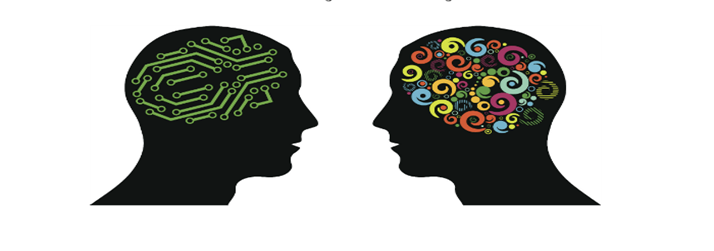
Creative Thinking vs Critical Thinking
The Mind Has Two Hands, and They Rarely Agree on What to Hold
A blank page doesn’t ask for permission.
It just waits.
Some people fill it immediately.
Others hesitate, measuring every possible sentence before it lands.
And in that small gap between impulse and judgment—something important happens.
A tension.
A split.
A negotiation inside the mind that most people never notice but constantly live inside.
One part of you wants to generate.
Another wants to evaluate.
One says: what if?
The other says: prove it.
One builds.
The other edits.
And neither is optional.
The question is not which one matters more.
The question is how they learn to work together without destroying each other.
Because when they fight, thinking stalls.
When they cooperate, thinking expands.
This is the quiet architecture behind almost every meaningful idea ever created.
Creative Thinking: The Engine That Produces Possibility
Creative thinking is often misunderstood as randomness.
It is not.
It is structured exploration of possibility.
It asks questions that do not yet have answers.
It allows contradiction to exist without immediate resolution.
It generates without filtering too early.
In neurological terms, it draws heavily on networks associated with:
Memory recombination.
Associative thinking.
Mental simulation.
Emotional coloring.
Pattern remixing.
Creative thinking is not about accuracy.
It is about expansion.
It says:
“What else could this be?”
“What if the rules were different?”
“What if I remove this constraint?”
“What if I combine these two unrelated things?”
It is not interested in closure.
It is interested in opening doors.
Even doors that lead nowhere useful.
Because sometimes “nowhere useful” becomes the birthplace of something entirely new.
Critical Thinking: The Force That Shapes Reality
Critical thinking operates differently.
It narrows.
It refines.
It tests.
It eliminates.
If creative thinking is expansion, critical thinking is compression.
It asks:
“Does this make sense?”
“Is this consistent?”
“Is this supported by evidence?”
“Does this survive scrutiny?”
Where creative thinking multiplies possibilities, critical thinking reduces them to what is viable.
It is deeply analytical.
It depends on logic, reasoning, evaluation, and structured judgment.
Without it, ideas remain unformed.
Infinite but unstable.
Beautiful but impractical.
Critical thinking gives ideas weight.
It decides what can exist in the real world versus what only lives in imagination.
The Most Common Misunderstanding: Thinking They Compete
People often treat these two modes as opposites.
As if creativity and criticism exist on opposite sides of a spectrum.
They don’t.
They exist in sequence.
And sometimes in conflict.
But never in isolation.
The real tension is timing.
When critical thinking arrives too early, it interrupts imagination before it can unfold.
When creative thinking dominates without evaluation, ideas never become functional.
The mistake is not having both.
The mistake is letting them speak at the wrong moment.
The Brain Uses Different Networks for Each Mode
Modern neuroscience suggests that these thinking styles involve different systems in the brain.
Creative thinking often engages:
The Default Mode Network (association, imagination, memory blending).
The hippocampus (retrieval of past experience).
Temporal regions (meaning and narrative connection).
Critical thinking relies more heavily on:
The Executive Control Network (planning, inhibition, decision-making).
The prefrontal cortex (logic, structure, evaluation).
The anterior cingulate cortex (conflict detection, error monitoring).
These systems do not operate independently.
They interact constantly.
But their balance determines whether thinking feels expansive or restrictive.
Creativity is not a switch.
It is a negotiation between systems that were not designed to agree quickly.
A Simple Table That Reveals a Deeper Truth
| Dimension | Creative Thinking | Critical Thinking |
|---|---|---|
| Primary function | Generate possibilities | Evaluate possibilities |
| Mental direction | Expansive | Reductive |
| Goal | Novelty | Accuracy |
| Question style | “What if?” | “Is it true?” |
| Tolerance for ambiguity | High | Low |
| Relationship to rules | Flexible | Structured |
| Output type | Ideas | Decisions |
| Emotional tone | Curious, exploratory | Analytical, cautious |
| Risk tolerance | High | Low |
| Strength | Originality | Precision |
| Weakness | Chaos without structure | Constraint without imagination |
The table looks clean.
But real thinking is not.
Real thinking oscillates between both columns constantly.
Sometimes in seconds.
Sometimes in milliseconds.
Why Creative Thinking Must Come First
There is a sequence that matters.
Not always rigid.
But deeply important.
Creative thinking must often precede critical thinking.
Why?
Because evaluation too early reduces the field of possibility.
It filters before exploration happens.
And once something is filtered out, it rarely returns.
A half-formed idea judged too quickly is often lost permanently.
But if creative thinking is allowed to expand first, critical thinking gains something substantial to work with.
Raw material.
Something worth refining.
Something worth shaping.
Without generation, evaluation has nothing to evaluate.
Without evaluation, generation has no direction.
But order matters.
Expansion first.
Refinement second.
Critical Thinking Without Creativity Becomes Repetition
There is a subtle danger in overdeveloping critical thinking.
It becomes efficient.
Predictable.
Safe.
It starts optimizing existing ideas instead of generating new ones.
In this state, thinking becomes a refinement loop.
Better versions of familiar things.
Improved systems.
Cleaner processes.
But rarely something genuinely new.
This is why highly analytical environments sometimes struggle with innovation.
Not because intelligence is missing.
But because imagination is underused.
Critical thinking alone does not create new territory.
It maps existing territory more precisely.
Creative Thinking Without Critical Thinking Becomes Noise
The opposite imbalance is equally problematic.
Unfiltered idea generation produces abundance.
But abundance without structure becomes overwhelming.
Ideas multiply without direction.
Possibilities stack without resolution.
Eventually, nothing solid emerges.
This is why many creative processes stall at the concept stage.
Not because ideas are lacking.
But because selection never happens.
Without critical thinking, creativity becomes endless variation without convergence.
The Real Skill: Switching Between Modes
The most effective thinkers are not those who excel at only one mode.
They are those who can switch deliberately between both.
This switching is not automatic.
It is trained.
Creative mode:
Open.
Associative.
Nonjudgmental.
Critical mode:
Focused.
Analytical.
Selective.
The skill is knowing when to:
Expand.
And when to reduce.
When to explore.
And when to decide.
When to generate more.
And when to stop generating altogether.
A Lesson I Learned About Thinking Too Early
For a long time, I thought strong ideas came from immediate clarity.
If something didn’t feel right quickly, I assumed it wasn’t worth pursuing.
That instinct felt efficient.
It also eliminated almost everything interesting.
Most early ideas were imperfect.
Incomplete.
Unclear.
So I filtered aggressively.
What remained was clean.
But predictable.
Then something shifted.
I began allowing ideas to exist before judging them.
Even if they felt wrong.
Especially if they felt strange.
At first, the process felt chaotic.
But over time, something important happened.
The ideas didn’t just multiply.
They deepened.
Critical thinking had not disappeared.
It had moved later in the process.
And that shift changed everything.
Evaluation became more meaningful because there was more to evaluate.
Why Both Thinking Modes Depend on Each Other
Creative thinking alone cannot decide.
Critical thinking alone cannot invent.
But together, they form a complete system of cognition.
One expands reality.
The other tests it.
One generates raw possibility.
The other shapes it into form.
It is not a battle.
It is a rhythm.
Inhale: creation.
Exhale: refinement.
When the rhythm breaks, thinking becomes unstable.
Either too loose or too tight.
Either too chaotic or too constrained.
But when the rhythm holds, something unusual happens.
Thought becomes architecture.
Education Often Separates What the Brain Intends to Combine
Many learning environments isolate these thinking styles.
Students are taught:
Generate ideas here.
Analyze answers there.
Be creative in one box.
Be correct in another.
But the brain does not naturally separate them.
Real cognition blends both continuously.
A better model might look like alternating currents:
Idea generation followed by evaluation.
Evaluation feeding back into new generation.
Iteration over time.
Not separation.
But conversation.
The Hidden Cost of Overvaluing One Mode
Societies often emphasize critical thinking in formal systems.
Testing.
Grading.
Standardization.
Accuracy is rewarded.
Deviations are penalized.
This builds precision.
But it can also reduce willingness to explore uncertainty.
On the other hand, environments that overvalue creativity without structure produce excitement without reliability.
Both extremes carry cost.
One produces rigidity.
The other produces instability.
The balance determines the quality of outcomes.
Not just in education.
In science.
In business.
In art.
In everyday decision-making.
Where True Insight Actually Appears
Most breakthroughs do not come from pure creativity or pure analysis.
They come from transitions.
Moments when:
An idea is generated freely.
Then suddenly examined deeply.
Then reimagined again under constraint.
Then expanded again with new freedom.
Insight often appears in the shift.
Not in either mode alone.
But in the movement between them.
The Provocative Truth About Thinking
We often describe thinking as if it is one thing.
But it is not.
It is a layered system of contrasting forces.
Creative thinking says:
“There is more than what we see.”
Critical thinking says:
“Let’s make sure what we see is real.”
Both are necessary.
Both are incomplete alone.
The real intelligence is not choosing one.
It is learning how to hold both without letting them cancel each other out.
Because the strongest ideas are not purely imagined.
And not purely verified.
They are born in imagination.
And survive through evaluation.
That is the full cycle.
And when it works, thinking stops feeling like conflict.
It starts feeling like creation under pressure.
- Arts
- Business
- Computers
- Jogos
- Health
- Início
- Kids and Teens
- Money
- News
- Personal Development
- Recreation
- Regional
- Reference
- Science
- Shopping
- Society
- Sports
- Бизнес
- Деньги
- Дом
- Досуг
- Здоровье
- Игры
- Искусство
- Источники информации
- Компьютеры
- Личное развитие
- Наука
- Новости и СМИ
- Общество
- Покупки
- Спорт
- Страны и регионы
- World

 English
 Russian
 French
 Spanish
 Deutsch
 Turkish
 Dutch
Dutch
 Italiano
 Arabic
 Romaian
 Portuguese (Brazil)
 Greek
Greek