
How Do I Create an On-Demand App?
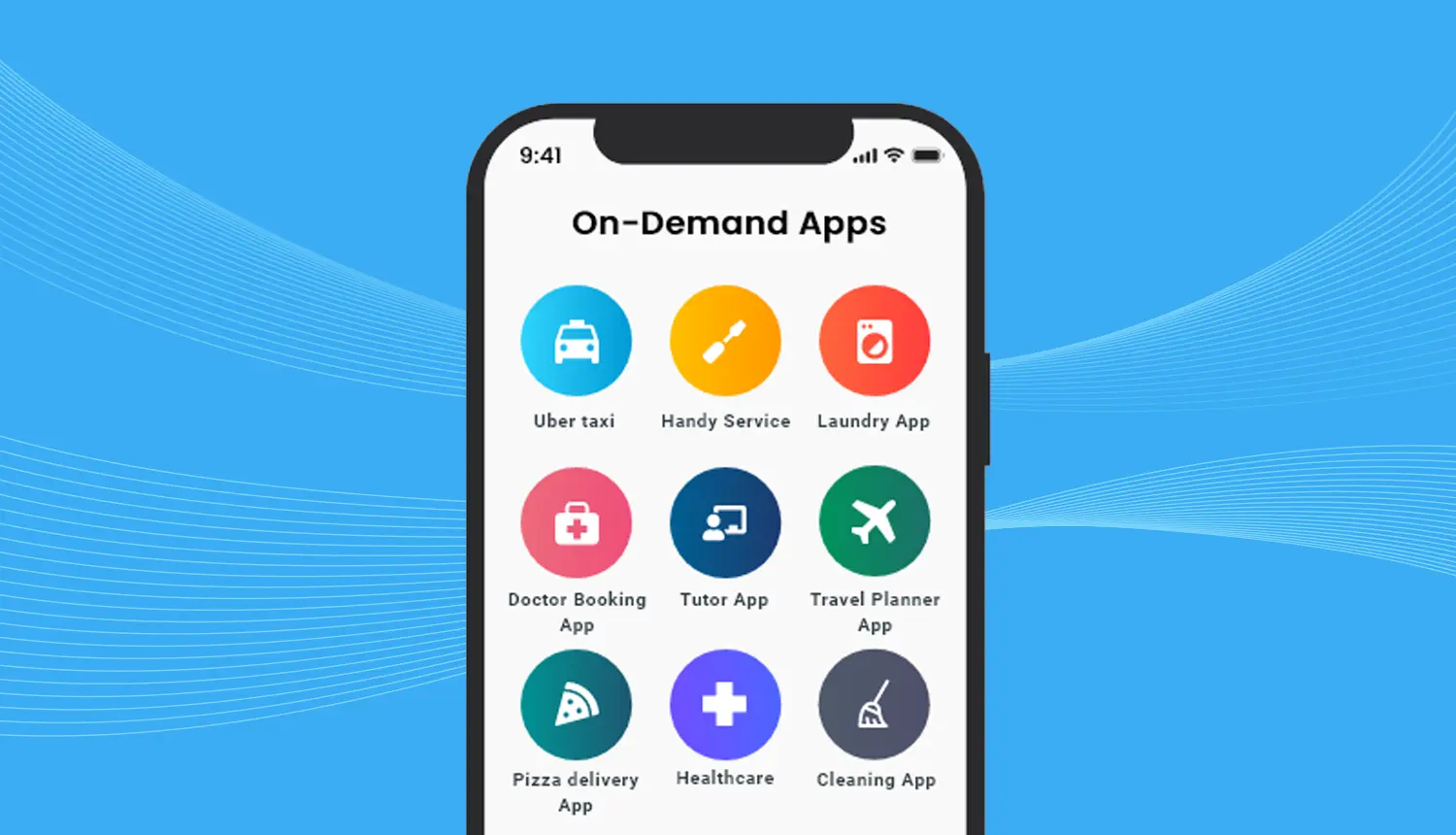
The first time I watched a founder explain their idea for an on-demand app, the presentation centered almost entirely on features.
Real-time tracking.
Push notifications.
Digital payments.
Ratings and reviews.
The product roadmap looked impressive. Yet after the meeting, I found myself asking a different question: "Why would someone choose this app over the dozens of alternatives already available?"
The silence that followed was revealing.
It's easy to become captivated by technology. Building an app feels tangible. Screens can be designed. Code can be written. Features can be shipped.
Creating a successful on-demand business is different.
An app is simply the interface. The real business lives behind it—in the relationships between customers and service providers, the operational systems that fulfill requests, and the trust that encourages people to return.
I've learned that the strongest on-demand platforms aren't defined by how many features they launch. They're defined by how effectively they solve one meaningful problem, repeatedly and reliably.
If you're planning to build an on-demand app, start there.
Everything else becomes easier.
Step 1: Identify a Real Customer Problem
Every successful on-demand platform begins with a simple observation.
Something takes too long.
Something feels unnecessarily complicated.
Something causes repeated frustration.
Rather than asking, "What app should I build?" ask a more valuable question:
"What recurring problem would people gladly pay to solve?"
Strong opportunities often share several characteristics:
- High frequency
- Time sensitivity
- Fragmented service providers
- Inconsistent customer experiences
- Clear willingness to pay
Technology should simplify an existing need—not create one.
Step 2: Define Your Marketplace
Most on-demand apps connect two groups.
Customers seeking a service.
Providers offering that service.
Understanding both audiences is essential because the experience of one directly affects the satisfaction of the other.
Ask questions such as:
For Customers
- What frustrates them today?
- How quickly do they expect service?
- Which factors influence trust?
- What would encourage repeat use?
For Providers
- How will they receive work?
- What motivates them to stay active?
- How will payments work?
- What tools make their jobs easier?
Healthy marketplaces create value for both sides simultaneously.
Step 3: Validate Before Building
One lesson I've learned repeatedly is that assumptions become expensive remarkably quickly.
Before investing heavily in development, validate demand.
Practical approaches include:
- Customer interviews
- Landing pages
- Waitlists
- Concierge-style manual services
- Small pilot programs
Early validation provides insight into pricing, demand, customer expectations, and operational challenges.
The goal isn't proving your idea is perfect.
It's discovering where improvements are needed before writing thousands of lines of code.
Step 4: Build a Minimum Viable Product
Many founders attempt to launch every imaginable feature.
That approach often delays learning.
A minimum viable product (MVP) focuses on solving one problem exceptionally well.
Core functionality may include:
- User registration
- Search
- Booking
- Secure payments
- Notifications
- Ratings and reviews
Everything else can evolve through customer feedback.
Simple products often generate clearer insights than highly complex platforms.
Step 5: Design for Trust
Trust influences nearly every customer decision.
People aren't merely downloading software.
They're inviting strangers into their homes, trusting drivers with transportation, or relying on someone to deliver meals, groceries, or professional services.
Your platform should reduce uncertainty through features such as:
- Identity verification
- Transparent pricing
- Customer reviews
- Provider profiles
- Secure payment systems
- Responsive customer support
Trust isn't an additional feature.
It is part of the product itself.
Comparing Core Features for an On-Demand App
| Feature | Customer Benefit | Business Value | Development Priority |
|---|---|---|---|
| User registration | Personalized experience | Customer identification | High |
| Search and filtering | Faster discovery | Improved conversions | High |
| Booking system | Convenience | Transaction management | High |
| Secure payments | Confidence | Revenue collection | High |
| Real-time tracking | Transparency | Better customer experience | Medium to high |
| Ratings and reviews | Increased trust | Quality improvement | High |
| Push notifications | Timely updates | Higher engagement | Medium |
| Customer support | Faster issue resolution | Better retention | High |
Not every feature needs to exist on day one.
Prioritize the capabilities that directly improve successful transactions.
Step 6: Choose the Right Revenue Model
Building the app is only one part of creating a sustainable business.
Equally important is deciding how the platform generates revenue.
Common models include:
Transaction Commissions
The platform retains a percentage of each completed booking.
This aligns revenue with marketplace activity.
Subscription Memberships
Customers pay recurring fees for premium benefits such as unlimited bookings, priority scheduling, or exclusive discounts.
Recurring revenue improves financial stability.
Service Fees
Additional charges help cover payment processing, customer support, and operational expenses.
Transparency matters.
Customers generally accept reasonable fees when they understand the value they receive.
Step 7: Build the Operational System
An on-demand app succeeds because operations succeed.
Consider everything that happens after a booking is confirmed.
Questions include:
- Who receives the request?
- How quickly must providers respond?
- What happens if someone cancels?
- How are disputes resolved?
- How are refunds processed?
These workflows deserve as much attention as the user interface.
Customers judge the experience, not the architecture.
Step 8: Recruit High-Quality Providers
Many founders focus heavily on customer acquisition.
Provider quality deserves equal attention.
Reliable providers improve:
- Customer satisfaction
- Reviews
- Retention
- Referral rates
Recruitment should include thoughtful onboarding, clear expectations, training resources, and ongoing communication.
Strong provider relationships create stronger customer relationships.
Step 9: Launch in One Market First
Expansion often appears exciting.
Focus frequently produces better outcomes.
Launching in a single city or neighborhood allows you to:
- Test demand
- Improve operations
- Refine pricing
- Collect customer feedback
- Strengthen marketplace liquidity
Every lesson learned locally reduces risk during future expansion.
Scaling proven systems is generally easier than fixing widespread problems.
Step 10: Measure What Actually Matters
Downloads receive attention.
Business health requires broader measurement.
Useful metrics include:
- Customer acquisition cost
- Customer lifetime value
- Repeat booking rate
- Average order value
- Provider retention
- Booking completion rate
- Customer satisfaction
- Response times
These measurements reveal how effectively the marketplace functions beyond surface-level growth.
Healthy metrics support informed decisions.
Lessons I've Learned About Building On-Demand Platforms
If I could offer one piece of advice to someone creating an on-demand app, it would be this:
Don't build an application.
Build a relationship.
Technology creates access.
Relationships create sustainability.
Every design decision influences trust.
Every operational decision shapes customer experience.
Every provider interaction affects future demand.
When businesses view each transaction as the beginning of an ongoing relationship rather than the conclusion of a sale, priorities naturally shift.
Customer support improves.
Product updates become more thoughtful.
Communication becomes clearer.
Retention increases.
The platform grows stronger because customers choose to return—not because they are constantly persuaded to do so.
Common Mistakes to Avoid
Several challenges appear repeatedly among early-stage platforms:
Building Too Many Features
Complexity often delays learning.
Launch with the essentials.
Improve continuously.
Ignoring Provider Experience
Providers represent half of the marketplace.
Supporting their success directly benefits customers.
Expanding Too Quickly
Growth should follow operational confidence.
Scaling unresolved problems simply magnifies them.
Competing Exclusively on Price
Discounts attract attention.
Reliability earns loyalty.
Customers frequently remain loyal to platforms that consistently deliver predictable, high-quality experiences.
Conclusion
Creating an on-demand app involves far more than developing software.
It requires designing an ecosystem where customers, providers, and the platform all benefit from every successful interaction.
The strongest platforms begin with a clearly defined problem, validate demand before investing heavily, build trust into every stage of the customer journey, and refine operations continuously through real-world learning.
Technology enables convenience, but sustainable businesses are built on consistency, transparency, and lasting relationships.
Ultimately, an on-demand app is not simply a collection of features. It is a promise to customers that every request will be handled reliably—and a promise to providers that participating in the platform creates meaningful opportunities for growth.
When those promises are fulfilled consistently, the application becomes much more than software. It becomes a marketplace people trust, recommend, and return to again and again.
- Arts
- Business
- Computers
- Oyunlar
- Health
- Home
- Kids and Teens
- Money
- News
- Personal Development
- Recreation
- Regional
- Reference
- Science
- Shopping
- Society
- Sports
- Бизнес
- Деньги
- Дом
- Досуг
- Здоровье
- Игры
- Искусство
- Источники информации
- Компьютеры
- Личное развитие
- Наука
- Новости и СМИ
- Общество
- Покупки
- Спорт
- Страны и регионы
- World

 English
 Russian
 French
 Spanish
 Portuguese
 Deutsch
 Dutch
Dutch
 Italiano
 Arabic
 Romaian
 Portuguese (Brazil)
 Greek
Greek