
How Do Subscription Licenses Work?
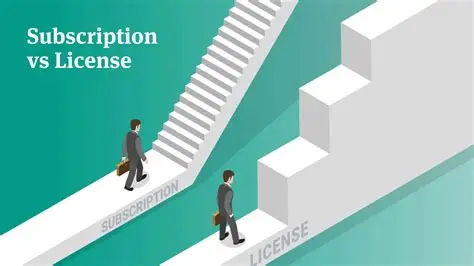
There was a time when buying software felt refreshingly straightforward.
You paid once.
The software was yours to use.
The transaction ended.
At least, that was the perception.
Today, the experience looks very different.
You subscribe.
Monthly.
Annually.
Sometimes based on users.
Sometimes based on usage.
Sometimes based on features.
The software continues evolving in the background while payments continue arriving in the foreground.
For many consumers and businesses, this transformation happened gradually.
Almost quietly.
One renewal notice at a time.
Yet behind this shift sits one of the most significant changes in the history of software commerce.
The rise of the subscription license.
Subscription licensing has fundamentally altered how software is developed, delivered, supported, and monetized.
It has reshaped vendor economics.
It has changed customer expectations.
It has introduced both remarkable flexibility and new forms of dependency.
And despite its prevalence, many people still misunderstand how subscription licenses actually work.
The software appears familiar.
The business model underneath it is anything but.
What Is a Subscription License?
A subscription license is a software licensing model that grants access to software for a defined period of time in exchange for recurring payments.
Unlike traditional perpetual licenses, subscription licenses do not typically provide indefinite usage rights.
Access continues only while the subscription remains active.
The distinction sounds subtle.
It is not.
A perpetual license focuses on ownership of usage rights.
A subscription license focuses on continued access.
That shift changes everything.
Core Components of Subscription Licensing
Most subscription licenses include:
- Software access
- Updates
- Security patches
- Technical support
- Feature enhancements
- Account management
Rather than purchasing a static product, users gain access to an evolving service.
The software becomes a relationship.
Not merely a transaction.
Why Subscription Licensing Became So Popular
The growth of subscription licensing did not occur accidentally.
It solved challenges for both software vendors and customers.
At least in theory.
For Software Vendors
Subscription licensing provides predictable revenue.
Predictability improves planning.
Planning improves investment decisions.
Rather than relying on periodic product launches, vendors generate recurring income streams.
This stability can support:
- Product development
- Security investments
- Infrastructure expansion
- Customer support
The business becomes more sustainable.
For Customers
Customers gain flexibility.
Large upfront expenditures often disappear.
Organizations can begin with smaller commitments and scale over time.
The appeal is obvious.
Particularly for growing businesses.
The Shift From Ownership to Access
One of the most important concepts in subscription licensing is understanding that customers are usually paying for access.
Not ownership.
Historically, software purchases often created the impression of permanence.
Subscription licensing introduces a different framework.
When payments stop, access frequently stops as well.
The software provider retains control over the platform.
Users retain access only while the agreement remains active.
This model increasingly extends beyond software.
Music.
Entertainment.
Productivity tools.
Cloud infrastructure.
Many industries now prioritize access over ownership.
Software merely arrived there first.
Common Types of Subscription Licenses
Subscription licensing is not a single model.
Multiple variations exist.
Each addresses different business objectives.
Individual Subscriptions
One user receives access.
Pricing typically reflects personal usage.
This model is common among consumers and independent professionals.
Team Subscriptions
Organizations purchase access for multiple users.
Pricing often scales according to user count.
Enterprise Subscriptions
Large organizations negotiate customized agreements.
Terms may include:
- User thresholds
- Support commitments
- Security requirements
- Compliance obligations
Enterprise subscriptions frequently become highly sophisticated.
Usage-Based Subscriptions
Some vendors charge based on consumption.
Examples include:
- API requests
- Storage usage
- Transactions processed
The software cost reflects activity levels.
Not merely access rights.
Comparing Subscription Licensing Models
| Subscription Type | Pricing Basis | Scalability | Typical Users | Flexibility |
|---|---|---|---|---|
| Individual License | Per user | Low | Consumers | Moderate |
| Team License | User count | Moderate | Small businesses | High |
| Enterprise License | Negotiated agreement | Very High | Large organizations | Very High |
| Usage-Based License | Consumption metrics | High | Technology companies | High |
| Tiered Subscription | Feature levels | Moderate | Various users | Moderate |
| Freemium Subscription | Free + upgrades | High | Consumers and startups | High |
| Device-Based Subscription | Device count | Moderate | Specialized industries | Moderate |
| Platform Subscription | Ecosystem access | High | Enterprise customers | High |
The variety reflects a broader trend.
Software companies increasingly align pricing with value consumption.
Not simply installation rights.
What Happens After You Subscribe?
The purchasing process may appear simple.
Behind the scenes, however, several systems activate simultaneously.
Account Creation
Users receive credentials.
Access rights become associated with an account.
License Validation
Software verifies that the subscription remains active.
This process often occurs automatically.
Feature Management
Many subscription platforms enable or disable features according to subscription levels.
Different plans unlock different capabilities.
Renewal Management
Subscription systems monitor renewal dates and payment status.
Access often depends on successful renewal.
The software becomes connected to an ongoing commercial relationship.
Not merely an installation event.
The Benefits of Subscription Licensing
The popularity of subscription licensing reflects genuine advantages.
Continuous Improvements
Software evolves continuously.
Customers receive updates without purchasing entirely new versions.
Lower Initial Costs
Upfront investment requirements decrease.
Organizations can adopt sophisticated software with smaller initial expenditures.
Predictable Upgrades
Security patches and feature improvements arrive more consistently.
Scalability
Organizations can often increase or decrease subscriptions as needs change.
Flexibility becomes part of the product itself.
For many businesses, that flexibility is invaluable.
The Criticisms of Subscription Licensing
The model also attracts criticism.
Some concerns are entirely legitimate.
Ongoing Costs
Perpetual licenses eventually stop generating costs.
Subscriptions continue.
Sometimes indefinitely.
Vendor Dependence
Access depends upon the vendor.
If the relationship ends, access frequently ends as well.
Budget Fatigue
Organizations increasingly manage dozens or hundreds of subscriptions.
The cumulative cost can become substantial.
Control Concerns
Customers often possess less control over software availability than under traditional licensing models.
The convenience of subscription licensing sometimes comes at the expense of autonomy.
Why Software Companies Prefer Recurring Revenue
Subscription licensing transformed software economics.
Historically, software companies faced revenue volatility.
Major releases generated large sales spikes.
Periods between releases often produced slower growth.
Subscriptions changed that dynamic.
Recurring revenue creates visibility.
Investors value predictability.
Executives value predictability.
Employees value predictability.
Predictable revenue frequently supports more stable businesses.
This explains why so many software vendors embraced subscription models so aggressively.
The incentives are powerful.
A Lesson I Learned During a Software Budget Review
Several years ago, I worked with an organization reviewing its software spending.
At first glance, the numbers seemed manageable.
No individual subscription appeared particularly expensive.
Most monthly charges looked relatively small.
Then someone aggregated them.
The result surprised nearly everyone.
The organization was managing dozens of subscriptions across multiple departments.
Each purchase had seemed reasonable in isolation.
Collectively, they represented a significant operational expense.
What stood out was not the cost itself.
It was the invisibility of the cost.
Subscription licensing distributes spending over time.
That can improve affordability.
It can also obscure scale.
The lesson was simple.
Organizations should evaluate subscription portfolios holistically rather than individually.
Recurring expenses have a way of accumulating quietly.
Subscription Licensing and Cloud Computing
Cloud computing accelerated subscription licensing dramatically.
The two models complement one another.
Cloud services require:
- Ongoing infrastructure
- Continuous maintenance
- Regular updates
- Security monitoring
Recurring revenue aligns naturally with recurring operational costs.
Customers receive continuously managed services.
Vendors receive continuous funding.
The relationship becomes ongoing rather than episodic.
This alignment explains why subscription licensing became the dominant model for cloud-based software.
How Subscription Licenses Affect Software Development
The licensing model influences product strategy.
More than many users realize.
Under Perpetual Licensing
Vendors often emphasized major releases.
New versions generated new revenue opportunities.
Under Subscription Licensing
Retention becomes critical.
Customers can cancel.
The software must continually justify its value.
This creates incentives for:
- Frequent updates
- Improved customer experiences
- Enhanced reliability
- Ongoing innovation
The relationship shifts from acquisition-focused to retention-focused.
That changes development priorities significantly.
The Future of Subscription Licensing
Subscription licensing continues evolving.
The model itself remains stable.
The pricing mechanisms are changing.
Increasingly, vendors experiment with:
- Usage-based pricing
- Hybrid subscriptions
- Outcome-based billing
- Platform access models
Artificial intelligence may accelerate these trends further.
Some software providers already charge based on computational usage rather than user counts.
The future likely involves greater flexibility.
And greater complexity.
The days of one-size-fits-all software licensing appear increasingly distant.
How Businesses Should Evaluate Subscription Licenses
Organizations should assess subscription licenses carefully.
Not merely the software.
The license itself.
Questions worth asking include:
What Happens if We Cancel?
Access rights vary significantly.
Data portability matters.
How Does Pricing Scale?
Growth can dramatically alter long-term costs.
What Features Are Included?
Subscription tiers frequently differ substantially.
Are Renewal Terms Clear?
Automatic renewals deserve attention.
Transparency matters.
Understanding these factors often prevents future surprises.
Conclusion: Subscription Licensing Is Really About Ongoing Relationships
At first glance, subscription licensing appears to be a pricing strategy.
Monthly payments.
Annual renewals.
User counts.
Invoices.
Those mechanics matter.
Yet they reveal only part of the picture.
Subscription licensing represents a broader shift in how software companies and customers interact.
The traditional model emphasized transactions.
The subscription model emphasizes relationships.
Access becomes continuous.
Development becomes continuous.
Support becomes continuous.
Revenue becomes continuous.
Success no longer depends solely on convincing customers to buy.
It depends on convincing them to stay.
That distinction has reshaped the software industry more profoundly than many people realize.
Because ultimately, subscription licenses are not merely contracts governing software access.
They are frameworks governing long-term engagement.
And in a marketplace increasingly defined by recurring relationships rather than one-time purchases, understanding that framework has become essential.
- Arts
- Business
- Computers
- Spiele
- Health
- Startseite
- Kids and Teens
- Geld
- News
- Personal Development
- Recreation
- Regional
- Reference
- Science
- Shopping
- Society
- Sports
- Бизнес
- Деньги
- Дом
- Досуг
- Здоровье
- Игры
- Искусство
- Источники информации
- Компьютеры
- Личное развитие
- Наука
- Новости и СМИ
- Общество
- Покупки
- Спорт
- Страны и регионы
- World

 English
 Russian
 French
 Spanish
 Portuguese
 Turkish
 Dutch
Dutch
 Italiano
 Arabic
 Romaian
 Portuguese (Brazil)
 Greek
Greek