
Can I Use AI-Generated Content Commercially?
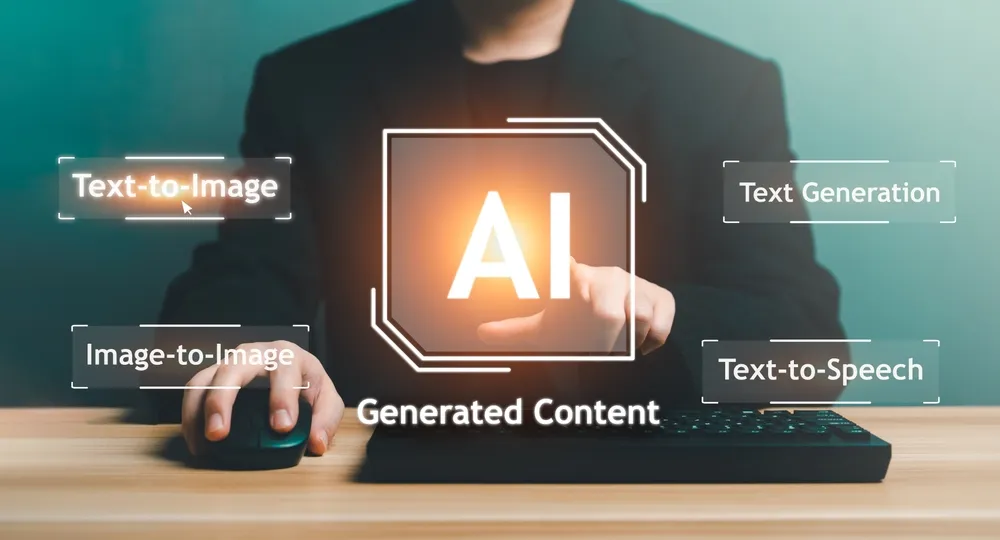
A question that sounds remarkably simple has become one of the most commercially important questions of the decade.
Can I use AI-generated content commercially?
At first glance, the answer appears obvious.
Businesses are publishing AI-assisted articles.
Marketing agencies are generating images.
Startups are creating videos.
Brands are producing product descriptions at scale.
The marketplace appears to have voted.
Commercial use is happening.
Case closed.
Not quite.
Because beneath the excitement lies a more nuanced reality.
The issue is not whether AI-generated content can be used commercially.
In many cases, it can.
The issue is understanding the conditions, limitations, risks, ownership questions, licensing requirements, and intellectual property uncertainties that accompany that use.
Commercial opportunity often arrives faster than legal certainty.
Artificial intelligence is no exception.
Organizations that understand this distinction are positioning themselves effectively.
Organizations that ignore it may discover that generating content is easier than protecting it.
And those are very different challenges.
The Short Answer Is Yes, But the Details Matter
Most modern AI platforms permit commercial use of generated content.
That includes many popular tools used for:
- Writing
- Image creation
- Video generation
- Audio production
- Design assistance
However, commercial use rights depend heavily on the terms governing the platform.
The platform matters.
The license matters.
The jurisdiction matters.
The specific content matters.
Commercial use is rarely a universal permission detached from context.
It is usually governed by contractual rules.
That distinction deserves attention.
Ownership and Commercial Use Are Not the Same Thing
One of the most common misconceptions surrounding AI-generated content involves ownership.
People often assume ownership and commercial rights are interchangeable.
They are not.
Commercial use means you may be permitted to use content for business purposes.
Ownership addresses who controls the underlying rights.
These are separate questions.
A business may possess broad commercial usage rights without possessing traditional copyright ownership.
Likewise, a creator may control certain rights while remaining subject to platform restrictions.
Understanding this distinction is essential because many AI-related legal discussions revolve around ownership rather than usage.
The two concepts frequently overlap.
They are not identical.
Commercial Use Appears Across Nearly Every Industry
AI-generated content is no longer confined to experimental projects.
Commercial applications now include:
- Advertising campaigns
- Product descriptions
- Blog articles
- Social media content
- Training materials
- Marketing videos
- Internal communications
- Customer service resources
The adoption curve has been remarkably steep.
Organizations are not merely experimenting.
Many are integrating AI-generated content into core business operations.
That reality explains why commercial-use questions have become increasingly urgent.
Why Licensing Terms Matter More Than Most People Realize
When organizations evaluate AI-generated content, they often focus on quality.
Quality matters.
Licensing matters more.
The rights granted by an AI provider determine:
- Commercial usage permissions
- Redistribution rights
- Ownership claims
- Attribution requirements
- Restrictions on use
Two AI platforms may generate nearly identical outputs.
Yet the legal rights attached to those outputs may differ significantly.
This is why reviewing platform terms has become a business necessity rather than a legal afterthought.
The Intellectual Property Question Remains Complicated
Few topics generate more confusion than copyright.
Particularly when AI is involved.
Traditional copyright frameworks were designed around human creativity.
Artificial intelligence introduces new variables.
Questions frequently arise regarding:
- Copyright ownership
- Originality
- Human contribution
- Derivative works
- Authorship
In some jurisdictions, purely machine-generated content may encounter copyright challenges.
Human involvement often becomes relevant.
The more substantial the human contribution, the stronger the argument for traditional copyright protection.
This area continues evolving.
Businesses should recognize that legal certainty is still developing.
Comparing Commercial Use Considerations
| Consideration | Why It Matters | Business Impact |
|---|---|---|
| Platform License Terms | Define permitted usage | Determines commercial eligibility |
| Copyright Protection | Affects ownership rights | Influences asset protection |
| Human Contribution | May strengthen legal protection | Supports intellectual property claims |
| Trademark Risks | Prevents brand conflicts | Reduces legal exposure |
| Content Accuracy | Protects credibility | Limits reputational risk |
| Industry Regulations | Ensures compliance | Avoids regulatory issues |
| Attribution Requirements | Satisfies contractual obligations | Prevents licensing violations |
| Recordkeeping | Documents content creation | Supports risk management |
The strongest commercial strategies evaluate all of these considerations simultaneously.
Focusing on only one creates blind spots.
Commercial Use Does Not Eliminate Liability
A surprising number of businesses misunderstand this point.
Permission to use content commercially does not eliminate responsibility.
Organizations remain accountable for:
- Accuracy
- Compliance
- Brand representation
- Defamation concerns
- Regulatory obligations
If an AI-generated marketing claim proves misleading, the business remains responsible.
If published content violates industry regulations, the business remains responsible.
AI can generate content.
Responsibility does not migrate alongside it.
This distinction is increasingly important.
Trademark Risks Often Receive Too Little Attention
Copyright dominates public discussions.
Trademark concerns frequently deserve equal consideration.
AI-generated content may inadvertently resemble:
- Existing brands
- Logos
- Product names
- Marketing slogans
Commercial deployment increases exposure.
A similarity that appears harmless in experimentation may become problematic in commerce.
Businesses therefore benefit from reviewing AI-generated assets before widespread use.
Particularly in branding initiatives.
Human Review Remains Commercially Valuable
Some organizations view AI as a replacement.
Others view it as a multiplier.
The second perspective often proves more effective.
Human review contributes:
- Judgment
- Context
- Accuracy
- Strategic alignment
- Risk assessment
These qualities remain difficult to automate fully.
AI excels at generation.
Commercial success often depends on refinement.
The distinction matters.
The Lesson I Learned During an AI Content Review
Several months ago, I reviewed a large collection of AI-assisted marketing materials for a growing organization.
The content was impressive.
Fast.
Scalable.
Consistent.
At first glance, the project appeared highly successful.
Then the review process began.
Several claims required fact-checking.
Certain brand references created confusion.
Some messaging failed to align with regulatory expectations.
None of the issues were catastrophic.
Yet collectively they illustrated something important.
The challenge was not generating content.
The challenge was governing content.
The organization ultimately improved the material significantly through human oversight.
That experience reinforced a lesson that continues proving relevant.
AI accelerates creation.
It does not eliminate responsibility.
Different Types of AI Content Create Different Risks
Not all AI-generated content should be evaluated identically.
Risk profiles vary considerably.
Text Content
Common considerations include:
- Accuracy
- Copyright questions
- Defamation concerns
- Regulatory compliance
Images
Additional concerns may involve:
- Copyright issues
- Trademark similarities
- Model releases
- Brand confusion
Audio and Video
These formats introduce questions regarding:
- Voice replication
- Likeness rights
- Advertising disclosures
- Publicity rights
The format influences the analysis.
One-size-fits-all approaches rarely work.
Industry Regulations May Override Convenience
Certain industries face heightened scrutiny.
Including:
- Healthcare
- Financial services
- Legal services
- Insurance
- Education
Organizations operating in regulated sectors often require additional review processes.
Commercial use may remain permissible.
Compliance obligations remain equally important.
In some cases, more important.
The content's source matters less than its impact.
Regulators generally focus on outcomes.
AI Content Is Becoming a Competitive Asset
Despite ongoing debates, organizations increasingly view AI-generated content as an asset class.
Not merely a productivity tool.
An asset.
It contributes to:
- Marketing performance
- Customer acquisition
- Brand awareness
- Operational efficiency
- Knowledge management
This shift changes the conversation.
The question becomes less about whether AI-generated content can be used commercially.
The question becomes how organizations can use it responsibly and strategically.
Documentation Is Emerging as a Best Practice
Businesses increasingly document:
- Prompt histories
- Editing processes
- Approval workflows
- Human contributions
This documentation serves multiple purposes.
Including:
- Compliance support
- Intellectual property management
- Internal governance
- Risk mitigation
Good documentation creates clarity.
Clarity creates resilience.
Organizations rarely regret maintaining records.
The Competitive Advantage May Not Be Generation
This may be the most overlooked observation in the entire AI discussion.
Content generation is becoming increasingly accessible.
Everyone can generate.
Fewer organizations can govern effectively.
Fewer still can differentiate meaningfully.
As AI tools become widespread, competitive advantages may emerge from:
- Strategy
- Judgment
- Brand voice
- Compliance
- Distribution
Not generation alone.
Generation is becoming abundant.
Quality governance remains comparatively scarce.
The Future of Commercial AI Content
The legal environment will continue evolving.
Copyright frameworks will mature.
Licensing models will expand.
Judicial decisions will provide additional guidance.
Regulatory expectations will become clearer.
Yet one principle appears increasingly stable.
Commercial use of AI-generated content is not disappearing.
It is becoming normal.
The conversation is shifting from possibility to management.
From experimentation to governance.
From curiosity to operational discipline.
That shift is significant.
Conclusion: Commercial Use Is Possible, but Responsibility Remains Human
Can AI-generated content be used commercially?
In many cases, yes.
Organizations across virtually every sector are already doing so.
But the simplicity of that answer can be misleading.
Commercial use exists within a framework.
Licensing agreements matter.
Intellectual property considerations matter.
Compliance obligations matter.
Brand protection matters.
Human oversight matters.
The businesses that thrive will likely be those that understand this balance.
Not those that generate the most content.
Those that manage content most effectively.
Because the future of AI-generated content may not be defined by what machines can create.
It may be defined by what organizations choose to do with those creations afterward.
And that remains a profoundly human decision.
- Arts
- Business
- Computers
- Games
- Health
- Home
- Kids and Teens
- Money
- News
- Personal Development
- Recreation
- Regional
- Reference
- Science
- Shopping
- Society
- Sports
- Бизнес
- Деньги
- Дом
- Досуг
- Здоровье
- Игры
- Искусство
- Источники информации
- Компьютеры
- Личное развитие
- Наука
- Новости и СМИ
- Общество
- Покупки
- Спорт
- Страны и регионы
- World

 Russian
 French
 Spanish
 Portuguese
 Deutsch
 Turkish
 Dutch
Dutch
 Italiano
 Arabic
 Romaian
 Portuguese (Brazil)
 Greek
Greek