
What Are the Risks of Outsourcing?
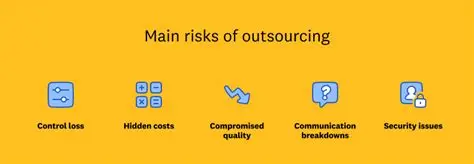
Outsourcing has become a common strategy for businesses of all sizes, from startups trying to scale efficiently to large corporations aiming to reduce costs and focus on core operations. By delegating certain tasks or processes to external vendors, companies can access specialized expertise, improve efficiency, and often save money. However, outsourcing is not without its downsides. While the benefits are often highlighted, the risks can be significant if not carefully managed.
Understanding these risks is essential before making any outsourcing decisions. Businesses that approach outsourcing without a clear awareness of potential pitfalls may face financial losses, operational disruptions, or reputational damage. This article explores the key risks of outsourcing in depth and explains how they can impact organizations.
1. Loss of Control
One of the most immediate and noticeable risks of outsourcing is the loss of control over certain business processes. When a company hands over responsibility to an external provider, it also gives up direct oversight of how tasks are performed.
This can lead to:
- Reduced visibility into day-to-day operations
- Difficulty enforcing company standards
- Delayed responses to issues
For example, if customer service is outsourced, the company may not have full control over how representatives interact with customers. This can result in inconsistent service quality and may harm the brand’s reputation.
2. Quality Concerns
Quality assurance becomes more complex when work is handled by an external party. Even if the outsourcing partner has a strong reputation, their standards may not perfectly align with the hiring company’s expectations.
Common quality-related risks include:
- Inconsistent output
- Lack of attention to detail
- Misalignment with brand voice or guidelines
Without proper monitoring systems, businesses may only discover quality issues after they’ve already affected customers or internal operations.
3. Communication Barriers
Outsourcing often involves working with teams in different locations, sometimes across countries and time zones. This introduces communication challenges that can affect productivity and collaboration.
These challenges may include:
- Language differences
- Cultural misunderstandings
- Time zone delays
- Lack of real-time communication
Miscommunication can lead to errors, missed deadlines, and frustration on both sides. Even small misunderstandings can snowball into larger operational problems.
4. Data Security and Privacy Risks
When outsourcing involves sharing sensitive data—such as customer information, financial records, or proprietary processes—security becomes a major concern.
Potential risks include:
- Data breaches
- Unauthorized access to confidential information
- Non-compliance with data protection laws
If an outsourcing partner does not follow strict security protocols, the hiring company may still be held responsible for any data leaks. This can result in legal consequences and damage to customer trust.
5. Hidden Costs
While outsourcing is often pursued as a cost-saving measure, it can sometimes lead to unexpected expenses. These hidden costs can reduce or even eliminate the financial benefits.
Examples of hidden costs:
- Contract management fees
- Transition and onboarding costs
- Additional charges for revisions or changes
- Monitoring and quality control expenses
In some cases, companies underestimate the time and resources needed to manage outsourced relationships effectively.
6. Dependency on External Vendors
Over-reliance on an outsourcing partner can create long-term dependency. If a company outsources critical functions, it may struggle to bring those processes back in-house or switch vendors.
Risks of dependency include:
- Limited flexibility
- Difficulty negotiating better terms
- Business disruption if the vendor fails
If the outsourcing provider experiences financial trouble, staffing issues, or operational breakdowns, the hiring company may be directly affected.
7. Cultural and Ethical Differences
Different regions and organizations operate under varying cultural norms and ethical standards. These differences can lead to misunderstandings or conflicts.
For example:
- Work ethics and expectations may vary
- Approaches to deadlines and accountability may differ
- Ethical practices may not align with company values
In some cases, outsourcing to regions with lower labor standards can raise ethical concerns and harm a company’s public image.
8. Intellectual Property Risks
Outsourcing often requires sharing proprietary information, designs, or processes. This creates a risk of intellectual property (IP) theft or misuse.
Possible issues include:
- Unauthorized replication of products or services
- Leakage of trade secrets
- Weak enforcement of IP laws in certain regions
Protecting intellectual property requires strong legal agreements, but enforcement can still be challenging, especially across international borders.
9. Reduced Employee Morale
Outsourcing can have an internal impact on employees, particularly if it leads to job reductions or changes in responsibilities.
Employees may feel:
- Job insecurity
- Reduced trust in management
- Lower motivation
This can lead to decreased productivity and higher turnover rates. Even employees who remain with the company may feel less engaged if they believe their roles could be outsourced in the future.
10. Vendor Reliability Issues
Not all outsourcing partners deliver on their promises. Some may lack the resources, expertise, or commitment needed to meet expectations.
Risks include:
- Missed deadlines
- Poor performance
- Lack of accountability
Choosing the wrong vendor can lead to significant setbacks and require costly transitions to a new provider.
11. Legal and Compliance Risks
Outsourcing across borders introduces legal complexities. Different countries have different regulations regarding labor, taxation, and data protection.
Companies may face:
- Compliance violations
- Contract disputes
- Regulatory penalties
Even if the outsourcing partner is responsible for certain operations, the hiring company may still be legally accountable in some situations.
12. Difficulty in Measuring Performance
Tracking the performance of outsourced teams can be challenging, especially if clear metrics are not established from the beginning.
Problems may include:
- Lack of transparency
- Inconsistent reporting
- Difficulty evaluating ROI
Without proper performance indicators, businesses may struggle to determine whether outsourcing is actually beneficial.
13. Transition Risks
The process of outsourcing itself can be risky. Moving operations from in-house teams to external providers requires careful planning and execution.
Transition-related risks:
- Temporary disruption of services
- Loss of critical knowledge
- Resistance from employees
If the transition is poorly managed, it can negatively impact both internal operations and customer experience.
14. Reputation Damage
Outsourcing can directly affect how customers perceive a company. If the outsourced service fails to meet expectations, customers may blame the company rather than the vendor.
For example:
- Poor customer support experiences
- Low-quality products or services
- Delayed responses
Reputation damage can be difficult to repair and may result in lost customers and revenue.
15. Lack of Innovation
Outsourcing certain functions may limit a company’s ability to innovate. External providers often focus on delivering predefined services rather than contributing new ideas.
This can result in:
- Reduced creativity
- Slower adaptation to market changes
- Missed opportunities for improvement
Companies that rely too heavily on outsourcing may lose their competitive edge over time.
Conclusion
Outsourcing can offer significant advantages, but it also comes with a wide range of risks that businesses must carefully consider. From loss of control and quality issues to data security concerns and hidden costs, these challenges can have serious consequences if not properly managed.
The key to successful outsourcing lies in preparation and oversight. Companies should conduct thorough research, establish clear contracts, define performance metrics, and maintain strong communication with their outsourcing partners. By proactively addressing potential risks, businesses can maximize the benefits of outsourcing while minimizing its downsides.
Ultimately, outsourcing is neither inherently good nor bad—it is a strategic decision that must be approached with careful planning and awareness. Businesses that understand the risks are far better equipped to use outsourcing effectively and sustainably.
- Arts
- Business
- Computers
- Games
- Health
- Home
- Kids and Teens
- Money
- News
- Personal Development
- Recreation
- Regional
- Reference
- Science
- Shopping
- Society
- Sports
- Бизнес
- Деньги
- Дом
- Досуг
- Здоровье
- Игры
- Искусство
- Источники информации
- Компьютеры
- Личное развитие
- Наука
- Новости и СМИ
- Общество
- Покупки
- Спорт
- Страны и регионы
- World

 Russian
 French
 Spanish
 Portuguese
 Deutsch
 Turkish
 Dutch
Dutch
 Italiano
 Arabic
 Romaian
 Portuguese (Brazil)
 Greek
Greek