
Is Inflation Good or Bad?
Is Inflation Good or Bad?
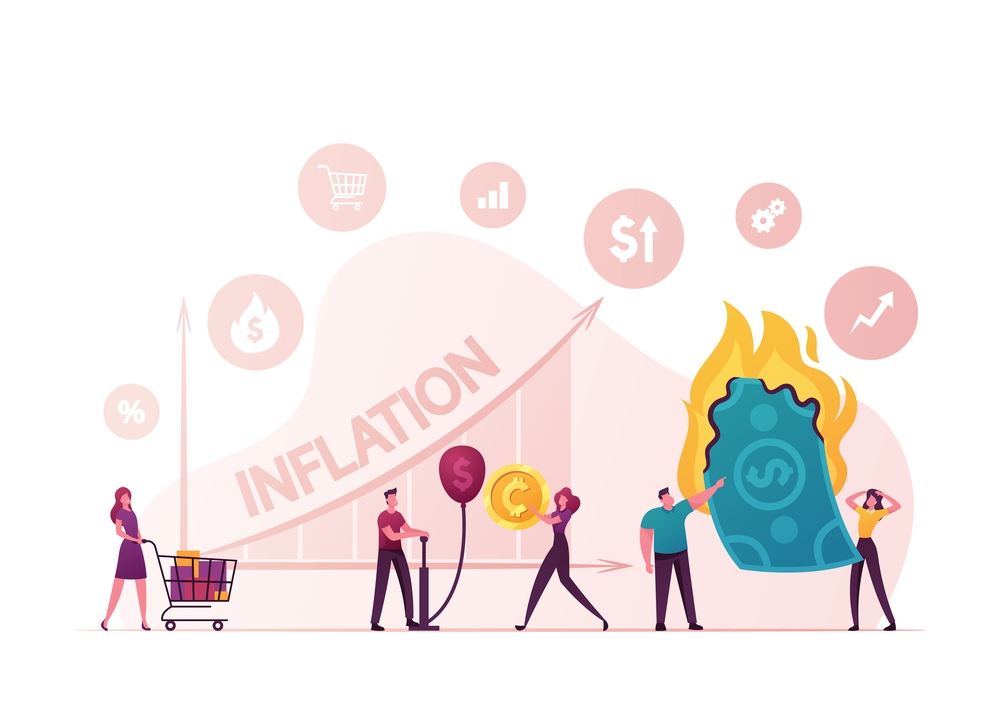
Inflation is one of the most discussed—and often misunderstood—economic concepts. At its simplest, inflation refers to the general increase in prices over time, meaning that money gradually loses its purchasing power. But whether inflation is “good” or “bad” isn’t a straightforward question. The answer depends on its level, its causes, and how it affects different groups in society.
Understanding Inflation
Before judging inflation, it’s important to understand what it represents. Inflation occurs when the demand for goods and services exceeds supply, production costs rise, or the money supply increases significantly. Moderate inflation is a normal feature of growing economies, while extreme inflation—known as hyperinflation—can destabilize entire nations.
The Benefits of Inflation
Although inflation often gets a bad reputation, it can actually play a positive role when it is low and stable.
1. Encourages Spending and Investment
When prices are expected to rise gradually, people are more likely to spend or invest their money now rather than save it indefinitely. This behavior supports economic activity. Businesses benefit from higher demand, which can lead to expansion, innovation, and job creation.
2. Reduces Debt Burden
Inflation can help borrowers. When prices rise, the real value of money decreases, meaning debts become easier to repay in “cheaper” money. For example, if wages increase along with inflation, individuals and governments can pay off loans more comfortably over time.
3. Prevents Deflation
A small amount of inflation helps prevent deflation—a general decline in prices. While falling prices might sound beneficial, deflation can lead to reduced spending, lower profits, layoffs, and economic stagnation. People may delay purchases in anticipation of lower prices, slowing down the economy.
4. Supports Wage Growth
In a healthy economy, inflation often coincides with rising wages. Employers increase pay as businesses grow and demand for labor rises. This helps maintain purchasing power, even as prices increase.
The Downsides of Inflation
Despite its potential benefits, inflation can also cause serious problems—especially when it becomes high or unpredictable.
1. Erodes Purchasing Power
The most direct effect of inflation is that money buys less over time. If wages do not keep up with rising prices, people’s standard of living declines. Essentials such as food, housing, and transportation become more expensive, disproportionately affecting low-income households.
2. Creates Uncertainty
High or volatile inflation makes it difficult for businesses and consumers to plan for the future. Companies may delay investments due to uncertainty about costs and demand. Individuals may struggle to budget or save effectively.
3. Hurts Savers
Inflation reduces the real value of savings. Money kept in cash or low-interest accounts loses purchasing power over time. This can discourage saving and disproportionately affect retirees or those on fixed incomes.
4. Distorts Economic Decisions
When inflation is high, prices may rise unevenly across sectors, making it harder to distinguish between genuine demand and temporary price changes. This can lead to inefficient allocation of resources and poor investment decisions.
5. Can Spiral Out of Control
In extreme cases, inflation can escalate rapidly into hyperinflation, where prices rise uncontrollably. This can destroy savings, disrupt markets, and lead to economic and political instability. Historical examples show how devastating this can be for entire societies.
Who Wins and Who Loses?
Inflation does not affect everyone equally. Its impact depends on individual circumstances.
-
Winners: Borrowers, property owners, and businesses that can raise prices may benefit.
-
Losers: Savers, retirees, and workers with fixed incomes tend to suffer the most.
This uneven impact is one reason inflation is often controversial. While some groups gain, others may experience significant financial hardship.
The Role of Governments and Central Banks
Because of its complex effects, managing inflation is a key responsibility of governments and central banks. Most modern economies aim for a low and stable inflation rate—often around 2% annually.
Central banks use tools such as interest rates to control inflation:
-
Raising interest rates can slow spending and reduce inflation.
-
Lowering rates can stimulate economic activity if inflation is too low.
Fiscal policies, such as taxation and government spending, also influence inflation levels.
When Is Inflation “Good”?
Inflation is generally considered beneficial when it is:
-
Low and predictable
-
Accompanied by economic growth
-
Matched by rising wages
In this scenario, inflation supports a dynamic economy without significantly harming purchasing power.
When Is Inflation “Bad”?
Inflation becomes harmful when it is:
-
High or rapidly increasing
-
Unpredictable
-
Not matched by income growth
Under these conditions, inflation can reduce living standards, create instability, and weaken economic confidence.
Striking the Right Balance
The key issue is not whether inflation is inherently good or bad, but whether it is controlled and balanced. A complete absence of inflation is not ideal, but neither is excessive inflation. Economies function best when inflation is moderate, stable, and well-managed.
Conclusion
Inflation is neither entirely good nor entirely bad—it is a double-edged sword. At moderate levels, it can encourage spending, support growth, and ease debt burdens. However, when it rises too quickly or becomes unpredictable, it can erode purchasing power, create uncertainty, and harm vulnerable populations.
Ultimately, the goal for policymakers is not to eliminate inflation, but to keep it within a manageable range. For individuals, understanding inflation is crucial for making informed financial decisions—whether it’s saving, investing, or planning for the future.
- Arts
- Business
- Computers
- Games
- Health
- Home
- Kids and Teens
- Money
- News
- Personal Development
- Recreation
- Regional
- Reference
- Science
- Shopping
- Society
- Sports
- Бизнес
- Деньги
- Дом
- Досуг
- Здоровье
- Игры
- Искусство
- Источники информации
- Компьютеры
- Личное развитие
- Наука
- Новости и СМИ
- Общество
- Покупки
- Спорт
- Страны и регионы
- World

 Russian
 French
 Spanish
 Portuguese
 Deutsch
 Turkish
 Dutch
Dutch
 Italiano
 Arabic
 Romaian
 Portuguese (Brazil)
 Greek
Greek