
What Are Examples of Marketplace Businesses?
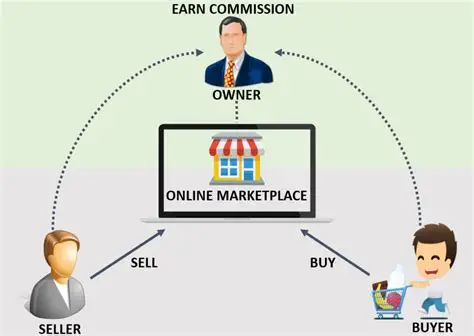
Most people interact with marketplace businesses every day.
They simply do not call them marketplaces.
They order transportation.
Book accommodations.
Hire freelancers.
Purchase products.
Download software.
Buy digital templates.
Reserve vacation experiences.
The transaction feels ordinary.
The business model behind it is anything but.
Marketplace businesses have become some of the most influential commercial structures ever created.
Not because they manufacture products.
Not because they own massive inventories.
But because they connect people.
That distinction may sound subtle.
It is not.
The marketplace model has transformed industries worth trillions of dollars by solving a remarkably old problem.
How do you help buyers find sellers efficiently?
Every successful marketplace answers that question differently.
Some focus on products.
Others focus on services.
Some specialize in digital assets.
Others facilitate transportation, hospitality, or professional expertise.
The categories vary.
The underlying principle remains remarkably consistent.
The marketplace creates value by facilitating exchange.
Understanding real-world examples reveals why this model has become so powerful.
And why it continues expanding into industries that once seemed unlikely candidates.
A Marketplace Is an Ecosystem, Not a Store
Before examining examples, it helps to understand a foundational distinction.
Marketplaces are not traditional retailers.
A retailer generally owns inventory.
A marketplace generally facilitates transactions between independent participants.
The marketplace creates infrastructure.
The sellers provide supply.
The buyers create demand.
The platform orchestrates the interaction.
That arrangement creates extraordinary scalability.
Which explains why so many modern business success stories involve marketplace economics.
Product Marketplaces
Perhaps the most recognizable examples involve physical products.
These marketplaces connect merchants with consumers.
Rather than selling only their own inventory, they create environments where many sellers participate simultaneously.
The marketplace benefits from variety.
Customers benefit from selection.
Sellers benefit from access.
The model creates mutual incentives.
That alignment often drives growth.
Consumer Goods Marketplaces
Large consumer marketplaces enable millions of product listings across numerous categories.
Participants may include:
- Independent merchants
- Brands
- Manufacturers
- Distributors
The marketplace itself focuses primarily on facilitating discovery and transactions.
Selection becomes the competitive advantage.
The broader the supply, the greater the appeal.
Service Marketplaces
Not everything sold online arrives in a box.
Many marketplaces connect people with expertise.
This category has expanded rapidly because services are naturally fragmented.
Finding the right professional can be difficult.
Marketplaces simplify the process.
Freelance Marketplaces
Freelance platforms connect businesses with professionals.
Examples of services may include:
- Writing
- Design
- Programming
- Marketing
- Consulting
The marketplace reduces friction.
Professionals gain visibility.
Businesses gain access.
Everyone benefits from improved matching.
Home Service Marketplaces
Other platforms connect homeowners with service providers.
These may include:
- Electricians
- Plumbers
- Landscapers
- Cleaners
Trust becomes especially important in these environments.
Reviews and verification systems often play a central role.
Transportation Marketplaces
Transportation once operated through relatively rigid systems.
Marketplaces introduced flexibility.
Instead of owning vehicles exclusively, these platforms frequently connect independent providers with passengers.
The model transforms underutilized assets into productive assets.
Vehicles become economic resources.
Demand becomes easier to satisfy.
Supply becomes easier to access.
The marketplace coordinates everything.
Accommodation Marketplaces
Hospitality experienced a similar transformation.
Traditional hotels once dominated many travel experiences.
Marketplaces introduced alternative supply.
Homeowners could participate.
Property managers could participate.
Travelers gained access to dramatically expanded inventory.
The result was not simply additional accommodation.
It was an entirely new hospitality category.
The marketplace expanded supply without constructing buildings.
An impressive achievement.
Digital Product Marketplaces
One of the fastest-growing marketplace categories involves digital assets.
These products can be delivered instantly.
No shipping.
No warehousing.
No physical inventory.
The economics become highly attractive.
Examples include:
- Software
- Templates
- Courses
- Music
- Graphics
- Photography
Creators gain access to customers.
Customers gain access to specialized resources.
The marketplace creates efficiency for both groups.
Software Marketplaces
Software marketplaces deserve particular attention.
The software industry increasingly relies on platform ecosystems.
Developers create applications.
Marketplaces distribute them.
Users discover solutions.
Transactions occur.
This structure benefits everyone.
Developers focus on products.
Marketplaces focus on distribution.
Customers gain convenience.
The arrangement has become foundational to modern software ecosystems.
Comparing Major Marketplace Categories
| Marketplace Type | Primary Participants | What Is Exchanged | Core Value Proposition |
|---|---|---|---|
| Product Marketplace | Buyers and merchants | Physical goods | Selection and convenience |
| Service Marketplace | Clients and professionals | Expertise | Efficient matching |
| Transportation Marketplace | Riders and drivers | Mobility | Access and flexibility |
| Accommodation Marketplace | Travelers and hosts | Temporary lodging | Expanded inventory |
| Digital Marketplace | Buyers and creators | Digital assets | Instant distribution |
| Software Marketplace | Users and developers | Applications | Discovery and convenience |
| Rental Marketplace | Renters and owners | Temporary access | Asset utilization |
| B2B Marketplace | Businesses and suppliers | Commercial goods/services | Procurement efficiency |
The diversity is striking.
Yet the economic logic remains remarkably similar.
Business-to-Business Marketplaces
Consumer marketplaces receive considerable attention.
B2B marketplaces are equally important.
Sometimes more so.
These platforms facilitate transactions between organizations.
Examples may include:
- Manufacturing components
- Industrial equipment
- Professional services
- Raw materials
B2B environments often involve larger transaction values.
More complex procurement processes.
Longer decision cycles.
The marketplace still serves the same purpose.
Reducing friction between supply and demand.
Rental Marketplaces
Ownership is not always the objective.
Sometimes access is enough.
Rental marketplaces capitalize on this reality.
Participants temporarily exchange access to:
- Equipment
- Vehicles
- Properties
- Specialized tools
The marketplace creates value by improving utilization rates.
Idle assets become productive assets.
This economic efficiency often benefits all participants.
Knowledge Marketplaces
An increasingly important category revolves around expertise.
People now monetize knowledge directly through marketplace structures.
Examples include:
- Educational platforms
- Coaching platforms
- Consulting networks
These marketplaces demonstrate an interesting trend.
The product is not a physical object.
The product is human expertise.
And demand continues growing.
Why Certain Marketplace Businesses Become Dominant
Not every marketplace succeeds.
Many fail.
The strongest examples tend to share several characteristics.
Strong Trust Systems
Participants must feel comfortable transacting.
Trust accelerates participation.
Liquidity
Buyers must find sellers.
Sellers must find buyers.
Activity matters.
Network Effects
More participants create more value.
The strongest marketplaces benefit from self-reinforcing growth.
Operational Simplicity
Reducing friction encourages participation.
Complexity discourages it.
These characteristics frequently separate successful marketplaces from unsuccessful ones.
The Lesson I Learned Watching a Niche Marketplace Grow
Several years ago, I worked with an organization serving a highly specialized industry.
The founders believed the niche was too small to support a marketplace.
Conventional wisdom agreed.
The market appeared limited.
Growth expectations were modest.
What happened surprised everyone involved.
The marketplace succeeded not because the niche was large.
It succeeded because the matching problem was painful.
Buyers struggled to find suppliers.
Suppliers struggled to find customers.
The platform solved that problem.
Participation increased steadily.
Eventually, the marketplace became one of the most influential organizations in that sector.
The lesson was powerful.
Marketplace success depends less on market size than on marketplace necessity.
If matching is difficult, marketplaces create value.
Hybrid Marketplace Models Are Emerging
Modern companies increasingly combine multiple marketplace concepts.
A single platform may facilitate:
- Products
- Services
- Advertising
- Subscriptions
- Digital assets
This creates ecosystem advantages.
Participants remain engaged longer.
Revenue streams diversify.
The platform becomes more resilient.
Hybrid models are becoming increasingly common as companies seek additional growth opportunities.
The Future of Marketplace Businesses
The marketplace model continues evolving.
Artificial intelligence is improving recommendations.
Automation is improving operations.
Global participation is becoming easier.
New categories continue emerging.
Yet the underlying concept remains unchanged.
People possess resources.
Other people need resources.
Marketplaces create connections.
Technology simply improves the process.
The principle itself remains timeless.
Conclusion: Marketplace Businesses Thrive Because They Solve a Human Problem
Looking across product marketplaces, service marketplaces, transportation platforms, accommodation networks, software ecosystems, and digital asset exchanges, a pattern emerges.
The businesses appear different.
The industries appear different.
The economics often appear different.
Yet beneath those differences lies a common purpose.
Connection.
Marketplace businesses create value because they reduce the distance between people who need something and people who can provide it.
Sometimes that "something" is a product.
Sometimes it is expertise.
Sometimes it is transportation.
Sometimes it is knowledge.
The form changes.
The function remains.
That is why marketplace businesses continue expanding into new industries.
Not because the technology is revolutionary.
Not because the interfaces are sophisticated.
But because efficient exchange remains one of the most valuable services any business can provide.
And marketplaces, at their best, are simply engines of efficient exchange.
- Arts
- Business
- Computers
- Games
- Health
- Home
- Kids and Teens
- Money
- News
- Personal Development
- Recreation
- Regional
- Reference
- Science
- Shopping
- Society
- Sports
- Бизнес
- Деньги
- Дом
- Досуг
- Здоровье
- Игры
- Искусство
- Источники информации
- Компьютеры
- Личное развитие
- Наука
- Новости и СМИ
- Общество
- Покупки
- Спорт
- Страны и регионы
- World

 Russian
 French
 Spanish
 Portuguese
 Deutsch
 Turkish
 Dutch
Dutch
 Italiano
 Arabic
 Romaian
 Portuguese (Brazil)
 Greek
Greek