
How Do I Price Products Competitively?
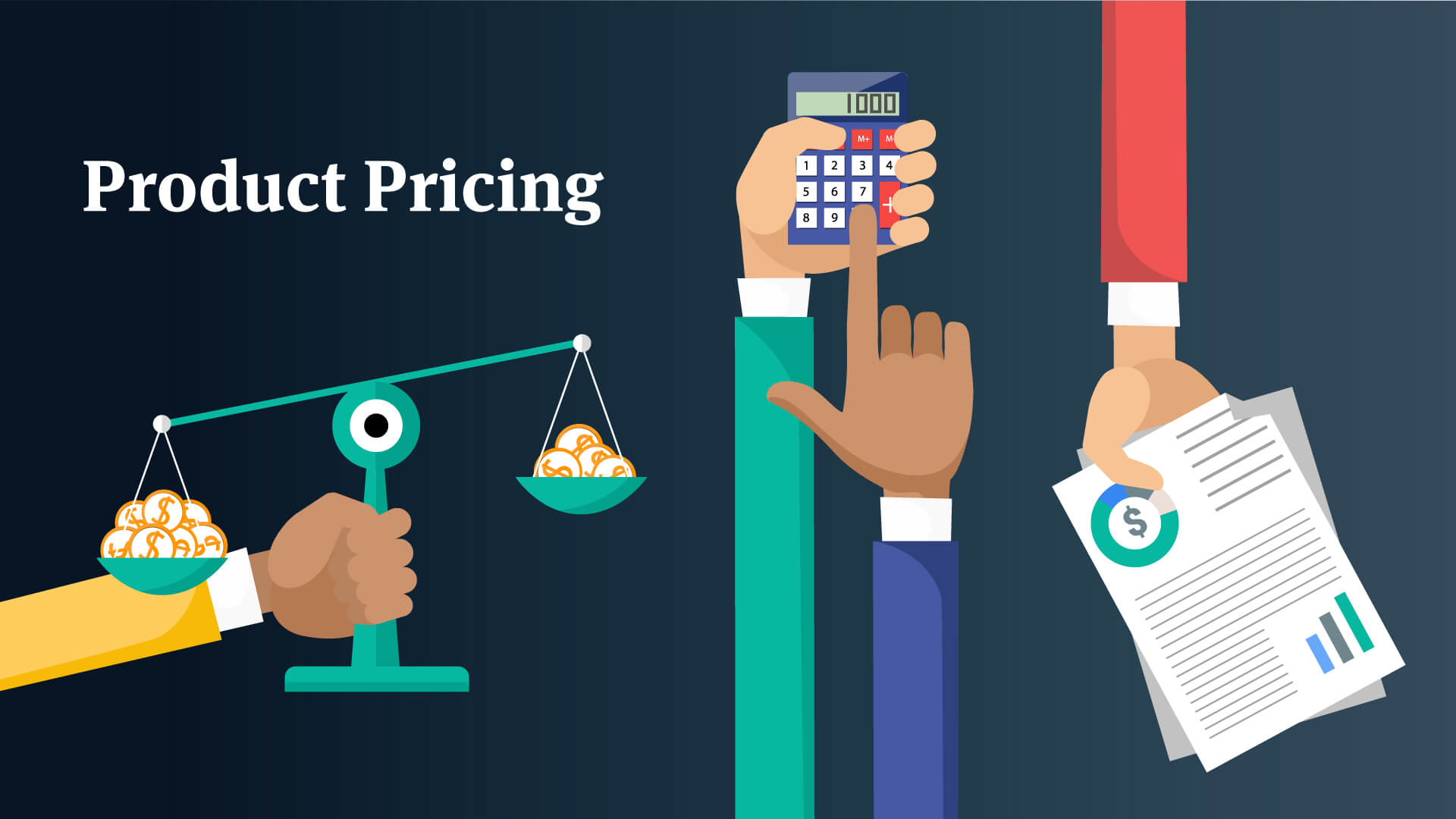
Most businesses do not have a sales problem.
They have a pricing problem.
The distinction is important.
A struggling product is often blamed on weak marketing.
Poor advertising.
Insufficient visibility.
Yet surprisingly often, the issue sits elsewhere.
Quietly.
Almost invisibly.
Inside the price tag.
Price is one of the most powerful signals a business sends.
It communicates value.
Quality.
Confidence.
Positioning.
Sometimes even trust.
A product priced too high can discourage buyers.
A product priced too low can create a different problem entirely.
Customers may question its quality.
Margins may disappear.
Growth may become impossible.
This is why pricing remains one of the most misunderstood disciplines in business.
Many entrepreneurs view pricing as arithmetic.
Cost plus margin.
Simple.
Logical.
Complete.
Unfortunately, customers rarely make decisions using spreadsheets.
People buy emotionally.
Then justify rationally.
Understanding how to price products competitively requires understanding both economics and psychology.
The strongest businesses recognize that pricing is neither art nor science.
It is a blend of both.
Competitive Pricing Is Not About Being the Cheapest
This misconception creates enormous damage.
Particularly among new businesses.
Many assume competitive pricing means offering lower prices than competitors.
That approach can create short-term sales.
It can also create long-term problems.
Low Prices Create Expectations
Once customers associate a brand with low prices, changing that perception becomes difficult.
Very difficult.
Price becomes the primary reason people buy.
Price also becomes the primary reason they leave.
Margins Matter
Revenue attracts attention.
Margins sustain businesses.
Competitive pricing should support profitability.
Not undermine it.
The goal is not winning a race to the bottom.
The goal is creating sustainable value.
Start With Costs Before Looking at Competitors
Many businesses reverse this process.
They examine competitor pricing first.
That can be dangerous.
Because competitors may have entirely different economics.
Understand Total Costs
Product costs represent only part of the equation.
Businesses should account for:
- Manufacturing
- Shipping
- Packaging
- Storage
- Marketing
- Marketplace fees
- Returns
- Customer support
Pricing decisions become more intelligent when costs are fully understood.
Determine Minimum Viable Pricing
Every business has a threshold.
A point below which profitability becomes impossible.
Knowing that threshold prevents costly mistakes.
Competitor Analysis Provides Context
Competitive pricing requires awareness.
Not imitation.
Competitors provide valuable information.
They should not dictate strategy.
Study Market Ranges
Most categories contain pricing clusters.
Products often group into:
- Budget options
- Mid-market options
- Premium options
Understanding these tiers reveals customer expectations.
Examine Differences Beyond Price
Products rarely compete on price alone.
Customers evaluate:
- Quality
- Features
- Shipping
- Brand reputation
- Customer service
Price exists within a broader value equation.
Customers Buy Value, Not Numbers
Businesses often obsess over pricing.
Customers focus on outcomes.
This distinction changes everything.
Increase Perceived Value
Businesses can improve pricing power by enhancing value perception.
Examples include:
- Better product descriptions
- Stronger branding
- Improved packaging
- Enhanced customer service
Customers compare value received against money spent.
Not simply prices.
Confidence Influences Purchasing Decisions
Brands that communicate confidence often command stronger pricing.
Hesitation can be surprisingly expensive.
Pricing Psychology Shapes Behavior
Numbers are rarely neutral.
Certain price points influence perception.
Even when customers are unaware.
The Power of Relative Comparison
A $100 product may appear expensive.
Placed beside a $250 alternative, it may appear affordable.
Context influences judgment.
Premium Pricing Can Increase Demand
This surprises many entrepreneurs.
Higher prices occasionally increase conversions.
Particularly when buyers associate price with quality.
Lower is not always better.
Common Pricing Strategies and Their Effects
| Pricing Strategy | Objective | Advantages | Risks |
|---|---|---|---|
| Cost-Plus Pricing | Ensure profitability | Simple implementation | Ignores customer value |
| Competitive Pricing | Align with market expectations | Easy comparison | Can reduce differentiation |
| Premium Pricing | Signal quality | Higher margins | Smaller audience |
| Penetration Pricing | Gain market share | Faster adoption | Margin pressure |
| Value-Based Pricing | Reflect customer benefit | Strong profitability potential | Requires customer insight |
| Dynamic Pricing | Adapt to demand | Revenue optimization | Customer perception challenges |
| Bundle Pricing | Increase average order value | Improved revenue per sale | Complexity |
The strongest businesses often combine multiple approaches.
Pricing rarely fits neatly into a single category.
Avoid the Trap of Constant Discounting
Discounts feel productive.
Sales increase.
Traffic rises.
Customers respond.
The danger emerges later.
Discounts Can Train Customers
Consumers learn quickly.
If discounts appear constantly, many customers simply wait.
Full-price purchases decline.
Profitability weakens.
Promotions Should Be Strategic
Occasional promotions can be effective.
Permanent discounting often creates dependency.
Dependency reduces pricing power.
Positioning Determines Pricing Freedom
Price and positioning are inseparable.
Businesses frequently underestimate this relationship.
Premium Brands Operate Differently
Premium brands focus on:
- Quality
- Exclusivity
- Experience
Price becomes part of the product story.
Not merely a transaction detail.
Budget Brands Require Scale
Lower prices frequently demand higher volume.
Volume introduces operational demands.
Not every business is equipped to pursue that model.
Customer Segmentation Improves Pricing Decisions
Not all customers think alike.
Not all customers value the same things.
Different Buyers Have Different Priorities
Some prioritize:
- Price
Others prioritize:
- Convenience
- Quality
- Reliability
- Brand trust
Understanding these differences improves pricing accuracy.
Segment-Specific Pricing Opportunities
Businesses often discover opportunities by serving distinct customer groups differently.
Sophisticated pricing reflects customer diversity.
Not customer uniformity.
A Lesson I Learned Watching Two Businesses Compete
Several years ago, I observed two companies selling nearly identical products.
The first company continually reduced prices.
Every competitive challenge triggered another discount.
The second company took a different approach.
Prices remained relatively stable.
Instead, they improved packaging.
Enhanced customer support.
Strengthened branding.
Expanded educational content.
Initially, the lower-priced company generated stronger sales volume.
The outcome seemed obvious.
Then profitability entered the conversation.
Margins shrank.
Marketing budgets tightened.
Growth slowed.
Meanwhile, the higher-priced company maintained healthier economics and stronger customer loyalty.
That experience reinforced a lesson I have carried ever since.
Customers evaluate more than price.
Businesses that compete solely on price often discover how fragile that advantage can be.
Marketplace Pricing Requires Additional Considerations
Marketplaces introduce unique challenges.
Comparison becomes effortless.
Customers evaluate alternatives instantly.
Visibility and Pricing Interact
Price influences:
- Search rankings
- Conversion rates
- Advertising performance
Small pricing adjustments can produce meaningful outcomes.
Lowest Price Does Not Guarantee Success
Reviews.
Shipping speed.
Brand reputation.
These variables frequently outweigh minor price differences.
Competing intelligently often proves more effective than competing aggressively.
Monitor Pricing Continuously
Markets evolve.
Costs evolve.
Competitors evolve.
Pricing should evolve as well.
Review Data Regularly
Businesses should evaluate:
- Conversion rates
- Profit margins
- Customer feedback
- Competitive activity
Pricing decisions benefit from ongoing analysis.
Avoid Emotional Reactions
Competitor price changes often trigger panic.
Panic rarely improves decision-making.
Thoughtful analysis usually produces better outcomes.
The Hidden Cost of Underpricing
Many entrepreneurs fear pricing too high.
Far fewer fear pricing too low.
This imbalance creates problems.
Underpricing Limits Growth
Insufficient margins reduce resources available for:
- Marketing
- Hiring
- Product development
- Customer support
Growth requires investment.
Investment requires profit.
Customers Sometimes Distrust Extremely Low Prices
Cheap products may appear risky.
Particularly in categories where quality matters.
Price communicates information.
Not merely cost.
The Future of Competitive Pricing
Technology continues changing pricing practices.
Data becomes increasingly available.
Automation improves responsiveness.
Artificial intelligence enhances forecasting.
Yet despite these developments, the fundamentals remain remarkably stable.
Customers continue asking familiar questions:
- Is this worth the money?
- Can I trust this company?
- Am I receiving value?
The businesses that answer those questions effectively often enjoy greater pricing flexibility.
Technology may influence execution.
Human psychology still influences decisions.
Conclusion: Competitive Pricing Is Really About Competitive Value
Many businesses approach pricing as a battle.
A contest against competitors.
A race toward lower numbers.
That perspective misses something important.
Customers rarely purchase prices.
They purchase value.
The strongest pricing strategies acknowledge this reality.
They account for costs.
They respect market expectations.
They understand customer psychology.
They protect margins.
And they reinforce brand positioning.
Competitive pricing is not about being cheaper.
It is about being compelling.
Compelling enough that customers feel confident purchasing.
Compelling enough that margins remain healthy.
Compelling enough that growth remains sustainable.
Because ultimately, pricing is not a mathematical exercise alone.
It is a statement.
A statement about value.
A statement about confidence.
A statement about how a business sees itself within the market.
And customers listen to that statement far more carefully than many businesses realize.
- Arts
- Business
- Computers
- Oyunlar
- Health
- Home
- Kids and Teens
- Money
- News
- Personal Development
- Recreation
- Regional
- Reference
- Science
- Shopping
- Society
- Sports
- Бизнес
- Деньги
- Дом
- Досуг
- Здоровье
- Игры
- Искусство
- Источники информации
- Компьютеры
- Личное развитие
- Наука
- Новости и СМИ
- Общество
- Покупки
- Спорт
- Страны и регионы
- World

 English
 Russian
 French
 Spanish
 Portuguese
 Deutsch
 Dutch
Dutch
 Italiano
 Arabic
 Romaian
 Portuguese (Brazil)
 Greek
Greek